On this page
Mount Bandai Travel Guide: Volcanic Calderas, Shifting Lakes & Highland Powder
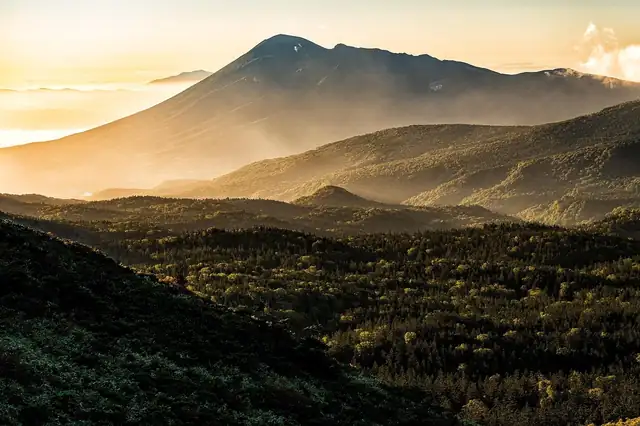
Dominating the horizon of western Fukushima Prefecture, Mount Bandai (磐梯山, Bandai-san) is one of Japan's most visually striking and geologically transformative volcanic massifs. Standing 1,816 meters above sea level within Bandai-Asahi National Park, the peak presents two starkly different faces to the world. Viewed from the south across the mirror-like waters of Lake Inawashiro, it rises as a graceful, conical stratovolcano affectionately christened Aizu Fuji. Yet from the north, this gentle silhouette gives way to a cataclysmic horseshoe-shaped caldera and sheer, jagged rock precipices—the legacy of an explosive collapse that permanently redrew the map of northern Japan.
On the morning of July 15, 1888, Mount Bandai unleashed one of the most violent phreatic eruptions in recorded Japanese history. Massive subterranean steam explosions triggered the total structural failure of the northern peak (Kobandai), unleashing a colossal avalanche of rocks, mud, and volcanic debris totaling 1.2 billion cubic meters. The debris flow obliterated multiple villages and dammed mountain river channels across the valley floor, creating the sprawling, lake-speckled highland plateau known today as Urabandai (Bandai Highlands), including the famous kaleidoscopic mineral ponds of Goshiki-numa and Lake Hibara. Today, the Bandai region is an all-season alpine outdoor hub, celebrated for scenic volcanic ridge drives, world-class winter powder skiing, natural hot spring enclaves, and rich highland terroir.
Navigating Mount Bandai: Core Geographic Sectors
The terrain around Mount Bandai naturally divides into four distinct travel corridors, linked by winding mountain passes and lakeside avenues:
| Sector | Primary Station / Road Access | Landscape & Atmosphere | Key Highlights |
|---|---|---|---|
| Urabandai Highland Plateau (North) | Bandai-Kōgen Bus Terminal / Route 459 | Forested highland basin (800m), hundreds of volcanic lakes, birch woods, resort lodges, hiking trailheads. | Goshiki-numa Nature Trail, Lake Hibara sightseeing cruises, Morohashi Museum of Modern Art (Dalí), Oguni-numa marsh. |
| Inawashiro & Southern Slopes (South) | JR Inawashiro / Ban'etsu Expressway | Wide lakeside plains, unobstructed views of "Aizu Fuji," historical estates, winter ski slopes, swan sanctuaries. | Lake Inawashiro (Tenkyōko), Hideyo Noguchi Memorial Museum, Tenkyōkaku imperial villa, Inawashiro Ski Resort. |
| Bandai Alpine Byways (Ridge Passes) | Bandai-Azuma Skyline / Bandai Gold Line | Winding high-altitude highways, barren volcanic scree, steaming sulfuric fumaroles, panoramic crater rims. | Jōdodaira Crater (Azuma-Kofuji), Mount Issaikyō fumarole, Kogane Falls, Happōdai Trailhead. |
| Bandai Western Base & Hot Springs | Bandai-Machō / JR Aizu-Wakamatsu | Rolling foothill vineyards, expansive ski resorts, historical samurai valley gateways, cedar onsen hamlets. | Hoshino Resorts Nekoma Mountain (Alts Bandai), Bandai Onsenkyo, thermal ryokans. |
Top Things to Do Around Mount Bandai
1. Hike the Shifting Mineral Waters of Goshiki-numa (Five Colored Ponds)
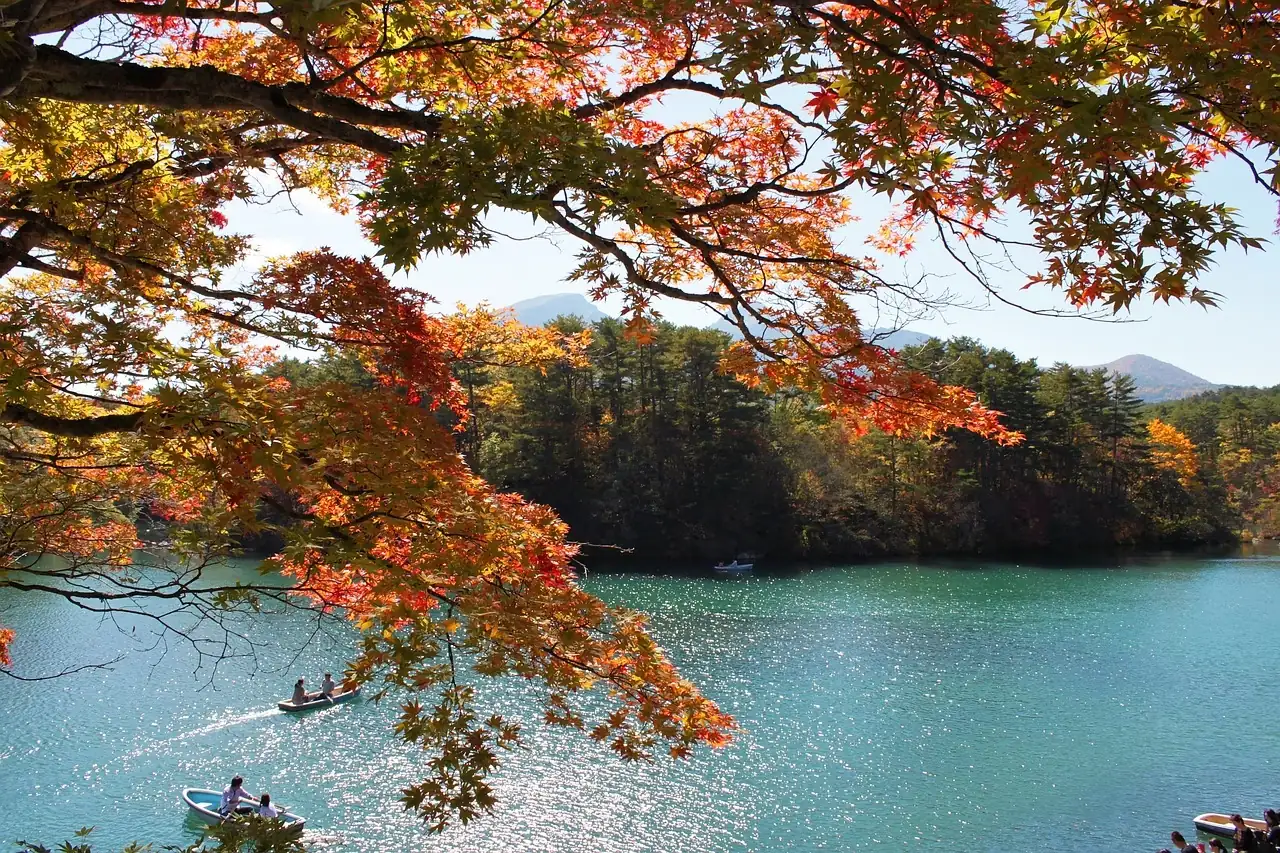
Formed directly by the 1888 volcanic debris dams, Goshiki-numa is a collection of roughly thirty volcanic ponds and lakes scattered across the Urabandai plateau. The name "Five Colored Ponds" does not refer to five specific bodies of water, but rather to the mystical phenomenon wherein the lakes shift between cobalt blue, milky turquoise, emerald green, and rust red depending on subterranean volcanic mineral concentrations (silica, aluminum, and iron compounds), water plant growth, and the angle of sunlight.
An easy, flat 3.6-kilometer nature trail (approx. 70–90 minutes one way) winds between the Urabandai Visitor Center and Bandai-Kōgen Bus Station. Key ponds along the trail include:
- Bishamon-numa: The largest and deepest pond, featuring clear emerald waters where visitors can rent rowboats against the dramatic backdrop of Mount Bandai's collapsed caldera wall. Keep an eye out for the famous white carp marked with a red heart-shaped spot, rumored to bring good fortune.
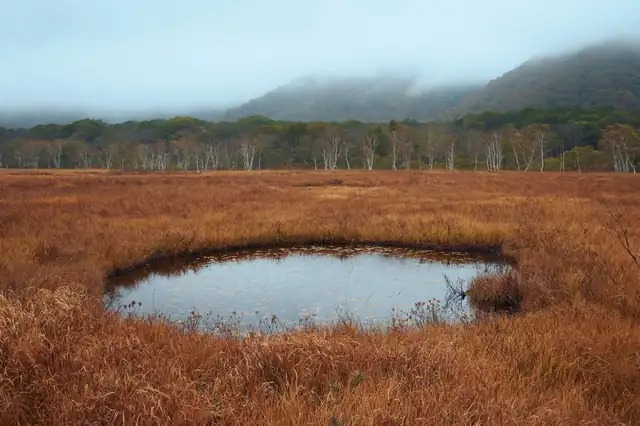
- Aonuma & Rurinuma: Intense, glowing electric-blue and milky-turquoise ponds fed by acidic, mineral-heavy underground thermal runoff.
- Benten-numa: A broad turquoise basin backed by alpine ridges, often framed by water lilies and reeds.
- Akanuma ("Red Pond"): A smaller pool ringed by aquatic mosses and reeds stained a deep rust-red from dissolved iron oxide deposits.
2. Summit Mount Bandai via the Happōdai Trail
Mount Bandai is designated one of Japan's 100 Famous Mountains (Hyakumeizan), offering several distinct hiking routes. The most popular and accessible route is the Happōdai Trail, starting at the Happōdai trailhead along the scenic Bandai Gold Line highway at an elevation of 1,194 meters.
Because the trailhead starts high on the western shoulder, the summit trek requires only roughly 620 meters of vertical ascent, taking 2 to 2.5 hours to the peak (4 to 5 hours round-trip). The trail leads through tranquil beech forests before passing the sulfurous, steam-venting ruins of Naka-Bandai Onsen. Beyond the Kōbō-shimizu mountain hut (which sells drinks and commemorative badges in summer), a final steep rocky push reaches the 1,816-meter summit. The peak delivers a 360-degree panoramic vista sweeping across Lake Inawashiro to the south, the lake-studded plateau of Urabandai to the north, and the distant peaks of Mount Azuma and Mount Adatara.
3. Drive the Volcanic Ridge: Bandai-Azuma Skyline & Jōdodaira
Reaching an elevation of 1,350 meters across the neighboring Azuma volcanic massif, the Bandai-Azuma Skyline is recognized as one of the premier alpine driving routes in Japan. The winding toll-free highway cuts through alpine hemlock forests before climbing above the tree line into a desolate, otherworldly moonscape of yellow sulfuric rock, active steam vents, and volcanic scree.
The road peaks at the Jōdodaira Visitor Center, situated between the steaming vents of Mount Issaikyō and the symmetrical cinder cone of Mount Azuma-Kofuji ("Little Mount Fuji of Azuma"). Visitors can climb a maintained wooden staircase to the rim of Azuma-Kofuji in fifteen minutes, walking the complete circular trail around the 500-meter-wide volcanic crater for views overlooking the Fukushima Basin below.
4. Cruise the Mirrored Waters of Lake Inawashiro (Tenkyōko)
Covering over one hundred square kilometers south of Mount Bandai, Lake Inawashiro is the fourth-largest freshwater lake in Japan. Because of its exceptional water clarity, low mineral runoff from volcanic soils, and mirror-like transparency, the lake earned the poetic moniker Tenkyōko ("The Heavenly Mirror Lake"), perfectly reflecting the snow-draped conical slopes of Mount Bandai on windless mornings.
Sightseeing cruise boats depart from Nagahama pier, offering loops around the bay. Along the southern and western shores, beaches like Shidahama attract campers and windsurfers in summer. In deep winter, cold northern winds blow freezing water droplets against shoreline tree branches, creating natural, glass-like Shibuki-gōri (Ice Spray Sculptures), while thousands of migratory Siberian swans overwinter along the shoreline.
5. Paddle Past Submerged Forests on Lake Hibara
Stretching ten kilometers from north to south, Lake Hibara is the largest lake created by the 1888 eruption. The volcanic landslide inundated an entire inhabited mountain river valley; on calm days, boaters can still peer beneath the clear surface to see stone foundation markers, roads, and the ghost-like submerged stumps of an ancient forest.
During the green season (May to October), Lake Hibara is a haven for recreational kayaking, stand-up paddleboarding, and bass fishing. In deep winter (January to March), the entire lake surface freezes over into a solid sheet of ice, transforming into a winter village of colorful thermal tents where ice fishers angle for sweet, tiny Wakasagi (smelt) through holes drilled into the ice.
6. Explore Surrealist Art at the Morohashi Museum of Modern Art
Nestled in a manicured park surrounded by beech woods and reflection ponds in Urabandai, the Morohashi Museum of Modern Art features a striking stone facade reminiscent of a European manor. The museum holds the third-largest collection of works by Salvador Dalí in the world, and the largest in Asia.
The permanent collection features over 330 paintings, watercolours, prints, and monumental bronze sculptures by Dalí—including iconic masterworks like The Persistence of Memory motifs, The Profile of Time, and Venus with Drawers—alongside impressionist and modern canvases by Cézanne, Renoir, Picasso, and Miró. The museum's glass-walled sculpture atrium frames sweeping views of Mount Bandai rising behind the outdoor ponds.
7. Carve Deep Powder at Nekoma Mountain (Hoshino Resorts)
Boasting some of the lightest, driest sub-zero powder snow in northern Honshu (dubbed Micro-Fine Snow), the slopes of Mount Bandai constitute a premier winter sports corridor. Following a major terrain unification, Hoshino Resorts Nekoma Mountain connects the former Alts Bandai (on the south-facing Inawashiro flank) and Nekoma Ski Resort (on the north-facing Urabandai flank) via a dedicated 13-person connecting lift.
The merged resort features thirty-three courses spanning 189 hectares, offering both sun-drenched cruising runs overlooking Lake Inawashiro and north-facing, deep-powder tree glades that preserve dry snow conditions from December through early May. Additional family-friendly ski areas dot the slopes, including Inawashiro Ski Resort and Minowa.
Bandai Food Culture: Soba Valleys, Sauce Katsudon & Wakasagi
The alpine climate, pure snowmelt runoff, and volcanic soil surrounding Mount Bandai support a rich regional food culture combining highland crops with lakeside catches:
- Inawashiro Soba: The volcanic alluvial fans surrounding Mount Bandai experience extreme day-night temperature swings, ideal for cultivating high-grade buckwheat. The local Aizu Kaori buckwheat variety is stone-ground into pale, highly aromatic noodles with a firm, bouncy chew. Savor it chilled on bamboo colanders accompanied by tempura made from locally foraged wild mountain vegetables (sansai) such as butterbur buds (fukinoto) and mountain asparagus (udo).
- Aizu Sauce Katsudon: The signature comfort food of the western Bandai foothills. A thick, juicy pork loin cutlet is coated in fine panko breadcrumbs, deep-fried to a golden crisp, and immediately dredged while scalding hot in a rich, sweet-and-tangy Worcestershire-based brown sauce. The cutlet is served over a mound of steaming white rice and a bed of shredded raw cabbage inside a large ceramic bowl.
- Lake Wakasagi (Fried Smelt): Freshwater Japanese smelt harvested directly from Lake Hibara and Lake Inawashiro. Caught through winter ice holes or via net trawls, these sweet, tender whole fish measure five to ten centimeters long. They are traditionally deep-fried whole in light tempura batter, seasoned simply with coarse sea salt, or simmered in a sweet soy-mirin glaze as Tsukudani.
- Bandai Highlands Soft-Serve: The lush dairy pastures of the southern Bandai plateau support multi-generational dairy farms. Visit local roadside rest areas (Michi-no-Eki Bandai) to sample rich, full-fat milk soft-serve ice cream, alongside regional variations infused with salty green seaweed (Aonori) or sweet mountain honey.
- Mountain Mineral Sake: Blessed with pristine snowmelt runoff filtering through volcanic basalt layers, historic breweries around the foot of Mount Bandai—such as Bandai Shuzō (brewing Aizu Bandaisan)—produce crisp, clean, medium-dry sakes designed to pair with hearty mountain hot pots and wild game.
Transportation: Rail Links & Mountain Byways
Reaching the Mount Bandai region involves taking high-speed rail to the central Fukushima transport spine, followed by scenic branch lines and connecting highway coaches:
- Tokyo to Inawashiro via Shinkansen & JR Rail:
- Tōhoku Shinkansen: Board the high-speed bullet train (Hayabusa or Yamabiko) from Tokyo Station to JR Kōriyama Station in roughly 75 minutes.
- JR Ban'etsu-West Line: At Kōriyama, transfer to the local or rapid Ban'etsu-West Line, which climbs through mountain valleys past the southern face of Mount Bandai to JR Inawashiro Station in roughly 40 minutes. (Both legs fully covered by the nationwide JR Rail Pass and JR East Tohoku Area Pass).
- Reaching Urabandai & Goshiki-numa from Inawashiro Station:
- Bandai Higashi Miyako Bus: Local buses depart directly from the bus turnabout outside JR Inawashiro Station, reaching Goshiki-numa Iriguchi (Visitor Center) in 30 minutes and Lake Hibara in 45 minutes.
- Navigating the Scenic Highways (Rental Car Recommended):
- While public buses connect major hubs, renting a car at Kōriyama, Shin-Shirakawa, or Inawashiro station offers the greatest freedom for exploring trailheads and scenic routes:
- Bandai Gold Line: Traverses the western flank between Bandai Town and Urabandai, providing direct access to the Happōdai trailhead.
- Bandai-Azuma Lake Line: Winds past secluded crater lakes like Nakatsugawa Gorge.
- Bandai-Azuma Skyline: Climbs over high volcanic passes toward Fukushima City.
- Winter Driving Warning: The high alpine passes (including the Skyline and Gold Line) close completely for winter from mid-November through mid-to-late April due to heavy snowpacks. Winter vehicle travel requires dedicated studless snow tires or 4WD systems.
- While public buses connect major hubs, renting a car at Kōriyama, Shin-Shirakawa, or Inawashiro station offers the greatest freedom for exploring trailheads and scenic routes:
Where to Stay: Strategic Base Camps Around Mount Bandai
| Base Hub | Vibe & Atmosphere | Transit Connections | Accommodation Strategy |
|---|---|---|---|
| Urabandai Highland Plateau | Forested alpine wilderness, quiet lakeshores, immediate walking access to Goshiki-numa trails. | Direct bus routes to Inawashiro Station; Route 459. | Full-service luxury lakeside resorts (such as Urabandai Grandeco and Urabandai Lake Resort), boutique forest chalets, family-run European-style pensions. |
| Inawashiro (Town & Lakeside) | Spacious lakeside farming basin, panoramic views of Mount Bandai, direct train station access. | JR Inawashiro Station; Ban'etsu Expressway interchange. | Hot spring (onsen) resort hotels, traditional Japanese inns with Inawashiro soba dining, rustic lakeside campsites. |
| Bandai-Atami Onsen (East) | Secluded riverside thermal valley along the Gohyakugawa River, historic hot spring waters. | JR Ban'etsu-West Line (Bandai-Atami Station, 15 mins from Kōriyama). | High-end traditional hot spring ryokans featuring private open-air cedar baths (rotenburo) and multi-course Aizu wagyu banquets. |
| Aizuwakamatsu (Western Base) | Historic samurai castle town, preserved sake breweries, lively izakaya food quarters. | JR Ban'etsu-West Line terminus (30 mins from Inawashiro). | High density of modern business hotels (including central APAs), historic timber city ryokans; ideal base for combining Mount Bandai with feudal castle history. |
Best Seasons to Visit Mount Bandai
- Autumn (Late September to Late October): The undisputed peak season for visual drama. The high-altitude deciduous forests of beech, oak, and larch across Urabandai, Goshiki-numa, and the Bandai-Azuma Skyline blaze in brilliant shades of yellow, gold, and crimson. Crisp, clear autumn days provide optimal conditions for summiting the peak and driving alpine switchbacks. Daytime temperatures average 12°C to 17°C (54°F–63°F).
- Winter (December to Early April): A premier winter sports season. Moisture sweeping from the Sea of Japan dumps meters of light, dry powder across the northern and western slopes, transforming Hoshino Resorts Nekoma Mountain into a haven for skiers and snowboarders. On Lake Hibara, winter brings ice-hole fishing for Wakasagi smelt, while Lake Inawashiro hosts migrating Siberian swans against ice spray formations.
- Summer (Late June to August): A refreshing, cool escape from the humid metropolitan lowlands. Because the Urabandai plateau sits above 800 meters elevation, summer daytime temperatures average a comfortable 22°C to 26°C (72°F–79°F). It is the prime window for kayaking on Lake Hibara, rowboating on Bishamon-numa, and completing alpine traverses along the mountain ridgelines.
- Spring (Late April to May): The season of alpine awakening. Winding mountain highways reopen as giant rotary snowplows clear the winter drifts. While cherry blossoms bloom along the shores of Lake Inawashiro in late April, the hiking trails of Urabandai emerge from snowbanks, framed by early-blooming Asian skunk cabbages (mizubashō) in marshy hollows.
 宮城
 青森
 山形
 福島
 秋田
 岩手