

On this page
Nagano Travel Guide: The Roof of Japan, Ancient Temples & Alpine Wilderness
Dominated by three monumental mountain ranges collectively known as the Japanese Alps—the Hida (Northern), Kiso (Central), and Akaishi (Southern) Alps—Nagano Prefecture (長野県) contains fifteen of Japan’s twenty-one peaks exceeding 3,000 meters. Historically designated as Shinano Province (or simply Shinshū), this high-altitude alpine frontier is completely landlocked in central Honshu. Its dramatic topography of snow-choked volcanic massifs, deep forested river canyons, and mist-covered river basins isolated regional settlements for centuries, fostering unique independent food preservation techniques, alpine architecture, and resilient mountain communities.
For modern travelers, Nagano represents one of Japan's premier destinations across all four seasons. Hosting the 1998 Winter Olympic Games cemented its status as a world-class winter sports capital, offering deep powder snow across resorts like Hakuba, Nozawa Onsen, and Shiga Kogen. In spring and summer, the mountain snowpacks feed crystal-clear rivers through pristine national valleys like Kamikochi, while centuries-old pilgrimage trails like the Nakasendo invite hikers into preserved wooden Edo-era post towns. Anchored by the profound spiritual weight of Zenkō-ji—one of Japan’s oldest and most significant Buddhist temple complexes—Nagano delivers an authentic mountain counterpoint to the Pacific mega-cities.
Navigating Nagano: Key Geographic Sectors
Because jagged mountain ranges divide the prefecture into distinct valleys, transit moves along well-defined north-south and east-west corridors:
| Sector | Primary Station Hubs | Landscape & Atmosphere | Key Highlights |
|---|---|---|---|
| Northern Basin (Hokushin) | JR Nagano Station / Yudanaka | Spiritual provincial capital, apple orchards, steamy hot spring gorges, wild snow monkey sanctuaries. | Zenkō-ji Temple, Jigokudani Snow Monkey Park, Togakushi Shrine forest, Obuse town (Hokusai museum). |
| The Northern Alps (Hakuba Valley) | Hakuba / Shinano-Omachi | Glaciated 3,000-meter granite peaks, Olympic downhill ski bowls, alpine climbing routes, mountain chalets. | Happo-One, Tsugaike Nature Park, Tateyama Kurobe Alpine Route gateway. |
| Central Valley (Chūshin) | JR Matsumoto Station | Historic castle town, vibrant arts and crafts culture, gateway to the high alpine highlands. | Matsumoto Castle ("Crow Castle"), Nawate-dori (Frog Street), Matsumoto City Museum of Art (Yayoi Kusama). |
| Kamikochi & Alpine Highland | Shin-Shimashima / Kamikochi Bus Terminal | Protected highland glacial valley, emerald mountain rivers, active volcanic peaks, pure alpine silence. | Taisho Pond, Kappa Bridge (Kappabashi), Myojin Pond, Mount Hotakadake views. |
| Kiso Valley (Nakasendo Trail) | Kiso-Fukushima / Nakatsugawa | Narrow river canyon, dense cedar forests, authentic Edo-period wooden post towns (shukuba). | Magome-juku, Tsumago-juku, Narai-juku, historic stone Nakasendo cobblestone trails. |
| Eastern Highlands (Toshin) | Karuizawa / Ueda | Forest resort plateau, historic castle towns, cool summer escapes, high-end shopping. | Karuizawa Kyu-Ginza, Shiraito Falls, Harunire Terrace, Ueda Castle ruins. |
Top Things to Do Across Nagano
1. Seek Enlightenment in the Dark at Zenkō-ji Temple
Founded in 642 AD, long before Buddhism split into competing sectarian schools in Japan, Zenkō-ji is one of the country's most revered pilgrimage sites. Because it belongs to no single Buddhist denomination, the temple has historically welcomed all worshippers regardless of faith, gender, or social standing. The monumental wooden Hondō (Main Hall), designated a National Treasure, houses the Ikko Sanzon Amida Nyorai, widely believed to be the very first Buddhist image brought to Japan from the Korean Peninsula in 552 AD (an image so sacred it is permanently hidden from view as a hibutsu, or secret Buddha).
Beneath the inner altar lies the Okaidan Meguri (Tunnel to the Key to Paradise). Visitors descend wooden steps into a pitch-black subterranean corridor, leaving behind all light. Walking in complete sensory deprivation with your right hand sliding along the cold wooden wall, you search for a brass metal door handle mounted below the hidden Buddha. Touching the key in total darkness is believed to form a direct spiritual bond with the Amida Buddha, guaranteeing salvation in the afterlife.
2. Ascend the Historic Black Keep of Matsumoto Castle
Constructed between 1592 and 1614, Matsumoto Castle (Matsumoto-jō) is one of only twelve surviving original castle keeps in Japan and the oldest five-tier, six-story wooden keep still standing. Known locally as the Karasu-jō (Crow Castle) due to its menacing black timber cladding, the castle was engineered during the Sengoku (Warring States) civil war period as an impenetrable defensive fortress. Unlike later peacetime palace keeps, Matsumoto features stone-dropping chutes (ishi-otoshi), gun ports for matchlock firearms (teppo-zama), and internal wooden staircases pitched at extreme 61-degree angles. During early spring, the castle's wide water moats reflect hundreds of blooming cherry trees framed against the snow-covered peaks of the Northern Alps.
3. Walk with the Snow Monkeys at Jigokudani Monkey Park
Tucked deep in the pine forests of the Yokoyu River gorge within Yamanouchi, Jigokudani Yaen-kōen is famous worldwide for its wild troop of Japanese macaques (Snow Monkeys) that soak in geothermal hot springs. Drawn down from the high mountain forests during freezing winter months, the monkeys spend hours luxuriating in the natural mineral waters, grooming each other with snow dusting their red faces and thick fur coats.
Crucial Logistics Note: Reaching the park requires a gentle 1.6-kilometer (30-minute) walk along an unpaved forest trail from the Kanbayashi Onsen bus stop, which can be packed with slippery ice and slush in winter—wearing boots with ice grips or crampons is essential. The park implemented date-specific online ticketing for peak winter weekends to manage queueing and protect the monkeys' habitat. The monkeys are completely wild; touching, feeding, or staring directly into their eyes is strictly prohibited.
4. Trek the Glacial Splendor of Kamikochi
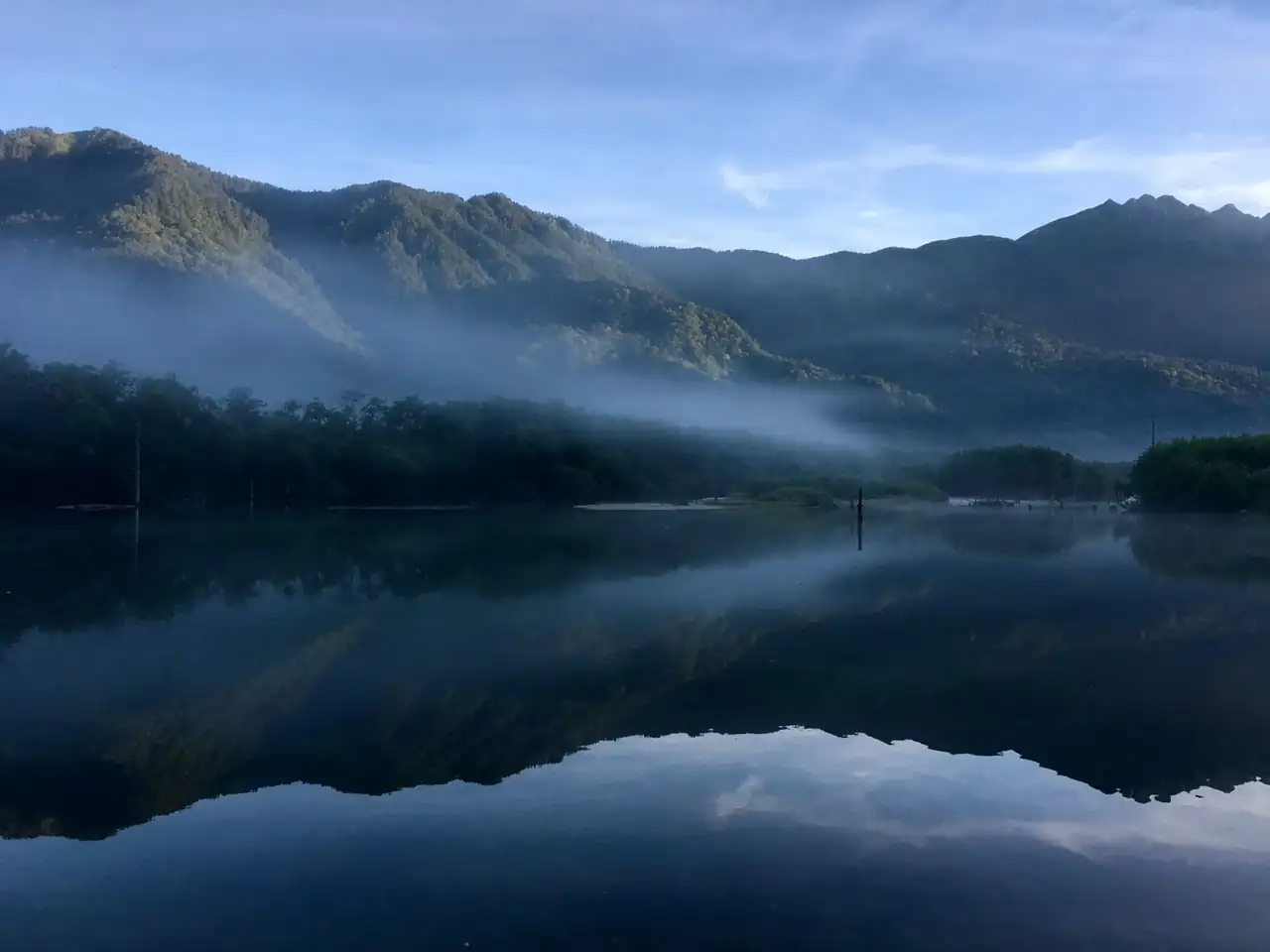
Set at 1,500 meters elevation inside the Chūbu-Sangaku National Park, the highland plateau of Kamikochi is universally recognized as the crown jewel of the Japanese Alps. Carved by the crystalline, turquoise snowmelt waters of the Azusa River, the valley is framed by the towering active volcanic cone of Mount Yakedake and the jagged granite pinnacles of the Hotaka mountain range.
To preserve its pristine alpine ecosystem, Kamikochi is strictly closed to private automobiles year-round; all visitors must arrive via official shuttle buses or licensed alpine taxis from the Sawando or Hirayu parking terminals. The valley is open annually only from mid-April to November 15, shutting down completely in winter. Take the scenic three-hour flat trail from Taisho Pond—where dead larch trees rise out of the submerged lake bed—past the iconic wooden suspension span of Kappa Bridge (Kappabashi), continuing upstream to the tranquil, mirror-like waters of Myojin Pond.
5. Step Back into the Edo Era on the Nakasendo Trail
During the Edo period, the Nakasendo ("Central Mountain Route") served as one of the five official highways linking the shogun’s administrative capital in Edo (Tokyo) with the imperial capital in Kyoto. Squeezing through the rugged topography of Nagano’s Kiso Valley, the route was divided by sixty-nine staging post towns (shukuba) where travelers rested, dined, and cleared samurai passport checkpoints.
Today, the stone-paved trail between Magome-juku and Tsumago-juku offers an incredible 8-kilometer (2.5 to 3-hour) historical walk. Tsumago, in particular, was the very first town in Japan to establish preservation laws banning modern cars, overhead electrical power cables, and neon signage. Walk between weathered, dark timber lattice storefronts (machiya), past wooden waterwheels and ancient stone horse troughs, and drop off your bags at the local tourist office for a convenient luggage forwarding service that transports your suitcase to your destination town while you hike.
6. Ski the Olympic Powder of Hakuba Valley & Nozawa Onsen
Averaging 11 to 13 meters of deep alpine snowfall annually, Nagano’s winter resorts are world-class:
- Hakuba Valley: A collection of ten distinct resorts spanning a thirty-kilometer alpine valley, anchored by Happo-One, which hosted the Olympic downhill and ski jump events. Hakuba features steep, technical alpine terrain, expansive above-tree-line bowls, and modern resort infrastructure.
- Nozawa Onsen: A historic hot spring farming village founded in the eighth century, renowned for its steep, powder-filled ski slopes paired with an authentic village culture. Scattered throughout the narrow cobblestone village streets are thirteen Sotoyu—communal, wood-paneled bathhouses fed by scalding natural sulfur springs, maintained collaboratively by local villagers and free to enter for visitors (modest donation requested).
7. Walk the Giant Cedar Avenue of Togakushi Shrine
Located in the forested mountain plateau thirty minutes northwest of Nagano City, Togakushi is steeped in ancient Shinto creation mythology. According to folklore, when the sun goddess Amaterasu hid away in a cave and plunged the world into darkness, the heavenly god Tajikarao hurled the stone cave door across Japan to prevent her from hiding again—the door landing to become Mount Togakushi. The shrine comprises five separate shrine complexes, linked by the magnificent two-kilometer approach to the Okusha (Upper Shrine). The path leads beneath a thatched red Zuishinmon gate and passes through an avenue of over three hundred monumental Cryptomeria (Japanese cedar) trees planted over four centuries ago.
Nagano Food Culture: High-Altitude Soba, Miso & Shinshu Beef
Because Nagano's high elevations and volcanic soils historically made wet-rice cultivation difficult, local communities mastered buckwheat grain processing, wild mountain vegetable foraging (sansai), and rich fermentation traditions to survive harsh winters:
- Shinshu Soba (Buckwheat Noodles): Nagano is the undisputed capital of artisanal buckwheat in Japan. Soba thrives in the cool climate and extreme day-to-night temperature swings of mountain basins like Togakushi and Matsumoto. Made with mineral-rich alpine snowmelt, Shinshu Soba is prized for its earthy aroma, nutty flavor, and toothsome, snappy texture. In Togakushi, noodles are traditionally served in five coiled horseshoe-shaped bundles called bocchi-mori, representing the five sacred altars of the mountain.
- Oyaki Dumplings: The ultimate traditional agrarian comfort food. A rustic dough made from local buckwheat and wheat flour is wrapped around seasoned seasonal fillings: savory salted mountain mustard greens (Nozawana), sweet simmered kabocha squash, wild mountain mushrooms, or sweet walnut-miso paste. The dumplings are lightly pan-fried on a griddle to crisp the skin, then steamed or roasted over glowing ash in traditional farmhouse irori sunken hearths.
- Shinshu Miso: Nagano produces nearly fifty percent of all the miso consumed in Japan. Characterized by its golden-yellow hue, smooth texture, and bright, refreshing savory-sweet profile, Shinshu miso undergoes clean, long-term fermentation through freezing winter cycles. It serves as the aromatic base for local hot pots, dipping sauces, and marinades.
- Shinshu Premium Beef & Apples: Nagano’s high-grade wagyu cattle are raised on custom feed supplemented with sweet local apples. The resulting Shinshu Beef features remarkably fine marbling with a delicate, subtly sweet fat profile that melts on the tongue during shabu-shabu or charcoal grilling.
- Basashi (Horse Meat Sashimi): A long-standing regional delicacy, particularly popular in Matsumoto and the Kiso Valley. Lean cuts of horse meat (sakura-niku) are sliced paper-thin and served raw, accompanied by grated raw ginger, garlic, and sweet aged soy sauce.
- Local Craft Sakes and Alpine Wines: Fed by pure granite snowmelt, breweries like Masuichi in Obuse and Daishichi produce mineral-crisp sakes. The high sunny elevations of the Chikuma River valley have also made Nagano Japan’s rising star for viticulture, producing award-winning Merlots and Chardonnays.
Transportation: Regional Rail Lines & Alpine Route Passes
Nagano is well integrated into the central Honshu rail system via high-speed Shinkansen and regional limited express services:
- Tokyo to Nagano City (80–95 minutes): The Hokuriku Shinkansen (Kagayaki or Hakutaka trains) runs directly from Tokyo Station to JR Nagano Station in under an hour and a half, continuing onward to Kanazawa and Tsuruga. (Fully covered by the JR Rail Pass and JR East Nagano/Niigata Area Pass).
- Tokyo to Matsumoto (2 hours 30 minutes): The JR Chuo Line Limited Express (Azusa) runs directly from Shinjuku Station through the Southern Alps to JR Matsumoto Station without requiring a transfer.
- Nagano to Matsumoto (50 minutes): The JR Shinano Limited Express connects Nagano Station and Matsumoto Station, offering panoramic window views through the Obasute mountain pass.
- Local Transit Cards & Mountain Buses:
- Major stations (Nagano, Matsumoto, Karuizawa) accept digital Suica, Pasmo, and ICOCA cards for train lines.
- Important Caveat: Regional mountain bus operators (such as the Alpico buses into Kamikochi or Nagaden buses to the Snow Monkey Park) often operate on proprietary ticketing, bundled regional passes, or require cash/credit card payments at the terminal counter. Check route requirements before leaving major hubs.
Where to Stay in Nagano: Strategic Base Camps
| Base Hub | Vibe & Atmosphere | Transit Connections | Accommodation Strategy |
|---|---|---|---|
| Nagano City (Station Core) | Practical regional capital, temple pilgrimage energy, excellent transit connectivity. | Hokuriku Shinkansen hub; Nagaden local lines to Snow Monkeys and Obuse. | High density of modern, efficient Japanese business hotels (multiple central APAs), temple lodgings (shukubō) around Zenkō-ji. |
| Matsumoto Core | Vibrant artistic castle town, walkable historic streets, craft beer bars, gateway to the Alps. | JR Chuo Line to Tokyo; JR Shinano to Nagoya; Alpico rail line to Kamikochi. | Clean, cost-effective station-front business hotels, boutique historic townhouses, hot spring inns in nearby Asama Onsen. |
| Hakuba Valley | International alpine ski village, winter sports buzz, panoramic mountain views. | Direct winter ski shuttles from Tokyo/Nagano; local resort loop buses. | Western-style ski chalets, luxury ski-in/ski-out apartments, boutique onsen lodges. |
| Kiso Valley (Tsumago / Narai) | Timeless Edo-period nostalgia, dark timber streetscapes, absolute night quiet. | JR Chuo Main Line (Kiso-Fukushima). | Atmospheric historic family-run minshuku and ryokans with traditional tatami mats and hearth-cooked meals. |
| Karuizawa | Upscale forest retreat, cool mountain breezes, high-end dining and shopping. | Hokuriku Shinkansen (65 mins from Tokyo). | Luxury Western-style forest resorts, boutique designer hotels, private woodland villas. |
Best Seasons to Visit Nagano
- Winter (December to March): The definitive winter sports and snow monkey season. Temperatures range from -2°C to -10°C (28°F–14°F). Deep powder skiing across Hakuba, Shiga Kogen, and Nozawa Onsen. The famous Nozawa Onsen Fire Festival (Dosojin Matsuri) takes place on January 15, featuring a massive wooden shrine tower defended by village men in a spectacle of fire and sparks.
- Autumn (Late September to Early November): The premier hiking season. Autumn foliage colors descend from the 3,000-meter peaks down into the valleys: alpine larch trees in Kamikochi turn brilliant golden yellow in mid-to-late October, while maples along the Nakasendo trail blaze red through early November. Crisp, sunny skies and fresh soba harvests.
- Spring (Mid-April to May): Late-blooming mountain sakura and alpine openings. While Tokyo blossoms in late March, Nagano’s cherry trees around Matsumoto Castle and Garyu Park peak in mid-April. The Tateyama Kurobe Alpine Route opens in mid-April, allowing travelers to walk between towering twenty-meter walls of carved snow, while Kamikochi celebrates its traditional mountain opening.
- Summer (July to August): The classic high-altitude summer retreat. While Tokyo and Osaka swelter in 35°C humidity, Nagano’s alpine valleys and plateaus (Kamikochi, Shiga Kogen, Karuizawa) offer refreshing daytime temperatures averaging 22°C to 26°C (72°F–79°F), making it an ideal destination for trekking, river rafting, and camping.


 山梨
山梨 石川
石川 岐阜
岐阜 愛知
愛知 静岡
静岡 富山
富山 新潟
新潟 福井
福井