

On this page
Yamanashi Travel Guide: Mount Fuji Vistas, Highland Terroir & Alpine Springs
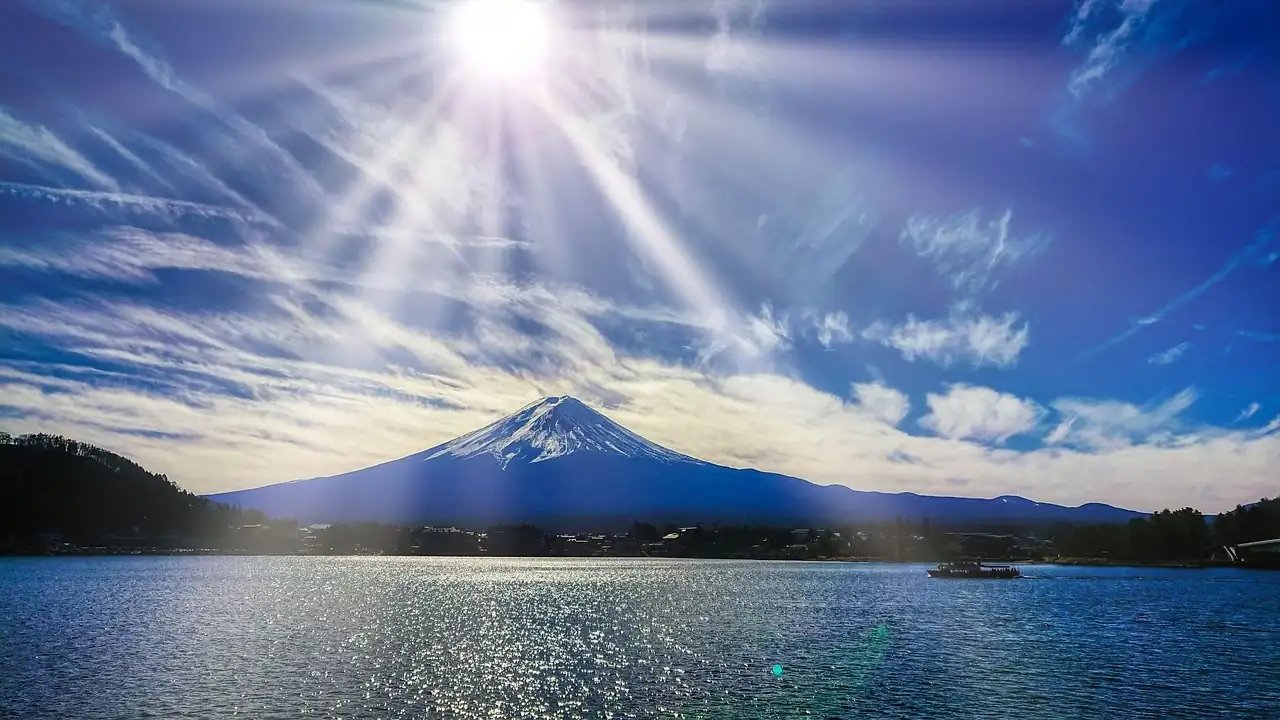
Landlocked in the mountainous spine of central Honshu directly west of Tokyo, Yamanashi Prefecture (山梨県) is defined by some of the most dramatic alpine geography in East Asia. Encircled by the jagged granitic crests of the Minami (Southern) Alps, the Chichibu mountains, and the Yatsugatake volcanic range, the southern frontier of the prefecture is dominated by the monumental, symmetrical cone of Mount Fuji (Fuji-san), rising 3,776 meters into the sky. Spared the dense urban sprawl of the Kanto plains, roughly eighty percent of Yamanashi’s territory is blanketed by protected national parks, volcanic lakes, ancient cedar forests, and fertile alluvial valleys.
Historically known as Kai Province, Yamanashi was the formidable power base of the legendary sixteenth-century Sengoku-period warlord Takeda Shingen, whose military banner famously invoked Sun Tzu's philosophy: Fūrinkazan—as swift as the wind, as silent as the forest, as fierce as fire, and as unshakable as the mountain. Today, Yamanashi represents an extraordinary escape for both outdoor enthusiasts and cultural epicures. It is universally celebrated as the premier fruit basket and historic wine capital of Japan, producing world-renowned Koshu wines, pristine single-malt whiskies at Hakushu, soothing thermal hot springs, and iconic postcard views across the Fuji Five Lakes.
Navigating Yamanashi: Key Geographic Sectors
Because towering mountain ridges divide the prefecture into distinct natural basins, travelers should understand Yamanashi's three primary geographic corridors:
| Sector | Primary Station Hubs | Landscape & Atmosphere | Key Highlights |
|---|---|---|---|
| Fuji Five Lakes (Fujigoko) | Kawaguchiko / Fujisan Station | Volcanic calderas, lakeside promenades, direct unobstructed views of Mount Fuji, alpine climbing trailheads. | Lake Kawaguchiko, Chureito Pagoda, Oshino Hakkai, Fuji-Q Highland, Narusawa Ice Cave, Lake Chuzenji views. |
| Kofu Basin & Heritage Core | JR Kofu Station | Historic feudal castle town, samurai shrines, fruit orchard alluvial plains, steep granite river gorges. | Shosenkyo Gorge, Takeda Shrine, Maizuru Castle Park, Yumura Onsen, local craft jewelry studios. |
| Koshu Wine Country & Foothills | Katsunuma-budokyo / Enzan | Rolling vineyard hillsides, historic European-style brick wine cellars, peach and grape orchards. | Budo-no-Oka (Hill of Grapes), Katsunuma wineries, Daibutsu of Erin-ji, Fuefukigawa Fruit Park. |
| Hokuto & Southern Alps | Kobuchizawa / Kiyosato | High-altitude mountain plateaus, crystal-clear alpine snowmelt streams, pristine single malt distilleries, craft dairies. | Suntory Hakushu Distillery, Ojiragawa Canyon, Yatsugatake Highland, Moegi-no-Mura. |
Top Things to Do Across Yamanashi
1. Capture the Postcard View at Chureito Pagoda
Perched high on the hillside of Arakurayama Sengen Park in the town of Fujiyoshida, the Chureito Pagoda provides what is arguably the most famous and photographed landscape perspective in all of Japan. Built in 1962 as a peace memorial honoring fallen citizens, this five-story, vermilion-eaved pagoda sits aligned directly above Mount Fuji's snow-capped northern face. Visitors ascend a steep 398-step stone staircase winding through a hillside grove of nearly seven hundred somei-yoshino cherry trees. In early April, the cherry blossoms frame the pagoda and mountain in a sea of pink; in November, the hillside blazes with crimson maple leaves.
2. Circuit the Waters of Lake Kawaguchiko
As the most accessible and commercially developed of the Fuji Five Lakes (Fujigoko), Lake Kawaguchiko serves as the primary base for exploring the northern base of Mount Fuji. A paved pedestrian and cycling path wraps along the lake perimeter, providing continuous shoreline perspectives:
- Oishi Park (Northern Shore): A botanical park celebrated for its lakeside flower beds that change with the seasons: fields of fragrant purple lavender from late June to mid-July, and vibrant, electric-crimson kochia (summer cypress) bushes in mid-autumn, framed by reflections of Mount Fuji across the water.
- Mount Fuji Panoramic Ropeway: Departing from the eastern lake shore, this cable car ascends 400 meters up the craggy slopes of Mount Tenjo, offering aerial perspectives over Kawaguchiko and the sweeping northern foothills of Fuji. The mountain is famously linked to Japanese author Osamu Dazai’s adaptation of the folk tale Kachi-Kachi Yama, commemorated by charming tanuki and rabbit statues along the summit trails.
- Kubota Itchiku Art Museum: Tucked into the quiet forests north of the lake, this museum honors master textile artist Kubota Itchiku, who revived the lost sixteenth-century tsujigahana silk-dyeing technique. The organic building—constructed from massive timber beams and Pyrenean limestone—displays Kubota's monumental, uncompleted work "Symphony of Light," a series of magnificent silk kimonos that together depict the changing seasons across Mount Fuji.
3. Explore the Sacred Springs of Oshino Hakkai
Nestled in a peaceful farming basin between Lake Kawaguchiko and Lake Yamanakako, Oshino Hakkai ("Eight Seas of Oshino") comprises eight pristine, crystal-clear spring ponds. The water originates as melted snow and rainfall high on Mount Fuji, filtering deep underground through volcanic lava and porous basalt strata for over eighty years before bubbling to the surface at a constant, bone-chilling 13°C (55°F). The mineral-rich water is so extraordinarily clear that submerged vegetation and schools of swimming rainbow trout appear suspended in mid-air. Traditional thatched-roof farmhouses, waterwheels, and rustic soba workshops surround the ponds, reflecting the timeless rural architecture of historic Kai Province.
4. Discover the Ancient Caves of the Aokigahara Forest
Formed over 1,200 years ago when Mount Fuji’s massive Jōgan eruption of 864 AD poured a sea of basaltic lava across the plateau, the Aokigahara Jukai ("Sea of Trees") is a primeval forest characterized by dense moss carpets, twisted hemlock roots gripping volcanic rock, and subterranean volcanic fissures. The porous basalt rock creates natural subterranean thermodynamic air chambers that remain frozen throughout the hottest summer months:
- Narusawa Ice Cave (Hyoketsu): Descend wooden stairs into an underground lava tube where temperatures hover around 0°C (32°F) year-round. Deep inside the cave, natural columns of ice rise from the cave floor, alongside walls of stored ice blocks historically used for natural summer refrigeration before electricity.
- Fugaku Wind Cave (Fuketsu): A horizontal lava cavern stretching over two hundred meters, lined with natural basalt shelving and home to rare, glowing luminous moss (schistostega).
5. Hike the Granite Wonders of Shosenkyo Gorge
Located just thirty minutes north of Kofu Station inside the Chichibu-Tama-Kai National Park, the Shosenkyo Gorge is widely recognized as one of Japan’s most scenic river canyons. Carved over millennia by the pristine waters of the Arakawa River cutting through sheer white granite cliffs, a scenic four-kilometer walking trail winds past bizarre rock formations named after animals, crossing the arched stone Nagatoro Bridge to the roaring thirty-meter cascade of Senga Falls. The granite gorge is particularly magnificent in late autumn when wild Japanese maples, sumac, and ginkgo trees create a vivid mosaic of orange and scarlet against the white cliffs.
6. Tour the Historic Birthplace of Japanese Wine: Katsunuma
Yamanashi is the undisputed historic heartland of Japanese viticulture, producing over thirty percent of the nation's domestically fermented wine. Situated on the alluvial fans of the Kofu Basin, the village of Katsunuma has grown indigenous pink-skinned Koshu grapes since the eighth century, officially launching commercial European-style winemaking in 1877. Visit Budo-no-Oka (Hill of Grapes), a hillside wine center perched above sweeping vineyards; its subterranean brick cellar allows visitors to purchase a tazunai (tasting cup) to sample more than one hundred regional Koshu whites, barrel-aged Muscats, and native reds from local wineries like Chateau Mercian, Grace Wine, and Katsunuma Jozo.
7. Experience World-Class Malt at Suntory Hakushu Distillery
Nestled in the deep pine forests of Hokuto at the foot of Mount Kaikoma in the Southern Alps, the Suntory Hakushu Distillery is one of the highest-elevation whisky distilleries in the world. Established in 1973 by Keizo Saji, the distillery sources its brewing water from the pristine, granite-filtered subterranean snowmelt of the Ojira River. Guided tours take visitors through washbacks, copper pot stills of diverse geometries, and atmospheric dunnage maturation warehouses, culminating in comparative tastings of world-acclaimed peated single-malt whiskies like Hakushu 12 and 18 Year Old.
8. Thrill-Seeking at Fuji-Q Highland
For adrenaline enthusiasts, Fuji-Q Highland in Fujiyoshida is one of the world's most famous amusement parks, legendary for holding multiple Guinness World Records for roller coaster engineering:
- Fujiyama: Once the tallest roller coaster on earth (79 meters), offering views of Mount Fuji before plunging at 130 km/h.
- Do-Dodonpa: Features the fastest acceleration in the world, blasting from zero to 180 km/h in an astonishing 1.56 seconds using compressed air launch systems.
- Takabisha: Features a record-breaking 121-degree beyond-vertical freefall drop.
- Eejanaika: A mind-bending "4D" coaster where seats rotate 360 degrees forward and backward independently of track maneuvers.
Yamanashi Terroir: Hearty Alpine Comforts & Orchard Delicacies
Because of its rugged alpine terrain, cold winter drafts, and sunny basin climate, Yamanashi developed a rustic culinary culture independent of Honshu’s coastal seafood traditions, focusing on hearty hot pots, long-fermented miso, and sweet tree fruits:
- Hōtō Noodles: The definitive soul food of Yamanashi. Thick, flat, chewy wheat noodles (resembling wide fettuccine) boiled raw directly in an unctuous, piping-hot dashi-miso broth, without pre-boiling. The star ingredient is local Kabocha squash (Japanese pumpkin), which slowly dissolves into the stew alongside shiitake mushrooms, leeks, carrots, mountain potatoes, and sliced pork belly. Traditionally eaten by samurai before entering battle, it remains the ultimate winter comfort dish, served scalding hot in heavy iron cauldrons at rustic restaurants like Hoto Fudo.
- Koshu Wine: The jewel of Japanese viticulture. Made from the ancient Koshu grape variety—which traveled along the Silk Road from the Caucasus to Japan over a thousand years ago—Koshu wines are crisp, refreshing, low-alcohol whites characterized by bright citrus aromas (yuzu, bitter orange), soft white peach notes, and a distinctive flinty minerality. Because of their subtle acidity and clean finish, Koshu wines pair with Japanese cuisine, including tempura, sashimi, and yakitori.
- Torimotsu-ni (Kofu Chicken Giblet Stew): A beloved local B-grade specialty invented in Kofu around 1950. Fresh chicken gizzards, hearts, livers, and unhatched eggs (chōchin) are glazed quickly over high heat in a wok with sweet soy sauce, mirin, and sugar until caramelized and lacquered. The glossy, savory-sweet morsels are a staple accompaniment to cold draft beer at izakayas.
- Yoshida Udon: Originating in the high-altitude mountain town of Fujiyoshida, this udon is famous for having the firmest, most intensely chewy noodles in all of Japan. Hand-kneaded with cold Fuji snowmelt, the square-cut noodles are served in a robust broth blending both miso and soy sauce, topped with boiled cabbage, tender shredded horse meat (sakura-niku), and spicy house-made suridane chili oil.
- Orchard Fruits (Peaches, Grapes & Shirasu): Thanks to receiving the highest number of annual sunshine hours and the sharpest day-to-night temperature variations in Japan, Yamanashi is the nation’s top producer of peaches (momo), grapes (budō), and plums (sumomo). From late June through October, roadside fruit farms offer all-you-can-eat picking tours for white peaches, Muscat of Alexandria, and jumbo Shine Muscat grapes.
- Shingen Mochi: A beloved historic confection named after warlord Takeda Shingen. Delicate, soft, chewy squares of sweet rice flour mochi, dusted in fragrant roasted soybean flour (kinako) and generously drizzled with thick, dark black sugar molasses syrup (kuromitsu).
Transportation: Visiting Yamanashi Smoothly
Yamanashi’s proximity to Tokyo makes it an easy escape, but travelers must choose the right transit modes based on their destination:
- Tokyo to Lake Kawaguchiko (Fuji Five Lakes):
- Fuji Excursion (Limited Express Train): The smoothest rail connection. Operates directly from JR Shinjuku Station to Kawaguchiko Station in roughly 1 hour and 50 minutes without requiring a transfer at Otsuki. (Fully covered by the JR TOKYO Wide Pass; a supplement applies for standard JR Pass holders on the private Fujikyu section).
- Highway Express Buses: Departing frequently from the Shinjuku Expressway Bus Terminal (Busta Shinjuku) and Tokyo Station, reaching Kawaguchiko and Fuji-Q Highland in roughly 1 hour 45 minutes to 2 hours. Cost-effective (around ¥2,000 to ¥2,500), but subject to weekend highway traffic congestion along the Chuo Expressway.
- Tokyo to Kofu & Wine Country: Board the JR Chuo Line Limited Express (Azusa or Kaiji) from Shinjuku Station. Reaches Katsunuma-budokyo in roughly 75 minutes, and Kofu City in 85 minutes. Fast, frequent, and fully covered by JR rail passes.
- Local Transit & Cycling: Around Lake Kawaguchiko, Fujikyuko Retro Sightseeing Buses operate three color-coded loop routes (Red, Green, Blue) connecting major lakeside sights every 15 minutes. Alternatively, renting an electric bicycle at Kawaguchiko Station is one of the best ways to bypass road congestion and tour the lake perimeter at your own pace.
Where to Stay in Yamanashi: Strategic Base Camps
| Base Hub | Vibe & Atmosphere | Transit Connections | Accommodation Strategy |
|---|---|---|---|
| Lake Kawaguchiko (Northern Shore) | Lakeside resort tranquility, unobstructed views of Mount Fuji reflected across the water. | Fujikyu bus lines; 15-minute shuttle to Kawaguchiko Station. | High-end hot spring (onsen) ryokans with private open-air terrace baths facing Mount Fuji, luxury glamping resorts. |
| Fujiyoshida / Kawaguchiko Station | Practical travel hub, lively evening izakaya dining, historic post-town alleys. | Direct train and highway bus lines to Tokyo; Chureito Pagoda access. | High density of modern Japanese business hotels (multiple central APAs), family apart-hotels, boutique youth hostels. |
| Kofu City Core | Feudal castle atmosphere, relaxed municipal pace, wine bars, gateway to the Southern Alps. | JR Chuo Line Limited Express (Azusa/Kaiji); JR Minobu Line. | Clean, cost-effective station-front business hotels; historic thermal hot spring inns in nearby Yumura Onsen. |
| Katsunuma & Fuefuki | Rolling vineyard country, pastoral orchard breezes, European-style wine lodges. | JR Chuo Line (Katsunuma-budokyo / Enzan). | Charming vineyard guesthouses, boutique wine resorts, rustic countryside minshuku. |
Climbing Mount Fuji: Essential Logistics (Yamanashi Side)
For travelers planning an active summit ascent, the Yamanashi side of the mountain hosts the historic Yoshida Trail, by far the most popular and best-supported route:
- Official Climbing Season: Strictly regulated from July 1 through September 10. Outside these summer dates, mountain trails, emergency stations, and high-altitude huts are closed; climbing off-season is exceptionally dangerous due to freezing alpine winds, rockfalls, and sub-zero blizzards.
- The Yoshida Trail Route: Begins at the Fuji Subaru Line 5th Station (elevation 2,300 meters), which is directly accessible by highway express bus from Shinjuku or local shuttle from Kawaguchiko Station. The ascent to the summit (3,776 meters) takes between 5 to 7 hours; the descent takes roughly 3 to 4 hours down a separate, zig-zagging gravel scree track.
- Official Booking & Entry Fees: To combat over-tourism and dangerous "bullet climbing" (attempting a non-stop night ascent without sleeping, which causes severe acute mountain sickness), Yamanashi enforces a mandatory daily hiker cap (4,000 climbers per day), an entry fee (¥2,000 per hiker), and an advance online reservation system for trail passes. Booking an overnight stay at a high-altitude mountain hut (between the 7th and 8.5th stations) months in advance is essential to acclimatize safely and witness the breathtaking Goraikō (sunrise above the sea of clouds) from the crater rim.
Best Seasons to Visit Yamanashi
- Autumn (October to Late November): The premier travel season. The maple trees surrounding Lake Kawaguchiko erupt in vivid crimson and gold during the annual Fuji-Kawaguchiko Autumn Leaves Festival (Momiji Matsuri), creating the famous "Momiji Corridor." Daytime temperatures are crisp and temperate (14°C–18°C / 57°F–64°F), and the autumn harvest brings fresh Koshu wine releases.
- Winter (December to February): Cool, crisp, and peaceful. While temperatures can drop below freezing at night (-5°C to 8°C / 23°F–46°F), winter brings the absolute lowest humidity and lowest cloud cover of the entire year—offering an almost eighty percent probability of viewing Mount Fuji with its heavy, pristine winter snow cap against deep sapphire-blue skies.
- Spring (April to May): The famous season of cherry blossoms and spring flowers. The somei-yoshino cherry trees frame Mount Fuji at Chureito Pagoda and Kawaguchiko's northern shore in mid-April. From mid-April through late May, the Fuji Shibazakura Festival takes place near Lake Motosu, where over 500,000 stalks of vivid pink moss phlox blanket the volcanic plains beneath the mountain.
- Summer (July to August): The active outdoor season. While mid-day temperatures in the Kofu Basin can be hot (32°C / 90°F), high-altitude lakes and the Southern Alps provide cooler temperatures (24°C–27°C / 75°F–80°F). Ideal for alpine hiking, climbing Mount Fuji, camping around the lakes, and fruit-picking sweet white peaches across Katsunuma's orchards.


 長野
長野 石川
石川 岐阜
岐阜 愛知
愛知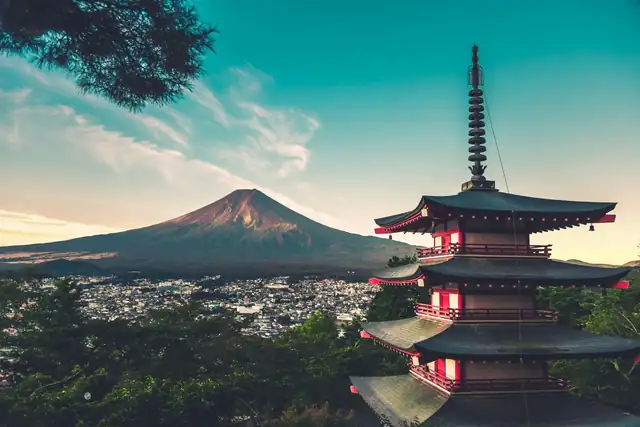 静岡
静岡 富山
富山 新潟
新潟 福井
福井