

On this page
Iwate Travel Guide: Pure Land Temples, Iron Craft & The Rugged Sanriku Coast
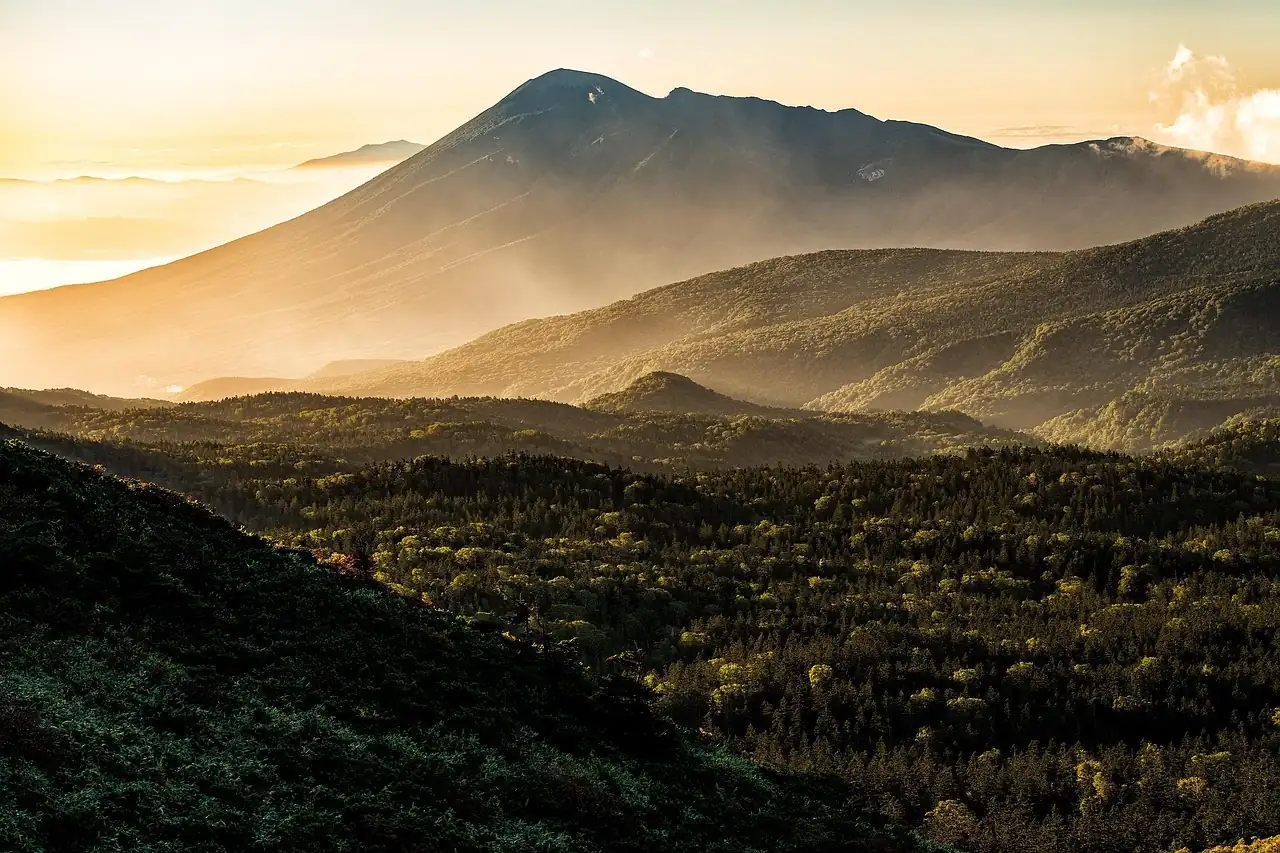
Covering more than 15,000 square kilometers, Iwate Prefecture (岩手県) is the second-largest prefecture in Japan (behind only Hokkaido) and the most sparsely populated on the main island of Honshu. Historically comprising ancient Rikuchū Province and sections of Mutsu, this vast northeastern realm is bounded by the soaring volcanic crest of Mount Iwate (the "Nanbu Fuji") and the jagged, wave-lashed cliffs of the Pacific Sanriku Coast. Long insulated from the political upheavals of central Japan, Iwate cultivated an independent, deeply mystical identity rooted in animist folklore, Kenji Miyazawa's poetic fairy tales, and master cast-iron metallurgy.
During the twelfth century, the legendary Northern Fujiwara clan transformed the southern valley of Hiraizumi into a grand cultural capital rivaling Kyoto. Guided by the tenets of Pure Land Buddhism, they sought to manifest a peaceful, classless Buddhist paradise on Earth, leaving behind the radiant gold-leaf sanctuary of Chūson-ji Konjikidō. Today, Iwate balances its monumental UNESCO heritage with untamed landscapes: from the limestone gorges of Geibikei and the volcanic hot spring snows of Hachimantai to the dramatic sea stacks of Jōdogahama and the frantic, stacking hospitality of Wanko Soba. Accessible via the Tōhoku Shinkansen in just over two hours from Tokyo, Iwate is an expansive frontier of deep-north tranquility.
Navigating Iwate Prefecture: Core Geographic Sectors
Because the Kitakami Mountains divide the prefecture vertically, transit runs along the central river valley and across scenic mountain passes to the coast:
| Sector | Primary Station Hubs | Landscape & Atmosphere | Key Highlights |
|---|---|---|---|
| Morioka & Northern Volcanoes | JR Morioka / Shizukuishi | Prefectural river capital, retro jazz cafes, Nanbu iron foundries, snow-capped volcanic ridges. | Morioka Castle Ruins (Iwate Park), Bank of Iwate Red Brick Building, Mount Iwate, Hachimantai Aspite Line. |
| Hiraizumi & Southern Valleys | JR Hiraizumi / Ichinoseki | Pure Land Buddhist temples, twelfth-century golden halls, sheer limestone river canyons, mochi feasts. | Chūson-ji (Konjikidō), Mōtsū-ji Pure Land garden, Geibikei Gorge, Genbikei Ravine (flying dango). |
| Sanriku Coastal Rim | Miyako / Kamaishi / Kuji | Jagged ria sea cliffs, white quartz beaches, deep ocean trenches, retro coastal railways, fresh seafood ports. | Jōdogahama Beach, Kitayamazaki Sea Cliffs, Sanriku Railway (Rias Line), Kosode Coast (Ama divers). |
| Tōno & Inland Folklore Basin | JR Tōno / Shin-Hanamaki | Misty agricultural mountain basin, water-sprite legends, thatched-roof L-shaped farmsteads, hot spring valleys. | Tōno Folklore Village, Kappa-buchi pool, Denshōen, Hanamaki Onsenkyo thermal valley. |
Top Things to Do Across Iwate
1. Step into the Pure Land Paradise of Chūson-ji Konjikidō
Perched amidst towering ancient cryptomeria cedars on Mount Kanzan in Hiraizumi, Chūson-ji is the crowning jewel of the Northern Fujiwara dynasty, inscribed as a UNESCO World Heritage site in 2011. Founded in 850 AD by the monk Ennin and vastly expanded in the early 1100s by Lord Fujiwara no Kiyohira, the temple was envisioned as a realm of universal peace to console the souls of all warriors who perished in northern border wars.
The ultimate spiritual and artistic wonder of the complex is the Konjikidō (Golden Hall), completed in 1124. Measuring just five-and-a-half meters on each side, this Amida memorial hall is completely coated inside and out in shimmering pure gold leaf, with the exception of its roof tiles. The interior showcases breathtaking Heian-period craftsmanship: altar pillars of African ivory and sandalwood inlaid with mother-of-pearl (raden), gold-lacquer reliefs (maki-e), and intricate openwork bronze fittings. Beneath the central altar rest the mummified remains of four generations of Northern Fujiwara lords. Today, the entire structure is permanently preserved within a climate-controlled concrete outer hall (Shin-Ōidō).
---
2. Punt Down the Towering Limestone Bluffs of Geibikei Gorge
Carved by the Satetsu River through ancient limestone rock outside Ichinoseki, Geibikei Gorge (Geibi Gorge) is a two-kilometer-long natural canyon flanked by sheer, vertical limestone cliffs rising over one hundred meters into the air. What makes Geibikei exceptional is its complete absence of motorized engines: sightseeing boats are flat-bottomed wooden punts navigated strictly by a single boatman using a long bamboo pole (sao) to push against the riverbed.
The 90-minute round-trip journey glides through mirror-like emerald water populated by wild carp and ducks beneath weeping wisteria vines and towering rock formations, such as the Lion’s Nose Rock (from which the gorge gets its name). Halfway through, passengers disembark to try Undama-nage (Lucky Pebble Throwing): purchase five small unglazed clay stones stamped with kanji characters (such as "Luck," "Love," or "Wealth") and attempt to throw them across the river into a natural hollow in the sheer limestone rock face on the opposite cliff. On the gentle return journey, the boatman serenades passengers with the haunting folk melody of the Geibi Oiwake, its acoustics echoing off the canyon walls.
---
3. Gaze Across the Heavenly White Rocks of Jōdogahama Beach
Located within Sanriku Fukkō National Park along the coast of Miyako, Jōdogahama ("Pure Land Beach") is one of the most famous coastal landmarks in Japan. In the late seventeenth century, a Buddhist monk named Reikō stood on the shore and famously proclaimed: "This is like the Pure Land of Amida Buddha," giving the bay its enduring name.
The beach is an extraordinary geological composition: a calm, wave-sheltered cove of smooth white quartz pebbles framing a series of jagged, stark-white volcanic rhyolite rock pinnacles rising out of the turquoise sea, crested with twisted, dark-green Japanese red pine trees. Visitors can walk the scenic shoreline trails, rent sea kayaks, or board small motorboats to venture inside the Blue Cave (Aonodōkutsu), where sunlight passing through an underwater sea arch illuminates the subterranean grotto in a brilliant, glowing cobalt blue.
---
4. Catch Flying Sweets at Genbikei Ravine
Located southwest of Ichinoseki along the Iwai River, Genbikei Ravine is a designated Place of Scenic Beauty characterized by dramatic potholes, rushing rapids, and deep emerald plunge pools carved through volcanic rock. Beyond its natural beauty, Genbikei is world-famous for Kakkō Dango ("Flying Dango").
Visitors stand on an open wooden gazebo on one side of the roaring river canyon, place money (approx. ¥500) into a wooden basket hanging from a high-tension cable that spans across the water to the Kakkō-ya teahouse on the opposite cliff, and strike a wooden board with a mallet to signal the shopkeeper. The basket is swiftly hand-winched across the gorge, returning moments later carrying a tray of freshly skewered rice dumplings (coated in sweet soy tare, red bean paste, and black sesame) alongside cups of hot green tea—without spilling a drop over the rushing rapids.
5. Hunt for Water Sprites in the Folklore Haven of Tōno
Tucked into an isolated mountain basin in central Iwate, the town of Tōno is the spiritual capital of Japanese folklore, immortalized in 1910 by folklorist Kunio Yanagita in his seminal collection Tōno Monogatari (The Legends of Tōno). For centuries, villagers passed down eerie oral tales of mountain witches (Yamauba), household spirits (Zashiki-warashi), and mythical river sprites known as Kappa.
At the temple of Jōken-ji, walk behind the main hall to Kappa-buchi—a quiet, shaded creek where kappa are said to lurk beneath floating leaves, pulling horses and travelers into the water. Visitors can purchase a humorous official "Kappa Catching Permit" from the local tourism board and dangle a bamboo fishing rod baited with a fresh cucumber into the stream. Nearby, explore Denshōen and the Tōno Furusato Village to inspect authentic Nanbu Magariya—massive, L-shaped thatched-roof farmhouses where living quarters and horse stables were integrated under a single roof so farming families could care for their prized horses during freezing winter snows.
6. Ride the Cliffside Rails of the Sanriku Railway (Rias Line)
Stretching 163 kilometers along the rugged Pacific coastline from Sakari in the south to Kuji in the north, the Sanriku Railway Rias Line is an iconic symbol of regional resilience. Following the devastating 2011 tsunami that destroyed tracks and bridges, the railway was painstakingly rebuilt with grassroots local and international support, fully reopening in 2019 as a continuous coastal artery.
The train click-clacks through long tunnels before emerging onto high bridges that look out over dramatic ria bays, deep fishing inlets, and sheer coastal headlands. The line is celebrated for its seasonal themed trains, including the winter Kotatsu Train (Kotatsu Ressha), where passengers sit under heated quilt tables inside retro wooden carriages, feasting on fresh sea urchin and abalone bento boxes while coastal Namomi demon performers entertain travelers.
7. Inspect Master Cast-Iron Art: Nanbu Tekki (Morioka)
The city of Morioka has been the premier center of Japanese cast-iron kettle and cookware manufacturing for over four hundred years. Established in the mid-seventeenth century when the Nanbu lords recruited master metal founders and kettle smiths from Kyoto, Nanbu Tekki (Nanbu Ironware) is celebrated worldwide for its durability, heat retention, and tactile rustic beauty.
Stroll past historic brick-and-timber workshops in the Konyachō district (such as Suzuki Morihisa Studio, operating since 1625) to watch artisans pour molten iron into hand-carved clay molds. Authentic Nanbu kettles (Tetsubin) are decorated with raised dimple patterns (arare) and naturally infuse boiled water with bioavailable iron, softening the water's taste for tea brewing.
Iwate Food Culture: Wanko Soba Battles, Morioka Noodles & Sanriku Seafood
Iwate boasts one of the most distinctive noodle cultures in East Asia, anchored by Morioka's "Three Great Noodles," alongside pristine catches from the cold currents of the Sanriku trenches:
- Wanko Soba (The Endless Bowl Challenge): Morioka’s most famous culinary ritual, born from ancient landlord hospitality traditions where hosts insisted guests eat until completely full. Diners sit at a table with small condiments (tuna sashimi, grated daikon, mushrooms, seaweed), attended by a dedicated server holding a tray of small lacquered bowls (wanko), each containing a single mouthful of buckwheat soba. The moment you slurp your noodles, the server instantly tosses another portion into your bowl with cheerful chants of "Hai, jan-jan!" or "Hai, dondon!" The goal is to see how many bowls you can consume; an average diner eats around 50 to 60 bowls, while surpassing 100 bowls earns a wooden certificate of achievement. The Golden Rule: The only way to end the meal is to slam the wooden lid over your empty bowl before the server can drop another portion inside.
---
- Morioka Reimen (Chilled Spicy Noodles): The second of Morioka’s Three Great Noodles, brought to the city in 1954 by Korean immigrant Aoki Teruhito. Unlike Japanese wheat noodles, Reimen noodles are made from potato starch and wheat flour, extruded through high-pressure nozzles to produce a translucent, pale noodle with a firm, bouncy chew. The noodles are served in an icy, rich beef-bone dashi broth topped with tender beef shank, boiled egg, kimchi, and a slice of seasonal sweet fruit (such as watermelon or pear) to balance the spicy kimchi heat.
- Morioka Jajamen: The third pillar of Morioka's noodle trinity. Thick, warm, flat wheat noodles are topped with a generous dollop of rich, dark, savory meat miso paste (niku-miso), diced cucumbers, and scallions. Diners customize their bowl with chili oil, grated garlic, and vinegar, mixing it thoroughly before eating.
- Chītantan (The Egg Soup Finish): When a few bites of noodles remain, diners crack a raw egg into the bowl, mix it with remaining miso, and hand it to the chef, who pours boiling noodle water over the mixture to create a comforting, velvety egg-drop soup.
- Sanriku Uni & Abalone: The cold Oyashio currents off the Sanriku Coast are lined with dense underwater forests of kombu kelp, creating premier feeding beds for Kita-Murasaki Uni (Sea Urchin) and wild Awabi (Abalone). In summer, try Kita-Murasaki Uni-don: fresh, sweet sea urchin served overflowing in bowls, or preserved in clean sterilized seawater inside glass milk bottles (Bin-iri Uni).
- Maesawa Beef (Maesawa-gyū): Reared in the southern town of Ōshū, Maesawa beef is a premier brand of certified Japanese Black wagyu. Fattened on local rice straw and beer mash, the beef features dense, intricate marbling with a low melting point, prized for sukiyaki, teppanyaki steaks, and lightly torched nigiri sushi.
Transportation: Bullet Train Corridors & Mountain Passes
Iwate's primary transportation backbone is the high-speed Tōhoku Shinkansen, which traverses the central valley:
- Tokyo to Morioka via Tōhoku Shinkansen:
- The Hayabusa Express races along the mainline at 320 km/h, linking Tokyo Station directly to JR Morioka Station in just 2 hours and 10 minutes. (Fully covered by the nationwide JR Rail Pass and JR East Tohoku Area Pass; all seats on Hayabusa are strictly reserved).
- To reach Hiraizumi, take the Shinkansen to JR Ichinoseki Station (approx. 1 hour 50 mins from Tokyo), transferring to the local JR Tōhoku Main Line for an 8-minute hop to JR Hiraizumi Station.
- Connecting Inland Valley to Sanriku Coast:
- JR Kamaishi Line: Connects Shin-Hanamaki Station eastward through the folklore town of Tōno to the coastal port of Kamaishi in roughly 1 hour and 45 minutes.
- JR Yamada Line: Runs from Morioka through deep mountain ravines to the coastal hub of Miyako (approx. 2 hours 15 mins).
- Hachimantai Aspite Line:
- A scenic 27-kilometer mountain highway traversing the volcanic plateau between Iwate and Akita. When the road reopens in mid-April, giant rotary plows carve a passage through winter drifts, creating a towering Snow Corridor (Yuki no Kairō) up to eight meters high that drivers and cyclists can navigate through late May.
- Digital Transit Cards (IC Cards): Major stations along the Tōhoku Shinkansen and local stations around Morioka accept digital Suica, Pasmo, and ICOCA cards loaded on smartphones. However, the Sanriku Railway and rural buses to remote gorges often require physical cash or local transit tickets.
Where to Stay in Iwate: Strategic Base Camps
| Base Hub | Vibe & Atmosphere | Transit Connections | Accommodation Strategy |
|---|---|---|---|
| JR Morioka Station Core | Lively prefectural capital, retro kissaten coffee houses, craft breweries, rapid Shinkansen junction. | Tōhoku & Akita Shinkansen; JR Tōhoku, Yamada, and Tazawako lines. | High density of modern, efficient Japanese business hotels (multiple central APAs), railway towers, corporate lodgings. |
| Hanamaki Onsenkyo (Valley) | Historic mountain river ravine, therapeutic hot springs, connections to poet Kenji Miyazawa. | Tōhoku Shinkansen (Shin-Hanamaki); free ryokan shuttles from Hanamaki Station. | Sprawling traditional hot spring (onsen) ryokans featuring open-air riverside rock baths (such as Osawa Onsen and Namari Onsen) and seasonal kaiseki dining. |
| Hiraizumi & Ichinoseki (South) | Sacred temple tranquility, peaceful pastoral surroundings, immediate access to Chūson-ji. | Tōhoku Shinkansen (Ichinoseki); JR Tōhoku Main Line (Hiraizumi). | Traditional Japanese country inns, comfortable station-front business hotels, local guesthouses. |
| Miyako & Coastal Sanriku | Seaside fishing harbor, ocean sunrises over white rock sea stacks, fresh seafood dining. | Sanriku Railway Rias Line; JR Yamada Line. | Coastal resort hotels overlooking Jōdogahama, traditional seaside ryokans featuring fresh abalone and sea urchin banquets. |
Regional Day Trips Across Iwate Prefecture
1. Mōtsū-ji: The Pure Land Garden of Reflection
Located just one kilometer south of Chūson-ji in Hiraizumi, Mōtsū-ji was once a colossal temple compound housing forty halls and five hundred monastic residences. While the original wooden structures were lost to medieval fires, its magnificent eighth-century Jōdo Teien (Pure Land Stroll Garden) remains preserved in its original Heian layout, centered around the sprawling Oizumi ga Ike pond.
The garden was engineered according to the principles of the Sakuteiki (Japan’s oldest landscape design manual): artificial stone beaches, rocky peninsulas (Dejima), and rugged crags represent coastal shores and spiritual islands in the Western Paradise. In late May, the garden hosts the Gokusui no En (Winding Stream Poetry Party), where scholars dressed in ornate Heian court robes sit along a winding stone brook, composing classical waka poetry before floating lacquer sake cups drift past.
2. The Kitayamazaki Sea Cliffs
Stretching for eight kilometers along the northern Sanriku Coast in Tanohata, the Kitayamazaki Sea Cliffs are often described as the most dramatic ocean precipices in Japan. Sheer volcanic rock bluffs plunge two hundred meters (650 feet) vertically into the crashing Pacific surf.
Visitors can view the jagged rock towers and natural sea caves from three elevated wooden observation decks perched high in the pine forests, or hike down a steep staircase of 736 steps to the water's edge. For an ocean perspective, small local fishing boats (Sappa-bune) take travelers through narrow channels right up to the base of the towering cliffs.
3. Ryūsendō Cave: The Subterranean Azure Lakes
Located in the wooded mountains of Iwaizumi, Ryūsendō is recognized as one of Japan's "Three Great Limestone Caves," designated a National Natural Monument. While more than four kilometers of the subterranean cave system have been surveyed, only a fraction is open to public wooden walkways.
The defining wonders are its deep subterranean lakes, fed by crystal-clear underground rivers filtered through thick limestone strata. The Third Underground Lake reaches a depth of thirty-five meters, while the Fourth Lake (viewed via observation lighting) plunges over one hundred meters into darkness. The water possesses astonishing clarity, illuminated by LED lights that turn the subterranean chambers into glowing pools of emerald and sapphire blue (Dragon Blue).
Best Seasons to Visit Iwate
- Autumn (October to Early November): The premier season for weather and visual spectacle. Crisp, sunny skies, low rainfall, and temperate sightseeing weather averaging 13°C to 18°C (55°F–64°F). The ancient cedar forests of Chūson-ji, the limestone walls of Geibikei Gorge, and the river ravines of Hanamaki blaze in brilliant shades of yellow, gold, and scarlet.
- Spring (Late April to Early May): A magnificent season of cherry blossoms. Because of its northern latitude, sakura blooms in late April, coinciding with Golden Week. Over ten thousand cherry trees bloom along the two-kilometer riverside promenade of Tenshōchi Park in Kitakami (ranked among Japan's top 100 sakura spots), where colorful carp streamers flutter above the river, accompanied by horse-drawn carriage rides under blooming tunnels.
- Early June (Chagu Chagu Umakko Festival): A beloved cultural festival celebrating Iwate’s historical bond with its horses. Over one hundred farm horses, elaborately adorned in colorful decorative saddles and hundreds of chiming brass bells (which make the characteristic "chagu-chagu" ring), parade fourteen kilometers from Sozen Shrine in Takizawa to Morioka Hachimangū Shrine.
- Winter (December to March): The ultimate deep-snow and hot spring season. Temperatures average -4°C to 3°C (25°F–37°F). The volcanic peaks of Appi Kogen and Hachimantai receive legendary dry powder snow (Aspite Snow), making Iwate a top-tier ski destination. It is the premier time to soak in rustic outdoor hot springs amidst snowbanks, feast on piping-hot bowls of Morioka Reimen and Wanko Soba, and ride the heated Kotatsu Train along the Sanriku Coast.
- Summer (July to August): Breezy and coastal. While inland Morioka reaches daytime highs of 30°C (86°F), sea breezes keep the Sanriku coast comfortable (23°C–26°C / 73°F–79°F). Summer brings the harvest of fresh Kita-Murasaki sea urchin, clear waters for kayaking at Jōdogahama, and the high-energy Morioka Sansa Odori Festival (August 1–4), where tens of thousands of taiko drummers parade down the avenues in the world's largest simultaneous drum dance.


 宮城
宮城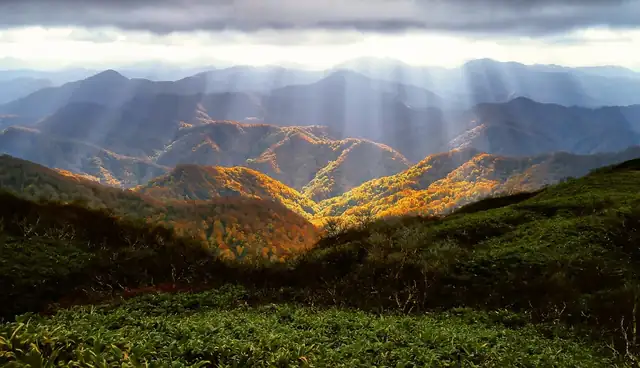 青森
青森 山形
山形 福島
福島 磐梯
磐梯 秋田
秋田