

On this page
Toyama Travel Guide: 3,000-Meter Alpine Peaks, Subsea Trenches & Bioluminescent Bays
Nestled along the central coast of the Sea of Japan in the Hokuriku region, Toyama Prefecture (富山県) possesses one of the most extreme vertical topographies on earth. Within a horizontal distance of just fifty kilometers, the landscape surges from the abyssal depths of Toyama Bay—a submarine canyon plunging over 1,000 meters into icy waters—to the soaring, snow-crested granite wall of the Northern Japan Alps (Tateyama Mountain Range), which breaches 3,000 meters into the sky. This sheer 4,000-meter elevation differential acts as a monumental natural distillery: moist oceanic winds strike the alpine peaks, dumping monumental winter snowpacks that melt into some of the purest, mineral-rich soft water in the world.
Historically designated as Etchū Province, Toyama forged a distinctive identity shaped by isolation, deep snow, and medicinal ingenuity. In the Edo period, the enterprising Maeda daimyo of Toyama established the famous Toyama no Kusuriuri (itinerant medicine peddlers), who crossed the empire with wicker packs using a deposit-first, pay-after-use sales model that laid the foundations of modern Japanese logistics and pharmaceuticals. Today, Toyama is globally celebrated for the monumental engineering of the Tateyama Kurobe Alpine Route—famed for its twenty-meter carved snow walls and the colossal Kurobe Dam—alongside the UNESCO-listed thatched mountain hamlets of Gokayama, the nostalgic timber storehouses and master copper foundries of Takaoka, and a seafood terroir nicknamed "Nature’s Fish Tank." Connected directly to Tokyo via the Hokuriku Shinkansen in roughly two hours, Toyama provides an unmatched alpine and maritime frontier.
Navigating Toyama Prefecture: Core Geographic Sectors
Toyama’s geography is shaped like an amphitheater opening north into Toyama Bay, framed by high mountain passes that divide travel into four well-defined corridors:
| Sector | Primary Station Hubs | Landscape & Atmosphere | Key Highlights |
|---|---|---|---|
| Toyama Bay & City Core | JR Toyama / Iwasehama | Modern canal city, light-rail transit trams, historic Meiji shipping port, pharmaceutical heritage, glass art. | Toyama Glass Art Museum (Kengo Kuma), Fugan Unga Kansui Park, historic Iwase merchant port, Toyama Castle park. |
| Tateyama & Kurobe Alpine Route | Dentetsu-Toyama / Tateyama / Unazuki-Onsen | 3,000-meter glaciated granite peaks, subalpine volcanic calderas, monumental dams, deep river gorges. | Yuki-no-Ōtani (Snow Wall), Murodo plateau & Mikurigaike, Kurobe Dam, Kurobe Gorge Railway (Torokko). |
| Takaoka & The Western Coast | JR Takaoka / Shin-Takaoka / Himi | Master metalcraft foundries, Great Buddha statues, dramatic sea-stack coastlines, coastal winter yellowtail ports. | Takaoka Daibutsu, Zuiryū-ji Temple (National Treasure), Amaharashi Coast, Kanayamachi lattice district, Himi fishing port. |
| Gokayama & Tonami Plain (South) | JR Johana / Ainokura / Suganuma | Steep river valleys, UNESCO thatched-roof gasshō-style farm hamlets, vast tulip bulb plains, dispersed agrarian settlements. | Ainokura Gasshō-zukuri Village, Suganuma Village, Tonami Tulip Park, Inami woodcarving quarter (Zuisen-ji). |
Top Things to Do Across Toyama
1. Walk Between the Glacial Towers of the Tateyama Snow Wall (Yuki-no-Ōtani)
Carving directly through the high-altitude volcanic plateau of Mount Tateyama (one of Japan's "Three Sacred Mountains," alongside Mount Fuji and Mount Haku), the Tateyama Kurobe Alpine Route is a world-renowned mountain traversal crossing the Northern Alps from Toyama into Nagano. The defining seasonal spectacle occurs at Murodo (the route’s highest station at 2,450 meters elevation), where colossal winter snowfalls accumulate across the roadway.
From mid-April through late June, specialized rotary snowplows equipped with GPS systems carve a two-lane vehicular highway through the packed snow drifts, creating Yuki-no-Ōtani (The Great Snow Wall). The resulting canyon of pure white carved snow towers up to twenty meters (65 feet) high. Visitors can walk along a dedicated pedestrian section of the road, touching the sheer, icy walls that showcase stratified layers of seasonal snow and sand dust carried from the Asian continent.
---
2. Marvel at the Hydroelectric Feat of Kurobe Dam
Completed in 1963 after seven years of grueling construction through hazardous tectonic fault lines and freezing water bursts (an epic industrial drama that claimed the lives of 171 workers), Kurobe Dam (Kurobe Dammu) is a monumental engineering triumph. Standing 186 meters tall, it holds title as the tallest arch-style concrete dam in Japan, holding back two hundred million cubic meters of alpine snowmelt in Lake Kurobe.
From late June through mid-October, the dam conducts its dramatic sightseeing water discharge (Kankō Hōsui), releasing more than ten tons of pressurized water every second from twin circular spillways. The torrent plunges into the canyon below in a thundering, mist-filled plume that creates perpetual double rainbows across the gorge. Visitors walk across the 492-meter crest of the dam, climbing 220 exterior concrete steps to the high observation deck for sweeping views of the Northern Alps reflected in the turquoise reservoir.
---
3. Gaze Across the Waves to Alpine Peaks at the Amaharashi Coast
Located along the western shoreline of Toyama Bay in Takaoka, the Amaharashi Coast (Amaharashi Kaigan) offers one of the most extraordinary landscape compositions on earth. From the rocky, pine-fringed coastal beaches, visitors gaze across the breaking white surf and the solitary, tree-crested sea stack of Onnaiwa (Woman's Rock) to see the jagged, snow-capped wall of the Tateyama Mountain Range rising 3,000 meters straight out of the ocean.
There are only two or three places in the world where 3,000-meter alpine peaks can be viewed directly across an open ocean bay. The scenery was immortalized in the eighth-century Man'yōshū poetry anthology by statesman Ōtomo no Yakamochi. On clear, freezing winter mornings (particularly December through February), cold air passing over warmer bay waters creates Kearashi—a mystical morning sea smoke that glides across the water surface, wrapping the sea stack in white fog while the Alps glow pink in the dawn sunrise.
---
4. Ride the Open-Air Torokko Trains of Kurobe Gorge
Carving a sheer V-shaped river canyon deep into the Northern Alps, Kurobe Gorge (Kurobe Kyōkoku) is recognized as the deepest V-shaped gorge in Japan. The canyon is explored aboard the Kurobe Gorge Railway (Kurobe Kyōkoku Tetsudō), a vintage, narrow-gauge railway originally built in the 1920s to haul construction materials for hydroelectric power stations.
Departing from the thermal resort of Unazuki Onsen, the small open-sided carriages (Torokko) wind 20.1 kilometers through forty-one tunnels and over twenty-one bridges, clinging to sheer granite cliffs high above the roaring, emerald-green Kurobe River. Key sights along the route include the bright red Shin-Yamabiko Bridge, the secluded outdoor riverside thermal baths of Kuronagi Onsen, and the sheer rock face of Nekomata. In autumn (late October to mid-November), the entire gorge erupts in a tapestry of fiery crimson maples and golden beeches.
5. Step into Timeless Gasshō Hamlets in Gokayama
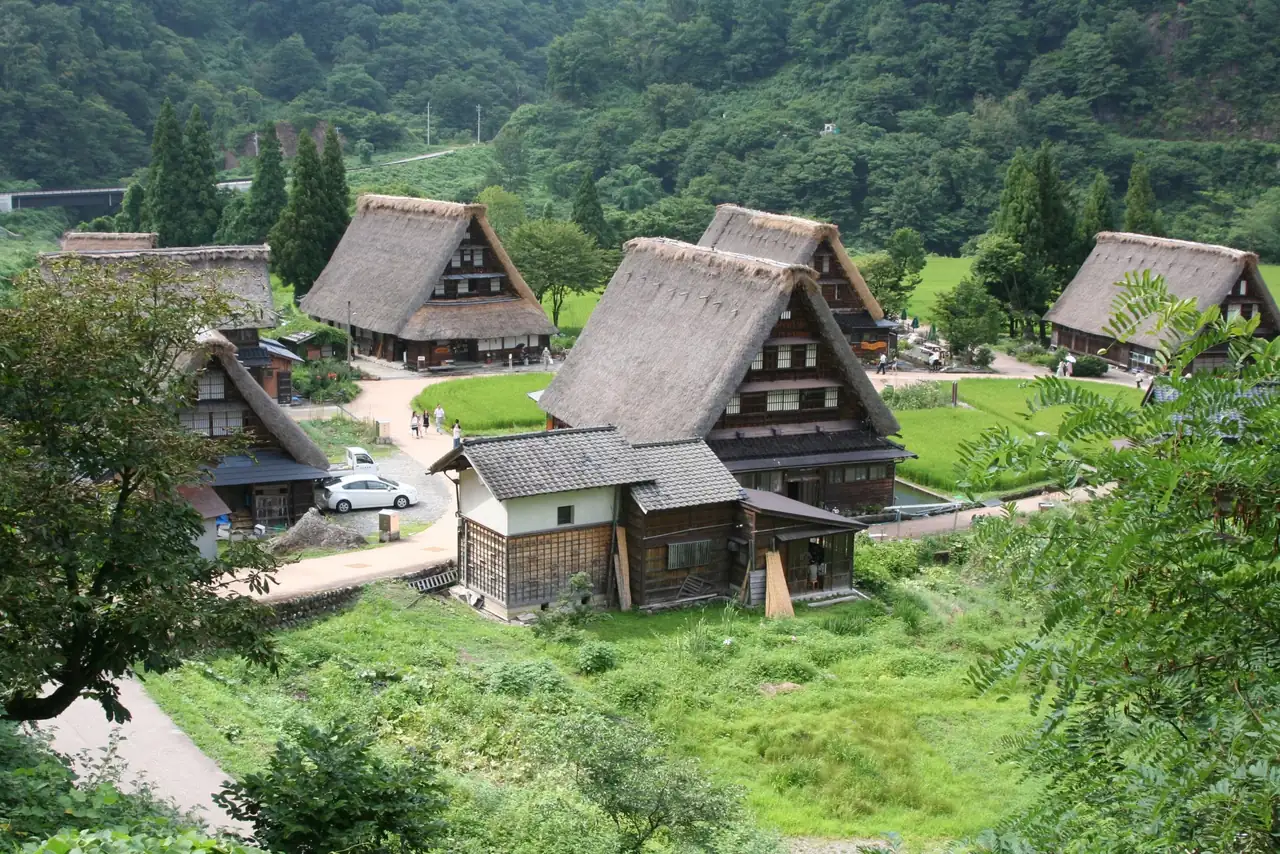
Tucked deep into the secluded mountain ravines of the Shogawa River in southwestern Toyama, the rural hamlets of Ainokura and Suganuma make up the Gokayama portion of the UNESCO World Heritage site shared with neighboring Shirakawa-go. Like their Gifu counterparts, the homes are built in the iconic Gasshō-zukuri ("constructed like hands in prayer") style, featuring steep 60-degree thatched roofs made from mountain pampas grass, engineered without nails to shed several meters of heavy, wet winter snow.
Because Gokayama sits in deeper mountain isolation, it receives a fraction of the tour bus crowds of Shirakawa-go, preserving a quiet, living agrarian rhythm. In feudal times, the remote valley was an exile territory for political prisoners and a secret production base for high-grade gunpowder saltpeter and durable, mulberry-fiber Gokayama Washi paper. Visitors can stroll along the unpaved rice paddy lanes, tour historic museum homes like the Murakami House (where owners demonstrate the Sasara, a traditional wooden rattle instrument used during the ancient Kokiriko folk dance), or arrange an authentic overnight stay inside a family-run thatched minshuku.
6. Inspect Zen Masterpieces and Bronze Foundry Arts in Takaoka
Founded in 1609 by Maeda Toshinaga (the second lord of the Kaga Domain), the western city of Takaoka is a major center of historical Zen spirituality and precision metal craftsmanship:
- Zuiryū-ji Temple: A designated National Treasure and the family temple of the Maeda clan. Constructed in pristine Sōtō Zen symmetrical geometry, the compound features an imposing Sanmon gate, Butsuden (Buddha Hall), and Hōdō (Dharma Hall) linked by covered wooden cloister corridors, set around manicured white gravel courtyards and lead-shingled timber roofs.
- Takaoka Daibutsu (Great Buddha): Standing sixteen meters tall in the city center, this seated bronze Buddha was cast by local artisans in 1933 following fires that destroyed two previous wooden incarnations. Renowned for its calm, remarkably handsome facial features, poet Akiko Yosano famously praised it as "more handsome than the Great Buddhas of Nara and Kamakura."
- Kanayamachi & Cast Metal Heritage: Takaoka produces over ninety percent of all cast copper and bronze crafts in Japan, including temple bells, Buddhist altars, and modern interior wares. Stroll through Kanayamachi, the city’s oldest metalcasting quarter, where narrow stone-paved streets are lined with Edo and Meiji-period merchant houses featuring delicate Senbon-kōshi (thousand-slat wooden lattice screens), visiting active brass ateliers like Nousaku to try sand-casting pewter sake cups.
7. Walk the Architectural Masterpieces of Toyama City
Reconstructed after wartime devastation, Toyama City has emerged as an internationally acclaimed model for "compact city" urban design, anchored by an ultra-modern light rail tram network:
- Toyama Glass Art Museum: Located inside the stunning TOYAMA Kirari complex designed by master architect Kengo Kuma. The building features an exterior facade of glass panels, granite, and aluminum that reflect changing sky conditions. Inside, a soaring, diagonal multi-story atrium lined with local cedar timber louvers houses the Glass Art Garden, showcasing monumental, vibrant glass installations by American master Dale Chihuly.
- Fugan Unga Kansui Park: A waterfront park centered around a historic canal basin linked by the iconic red-brick Tenmon-bashi Bridge. The park is home to a glass-walled Starbucks location consistently celebrated as one of the most beautiful in the world, where visitors sip coffee while watching solar-powered sightseeing boats glide down the canal toward the historic sea port of Iwase.
Toyama Food Culture: The Subsea Jewelry Box & Black Ramen
Toyama Bay is celebrated across Japan as a natural "fish tank" (Toyama-wan no Sakana). Because the ocean floor plunges over 1,000 meters immediately offshore, cold subarctic deep-sea water (Nihonkai Koyu-sui) brimming with nutrients is trapped beneath warmer surface currents, yielding extraordinary marine delicacies:
- Shiro-Ebi (The Jewel of the Glass Sea): Toyama Bay is the only place in the world where Shiro-Ebi (White Glass Shrimp) are caught commercially in significant quantities. Harvested from deep subsea ravines between April and November, these tiny, translucent pinkish-white shrimp measure roughly five to eight centimeters long. Peeling them requires extraordinary hand-skill; eaten raw as sashimi, they deliver a melting, velvety texture and an intense natural sweetness. They are also deep-fried whole with light salt as crispy Kakiage tempura or pressed into crisp rice crackers.
- Hotaru-Ika (Bioluminescent Firefly Squid): From late March through early June, millions of tiny Hotaru-Ika rise from the deep 300-meter ocean abyss to the shallow waters of Toyama Bay to spawn. The squid possess hundreds of tiny light-emitting photophores along their tentacles and bodies, creating an ethereal, glowing electric-blue light show in the water at night. Savor them freshly boiled with sweet vinegared miso (Sumiso), grilled over binchōtan charcoal, cured raw in salt (Shiokara), or eaten as tempura in coastal towns like Namerikawa.
- Himi Kan-Buri (Winter Yellowtail): From November through February, mature wild yellowtail migrate south from Hokkaido to feed in the cold waters off Himi. To withstand freezing currents, the fish develop extraordinarily thick layers of snowy, sweet fat. Himi Buri is landed using traditional fixed coastal nets (Seto-ami) that prevent stress and bruising. Connoisseurs enjoy it as Buri Shabu: paper-thin ribbons of fatty raw yellowtail swirled for three seconds in boiling kelp broth to melt surface fat, dipped in ponzu, or eaten as rich sashimi with freshly grated wasabi.
- Masuzushi (Trout Sushi): Toyama’s most iconic regional culinary souvenir, dating back to 1717 when it was gifted to Tokugawa Yoshimune. Seasoned strips of pink trout (Sakura-masu) are layered atop a circular bed of Toyama koshihikari vinegared rice, wrapped tightly in green bamboo leaves (sasa), and pressed inside a circular cedar wooden box with bamboo splits and rubber bands. Diners cut the round cake into triangular wedges like a pizza; the bamboo leaves impart a clean, refreshing forest aroma to the rich, slightly cured fish.
- Toyama Black Ramen: Invented in 1955 at the eatery Taiki, this distinct noodle dish was originally created as a high-salt, hearty meal for manual laborers reconstructing the city after the war. The soup features an intensely concentrated, jet-black broth brewed from dark soy sauce and chicken bones, aggressively dusted with coarse black pepper, loaded with salty chashu pork, thick menma bamboo shoots, and heaps of chopped raw scallions. It is designed to be eaten alongside a bowl of white rice to balance the bold, salty punch.
Transportation: Hokuriku Shinkansen & Light Rail Infrastructure
Toyama boasts exceptional high-speed bullet train connectivity from Tokyo and Osaka, paired with Japan's most advanced light rail streetcar web:
- Tokyo to Toyama via Hokuriku Shinkansen:
- Kagayaki Express: High-speed bullet train connects Tokyo Station directly to JR Toyama Station in just 2 hours and 8 minutes. (Fully covered by the nationwide JR Rail Pass and JR East/West Hokuriku passes; all seats on Kagayaki are strictly reserved).
- Hakutaka Service: Semi-fast bullet train service connecting Tokyo to Toyama in roughly 2 hours and 30 minutes, stopping at Karuizawa, Nagano, and Joetsu-Myoko.
- Connecting to Kanazawa & Kyoto/Osaka:
- To Kanazawa: The Hokuriku Shinkansen connects Toyama to JR Kanazawa Station in just 19 minutes.
- To Osaka/Kyoto: Take the Hokuriku Shinkansen from Toyama to the transfer hub at Tsuruga, transferring directly across the platform to the JR Thunderbird Limited Express onward to Kyoto (approx. 2 hours 15 mins total) and Osaka (approx. 2 hours 45 mins total).
- Tateyama Kurobe Alpine Route Logistics:
- Western Gateway (Toyama side): Board the Toyama Chihō Railway from Dentetsu-Toyama Station to Tateyama Station (approx. 60 mins). From there, travelers transfer sequentially across six distinct alpine transport modes: cable cars, highland buses, the Tateyama Tunnel Trolley Bus, the ropeway, and Kurobe underground cable car to cross over the dam into Nagano.
- Luggage Forwarding (Kaisō): Dedicated luggage forwarding services operate between Toyama Station and Shinano-Omachi Station / Nagano Station, allowing you to traverse the mountain pass carrying only a daypack while your suitcases are forwarded to your destination hotel.
- Toyama City Tramway & Portram: Toyama’s light rail tram system runs right through the ground level of JR Toyama Station. Trams connect the station directly to the Toyama Glass Art Museum, castle park, and the historic northern harbor of Iwasehama. Streetcars and JR lines accept digital Suica, Pasmo, and ICOCA cards loaded on smartphones.
Where to Stay in Toyama: Strategic Base Camps
| Base Hub | Vibe & Atmosphere | Transit Connections | Accommodation Strategy |
|---|---|---|---|
| JR Toyama Station Core | Modern urban hub, multi-story shopping complexes, immediate Shinkansen access, lively izakayas. | Hokuriku Shinkansen; Toyama Chihō Railway; light rail tram terminal. | High density of modern, efficient Japanese business hotels (multiple central APAs), railway tower hotels, sleek design properties. |
| Unazuki Onsen (Kurobe Gorge) | Steamy river canyon village, historic thermal bathhouses, gateway to the open-air Torokko trains. | Toyama Chihō Railway terminus (approx. 50 mins from Toyama). | Traditional hot spring (onsen) ryokans featuring open-air cedar baths overlooking the Kurobe River and fresh seafood banquets. |
| Takaoka Core | Historic artisan foundry atmosphere, quiet merchant avenues, walking access to Great Buddha. | Hokuriku Shinkansen (Shin-Takaoka); JR Ainokaze Toyama Railway. | Clean, cost-effective station-front business hotels, boutique heritage guesthouses. |
| Gokayama Hamlets (Ainokura) | Peaceful alpine seclusion, night tranquility under thatched roofs once day visitors depart. | World Heritage Bus from Shin-Takaoka / Takaoka Station. | Authentic family-run Gasshō-zukuri farmstay minshuku featuring hearth-cooked mountain vegetable (sansai) and river fish dinners. |
Regional Day Trips Across Toyama Prefecture
1. Inami: The Woodcarving Capital of Japan
Located in Nanto in southern Toyama, Inami is celebrated as the undisputed woodcarving center of Japan. Following a catastrophic fire in 1790 that destroyed the grand Buddhist temple of Zuisen-ji, master sculptors from Kyoto were dispatched to rebuild the halls, passing their techniques down to local apprentices. Today, the paved main street of Yokamachi-dori resonates with the rhythmic tapping of mallets and chisels echoing from over two hundred master woodcarvers’ ateliers.
Stroll past stone paths lined with wooden workshop signs, lantern brackets, and mailbox stands intricately hand-carved with dragons, phoenixes, and flowers. Tour Zuisen-ji to inspect the magnificent Sanmon Gate, celebrated for its Karanishiki wooden transoms carved in three-dimensional relief, displaying dragons that appear to leap out of the timber.
2. The Tonami Tulip Plains
Every spring, the flat agricultural plains of Tonami burst into an ocean of color. Toyama is the leading producer of tulip bulbs in Japan, cultivating flowers since 1918 thanks to abundant snowmelt irrigation and cool coastal springs. From late April through early May, the Tonami Tulip Fair showcases more than three million blooming tulips representing three hundred varieties, arranged in colossal geometric petal carpets, elevated wooden viewing towers, and floating flower beds set upon river channels.
3. Kaiwomaru Park & The Shinminato Bridge
Positioned on the eastern coast of Imizu overlooking Toyama Bay, Kaiwomaru Park is centered on the magnificent Kaiwomaru—a historic four-masted sailing ship constructed in 1930 as a training vessel for the merchant marine, nicknamed the "Lady of the Sea." The vessel is permanently moored along the waterfront, unfurling all twenty-nine sails on designated festival days. Walking along the waterfront promenade offers sweeping views of the massive cable-stayed Shinminato Bridge, framed against the distant white peaks of the Tateyama range.
Best Seasons to Visit Toyama
- Spring (Mid-April to May): The premier season for iconic alpine and maritime spectacles. Mid-April marks the grand opening of the Tateyama Kurobe Alpine Route and the 20-meter Yuki-no-Ōtani Snow Wall. Down along the coast, cherry blossoms bloom along the Matsukawa River in Toyama City, the Tonami Tulip Fair takes place, and fishing fleets net glistening catches of bioluminescent Firefly Squid (Hotaru-Ika) and Shiro-Ebi shrimp.
- Autumn (October to Early November): The best weather for trekking and scenic train rides. The maple and beech canopies across Kurobe Gorge, Mount Tateyama, and the river valleys of Gokayama blaze in brilliant shades of yellow, gold, and scarlet. Comfortable, crisp sightseeing weather averaging 14°C to 19°C (57°F–66°F).
- September 1–3 (Owara Kaze no Bon Festival): Toyama’s most mysterious and melancholic traditional festival, held in the hilly cobblestone streets of Yatsuo. To appease autumn typhoons and pray for bountiful rice harvests, townspeople wearing low-brimmed braided straw hats (amigasa) dance slowly and silently through lantern-lit streets to the haunting melodies of the kokyū (a traditional bowed string instrument) and shamisen throughout the night.
- Winter (December to February): The definitive culinary and hot spring season. Temperatures hover between -1°C and 6°C (30°F–43°F), burying the thatched roofs of Gokayama in several meters of white snow. Winter brings the absolute clearest atmospheric visibility to view the snow-capped Tateyama Alps across the Amaharashi Coast, while seafood lovers flock to Himi to feast on prized, fatty Himi Kan-Buri (winter yellowtail).
- Summer (July to August): The active alpine mountaineering season. With snow clearing from the high peaks, hikers conquer the 3,000-meter summits of Mount Tateyama and Mount Tsurugi. Down in the canyon, Kurobe Dam stages its massive, misty water discharge, while seaside towns along Toyama Bay host summer fireworks festivals.


 山梨
山梨 長野
長野 石川
石川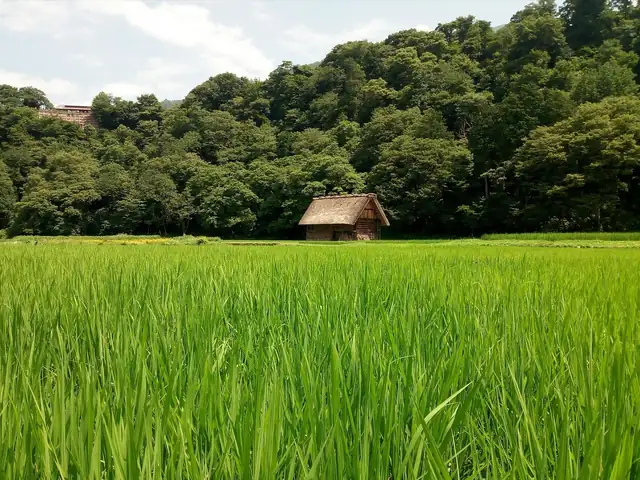 岐阜
岐阜 愛知
愛知 静岡
静岡 新潟
新潟 福井
福井