

On this page
Yamagata Travel Guide: Mountain Monasteries, Taisho Onsens & Frozen Monsters
Positioned along the Sea of Japan coast in the southwestern quadrant of the Tōhoku region, Yamagata Prefecture (山形県) is a dramatic highland sanctuary framed by the volcanic peaks of the Ōu Mountain Range to the east and the sacred massif of Mount Gassan to the west. Historically comprising the ancient province of Uzen and part of Ugo, Yamagata’s interior is characterized by deep, fertile alluvial basins—Murayama, Mogami, and Okitama—connected to the coastal Shōnai Plain by the rushing, silty torrents of the Mogami River.
Yamagata is globally renowned for its profound mountain ascetic traditions, Taisho-era hot spring enclaves, and colossal winter snowfalls. It is the sacred sanctuary of the Dewa Sanzan (Three Mountains of Dewa)—Mounts Haguro, Gassan, and Yudono—where white-clad Yamabushi mountain hermits have practiced nature veneration and death-and-rebirth pilgrimages for over fourteen centuries. Along its mountain passes, the gas-lit wooden inns of Ginzan Onsen evoke nostalgic cinematic romance, while the clifftop wooden sanctuaries of Yamadera inspired haiku master Matsuo Bashō. In winter, freezing Siberian gales blowing across the peaks of Mount Zaō encase high-altitude alpine firs in towering coats of rime ice, creating the world-famous Juhyō (Snow Monsters). Positioned along the Yamagata Shinkansen line, Yamagata delivers an immersive dive into northern Japan's spiritual roots, orchard bounties, and thermal heritage.
Navigating Yamagata Prefecture: Core Geographic Sectors
Because jagged mountain ranges isolate each river basin, travel in Yamagata naturally follows four distinct geographic quadrants:
| Sector | Primary Station Hubs | Landscape & Atmosphere | Key Highlights |
|---|---|---|---|
| Murayama & Central Valley | JR Yamagata / Tendō / Yamadera | Prefectural castle capital, clifftop monasteries, shogi wooden chess workshops, fruit orchard plains. | Yamadera (Risshaku-ji), Kajo Park (Yamagata Castle), Bunshōkan, Tendō shogi ateliers. |
| Zaō & Ginzan Thermal Belt | Yamagata / Ōishida (Bus access) | Active volcanic ridges, sulfur hot spring valleys, Taisho-era riverfront wooden ryokans, winter snow monsters. | Ginzan Onsen, Zaō Onsen, Zaō Ropeway (Juhyō / Snow Monsters), Okama Crater Lake (shared with Miyagi). |
| Shōnai Coastal Plain (West) | JR Tsuruoka / Sakata | Ancient mountain ascetic forests, sacred five-story wooden pagodas, historic rice storehouses, cold-water fisheries. | Dewa Sanzan (Mount Haguro five-story pagoda), Sankyo Rice Storehouses, Kamo Aquarium (jellyfish), Chidōkan. |
| Okitama & Mogami (South & North) | JR Yonezawa / Shinjō | Feudal samurai castle towns, world-famous wagyu ranches, riverboat cruise canyons, kabuki float museums. | Uesugi Shrine (Yonezawa), Yonezawa beef dining, Mogami River Gorge boat cruise, Shinjō Matsuri floats. |
Top Things to Do Across Yamagata
1. Ascend the 1,015 Stone Steps of Yamadera (Risshaku-ji)
Clinging to the sheer, weathered volcanic rock cliffs of Mount Hōjū northeast of Yamagata City, Yamadera—officially named Hōjūsan Risshaku-ji—is one of the most visually stunning Buddhist temple compounds in northern Japan. Founded in 860 AD by the Tendai monk Jikaku Daishi (Ennin) under imperial patronage, the temple spans a vertical mountain slope surrounded by ancient Japanese cedars and weathered meditation caves.
Visitors embark on a spiritual ascent up 1,015 ancient stone steps through the forest. Along the way, the path passes the Mida-hora rock outcrop and monumental stone lanterns, culminating at the clifftop Godaidō Observation Platform. This unpainted, cantilevered wooden balcony hangs precariously over the valley, rewarding climbers with a sweeping, panoramic view across the patchwork farming villages and jagged emerald mountain ridges of the Murayama basin below.
Near the summit perches the vermilion Nokyōdō (Sutra Copying Hall), resting on a rocky crag jutting into empty air. It was here in 1689 that poet Matsuo Bashō penned his iconic haiku on his journey through the deep north: "Stillness— / sinking into the rocks, / the cicada's cry." (Shizukasa ya / iwa ni shimiiru / semi no koe).
---
2. Step into Taisho Nostalgia at Ginzan Onsen
Tucked into a narrow, secluded mountain ravine outside Obanazawa, Ginzan Onsen ("Silver Mountain Hot Spring") is widely considered one of the most picturesque hot spring hamlets in Japan. Originally developed around a booming silver mine during the early Edo period, the town was rebuilt following a catastrophic flood in 1913 into a remarkably unified streetscape of three- and four-story wooden ryokans lining the rushing Ginzan River.
The architecture blends traditional Japanese timber construction with Taisho-era (1912–1926) Western motifs, featuring exposed dark timber post-and-beam facades, white plaster walls decorated with colorful raised plaster murals (kote-e), and delicate wooden railings. In the evening, the vehicle-free pedestrian street is illuminated solely by warm yellow gas lamps, casting soft reflections across the water and snowdrifts.
Walk across arched footbridges, soak your feet in the free riverside Warashiyu footbath, or rent an authentic Taisho-period hakama or kimono to stroll the snowy lane. At the head of the valley, explore the illuminated Shirogane Falls and step inside the mouth of the preserved Nobesawa Silver Mine tunnel.
---
3. Encounter the Frozen Giants: Mount Zaō Snow Monsters (Juhyō)
Perched high in the alpine peaks along the eastern border of Yamagata, Mount Zaō hosts one of the planet's rarest winter meteorological spectacles. Beginning in late December, prevailing sub-zero winter gales blowing from Siberia absorb moisture over the warm Tsushima Current in the Sea of Japan, striking the high-altitude forests of Maries' fir (Aomori-todomatsu) standing near the summit plateau at 1,600 meters elevation.
Supercooled water droplets and driving alpine snow freeze instantly upon contact with the fir needles and branches, accumulating horizontal rime ice into monstrous, sculpted white formations known as Juhyō (Snow Monsters). By late January and February, the trees are entombed in meters of solid ice and snow, resembling a silent army of mythical white creatures marching across the mountain plateau.
Travelers ride the Zaō Ropeway from Zaō Onsen to the summit station (Jizō Sanchō) to walk among the frozen giants. On select winter nights, the snow monster fields are illuminated in vivid multicolors, viewed from heated observation lounges or open-air summit viewing decks. Skiers and snowboarders can glide down the mountain directly through the winding snow monster corridors along the Juhyō Course.
---
4. Embark on Spiritual Rebirth at Dewa Sanzan
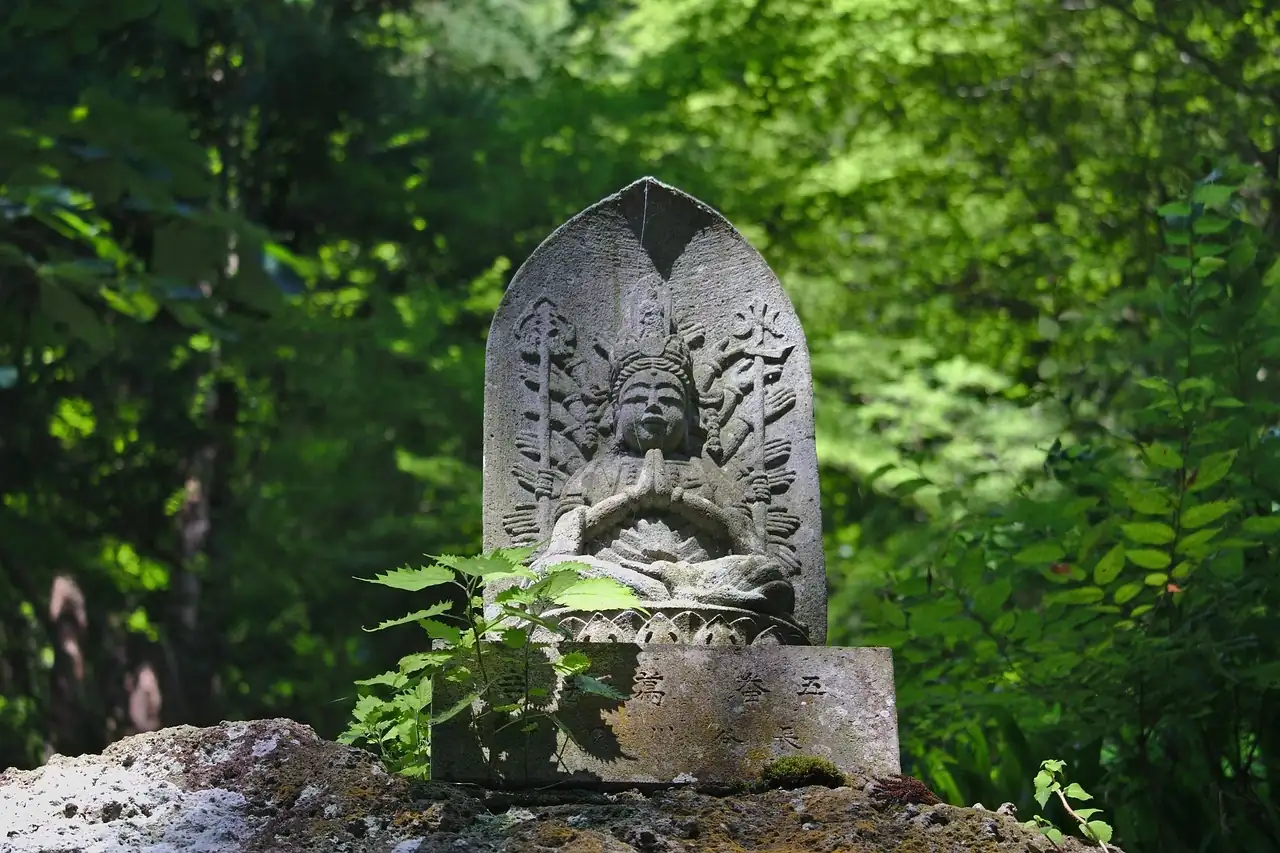
For more than 1,400 years, the Dewa Sanzan (Three Sacred Mountains of Dewa) in the western Shōnai region have served as the holy ground for Shugendō—a syncretic religion merging indigenous nature animism, Daoist magic, and esoteric Shingon/Tendai Buddhism. Pilgrims embark on an esoteric journey of spiritual rebirth: Mount Haguro represents the present world (birth); Mount Gassan represents the realm of the dead (death/past); and Mount Yudono represents spiritual rebirth (future):
- Mount Haguro (Hagurosan): The only peak accessible year-round. The sacred ascent begins at the Zuishinmon Gate, descending into an ancient forest of soaring cryptomeria cedars past the roaring Suga Falls. Standing in a forest clearing perches the Five-Story Pagoda of Mount Haguro (Hagurosan Gojūnotō). Constructed without a single nail in 1372 from unpainted natural cedar timber (a designated National Treasure), it is the oldest wooden pagoda in northeastern Japan. Conquer the 2,446 stone steps to reach the summit, home to Sanjin Gōsaiden—a colossal wooden shrine hall crowned with a massive, 2.1-meter-thick thatched reed roof, the largest thatched shrine building in Japan, enshrining the deities of all three mountains.
- Mount Yudono (Yudonosan): The most secret and sacred peak. Shinto law strictly forbids revealing what occurs within the shrine: "Do not speak, do not ask" (Kataru-nakare, kiku-nakare). Worshippers remove shoes and socks to walk barefoot over cold sacred stones to worship a massive, steaming red natural thermal rock outcrop.
5. Soak in the Ancient Sulfur Springs of Zaō Onsen
Located on the slopes of Mount Zaō, Zaō Onsen is a historic thermal resort founded in 110 AD by warrior Kibi no Tanoo. Fed by active volcanic vents, Zaō's waters are celebrated for having some of the most acidic mineral waters in Japan (pH 1.3 to 1.6), rich in dissolved sulfur, iron, and aluminum.
The cloudy, milky-white waters possess potent antibacterial and astringent properties, historically nicknamed Hime no Yu ("Princess Water") for leaving skin smooth and rejuvenating joints. The village is filled with steamy roadside footbaths and three historic communal public bathhouses (Kamiyu, Shimoyu, and Kawarayu). In the warmer months (late April to early November), visit the Zaō Dai-Rotenburo—a massive open-air mountain bath built directly along the rushing, rocky banks of a wild thermal river, accommodating hundreds of bathers beneath a forest canopy.
6. Drift the Historic Current of the Mogami River
Carving a wide, silty path through the heart of Yamagata out to the Sea of Japan at Sakata, the Mogami River (Mogami-gawa) has been the lifeblood of the prefecture for centuries. In feudal times, cargo riverboats transported high-grade rice and precious Benibana (safflower) red dyes downriver to coastal ports, where Kitamaebune merchant ships sailed them onward to Kyoto and Osaka.
Today, visitors board traditional flat-bottomed wooden passenger boats for the Mogami River Basho Line Cruise (Mogamigawa Funa-kudari). Over a peaceful one-hour journey through the sheer rock canyons of the Mogami Gorge, skilled boatmen steer through river bends using oars, singing melancholic local boat songs (Mogamigawa Funauta). The route passes cascading waterfalls, including the soaring 120-meter Shiraito Falls, surrounded by mountains that burst into brilliant orange and scarlet foliage in autumn.
7. Walk the Merchant Storehouses of Sakata: Sankyo Sōko
Located in the port city of Sakata where the Mogami River meets the Sea of Japan, the Sankyo Rice Storehouses (Sankyo Sōko) are a magnificent testament to Meiji-era commercial logistics. Constructed in 1893, this unified row of twelve black-plastered wooden storehouses was engineered to store hundreds of thousands of bags of Shōnai rice.
The complex is celebrated for its ingenious passive climate control architecture: double-layered wooden roofs allow continuous air circulation to regulate humidity, while the rear of the storehouses is lined with a majestic grove of towering Keyaki (Japanese zelkova) trees, planted to cast cooling shade in summer and shield the timber buildings from ferocious winter gales blowing off the Sea of Japan. Today, the storehouses house the Shōnai Rice Historical Museum and regional craft boutiques.
Yamagata Terroir: Prized Yonezawa Beef, Sweet Cherries & Imoni
Protected by high mountain walls that create hot summer basins, freezing snowy winters, and vast day-night temperature swings, Yamagata boasts an agricultural and livestock terroir celebrated across Japan:
- Yonezawa Beef (Yonezawa-gyū): Ranked alongside Matsusaka and Kobe as one of the Three Great Wagyu Beefs of Japan. Reared in the southern Okitama Basin around Yonezawa City, certified black cattle are fattened for over thirty-two months on local rice straw, wheat bran, and mineral-rich snowmelt water. The extreme seasonal temperature swings promote dense, ultra-fine intramuscular marbling with a low fat melting point. Savor it at historic establishments like Uesugi Hakushakutei, served as:
- Yonezawa Sukiyaki: Thick cuts of marbled beef lightly simmered in sweet soy sauce, mirin, and local miso dashi, dipped in beaten raw egg.
- Steak & Nigiri: Seared over binchōtan charcoal or lightly torched atop seasoned sushi rice.
- Yamagata Cherries (Satō Nishiki): Yamagata produces over seventy percent of all cherries grown in Japan. Cultivated in the Murayama Basin around Higashine and Sagae since 1875, Yamagata’s crown jewel is the Satō Nishiki variety, celebrated as the "Ruby of the Orchards." Harvested by hand in June and July, the cherries possess an exquisite balance of rich sweetness, subtle acidity, and thin, glossy skins. Orchards offer all-you-can-eat fruit-picking tours during early summer.
- Imoni (Yamagata Taro Stew): The definitive soul food of Yamagata, celebrated every autumn. Tender cubes of Satoimo (taro potato) are slow-simmered in a massive cauldron with thinly sliced beef, konjac knots, and sweet leeks.
- Regional Dividing Line: In inland basins (Yamagata City and Yonezawa), Imoni is flavored with a sweet soy sauce base with beef. On the coastal Shōnai Plain (Sakata and Tsuruoka), it is prepared with a miso broth base loaded with pork.
- The Giant Imoni Festival: Every September, Yamagata City hosts the Nihon-ichi no Imoni-kai along the dry riverbeds of the Mamigasaki River, simmering over six tons of taro stew in a colossal, six-meter-wide industrial iron cauldron stirred by a backhoe crane equipped with food-grade stainless-steel buckets.
- Yamagata Soba & Ita Soba: Yamagata is one of Japan's premier buckwheat regions. Buckwheat flour is stone-ground into thick, firm, rustic noodles known as Ita Soba, served chilled across large, flat, rectangular wooden cedar boxes (ita). The dark noodles possess a robust earthy chew and fragrance, dipped in concentrated bonito dashi accompanied by mountain vegetable tempura (sansai). In the town of Murayama, explore the famous "Soba Kaido" (Soba Highway) lined with historic family-run soba farmhouses.
- Cold Ramen (Hiyashi Rāmen): Invented in Yamagata City in 1952 at the ramen shop Sakaeya Honten to beat the oppressive, humid summer heat of the basin. Unlike standard hot ramen, the soup is a chilled, clear soy-and-beef dashi broth with plant-based oils that do not solidify when cold, served with ice cubes floating in the bowl alongside chewy ramen noodles, cucumber slices, and pickled bamboo shoots.
- Yamagata Sake (GI Yamagata): Yamagata was the very first prefecture in Japan awarded protected Geographical Indication (GI) status for sake. Blessed with soft snowmelt mountain runoff and local sake rice (such as Dewa Sansan and Yukimegami), Yamagata produces exceptionally clean, aromatic, fruity Ginjo and Daiginjo sakes (promoted by legendary breweries like Juyondai and Toko).
Transportation: The Yamagata Shinkansen & Mountain Rail
Yamagata is connected directly to Tokyo via a scenic "mini-shinkansen" line that winds directly through mountain passes:
- Tokyo to Yamagata via Yamagata Shinkansen (Tsubasa):
- The Yamagata Shinkansen (Tsubasa Express) departs Tokyo Station, racing north along the Tōhoku mainline before branching off at Fukushima onto converted narrow-gauge tracks directly into the mountain valleys of Yamagata.
- Reaches JR Yonezawa in 2 hours, JR Yamagata Station in 2 hours and 30 minutes, and terminates at JR Shinjō in roughly 3 hours and 15 minutes. (Fully covered by the nationwide JR Rail Pass and JR East Tohoku Area Pass).
- Reaching Yamadera:
- Board the JR Senzan Line from JR Yamagata Station to JR Yamadera Station in just 18 minutes (¥240). The trail entrance is a short, flat 5-minute walk from the station exit. (The same Senzan Line connects Yamadera directly onward to Sendai in Miyagi in roughly 55 minutes).
- Reaching Ginzan Onsen (The Transfer Logistics):
- Take the Yamagata Shinkansen to JR Ōishida Station.
- From Ōishida Station, board the local Ginzansen retro bus (approx. 40 minutes, ¥1,000) directly into Ginzan Onsen. Crucial Note: Most traditional ryokans provide complimentary private shuttle vans for staying guests coordinated with train arrival times at Ōishida Station (advance reservation required with your inn).
- Reaching Mount Zaō & Snow Monsters:
- Frequent Sankō Highway Buses depart from Yamagata Station Bus Stop 1 directly to Zaō Onsen Bus Terminal in 45 minutes (¥1,000). From the terminal, it is a 10-minute walk to the Zaō Ropeway base station.
- Digital Transit Cards (IC Cards): Major stations (Yamagata, Yamadera, Yonezawa) accept digital Suica, Pasmo, and ICOCA cards. However, rural bus lines to Ginzan Onsen, Dewa Sanzan, and regional taxi companies often require physical cash.
Where to Stay in Yamagata: Strategic Base Camps
| Base Hub | Vibe & Atmosphere | Transit Connections | Accommodation Strategy |
|---|---|---|---|
| JR Yamagata Station Core | Modern prefectural capital, multi-level retail shopping, rapid Shinkansen access, lively izakayas. | Yamagata Shinkansen; JR Senzan Line (to Yamadera/Sendai); JR Ōu Line; central bus terminal for Zaō. | High density of modern, efficient Japanese business hotels (multiple central APAs), railway towers, corporate lodgings. |
| Ginzan Onsen (Ravine Hamlet) | Romantic Taisho-era nostalgia, gas-lit river footbridges, pristine snowy serenity. | Bus or ryokan shuttle from JR Ōishida Station. | Historic multi-story wooden ryokans featuring natural sulfur hot spring baths and seasonal multi-course Obanazawa beef dining (requires booking months in advance). |
| Zaō Onsen (Alpine Village) | Steamy ski resort village, acidic mineral hot springs, direct cableway access to snow monsters. | Direct bus from Yamagata Station (45 mins). | Traditional hot spring ryokans with wooden open-air baths (rotenburo), mountain ski lodges, family-run pensions. |
| Tsuruoka & Shōnai Coast | Ancient ascetic gateways, seaside hot springs, creative UNESCO gastronomy. | JR Uetsu Main Line; Shōnai Airport (SYO). | Coastal hot spring ryokans (Yunohama Onsen), historic temple lodgings (Shukubō) at Mount Haguro, modern boutique hotels. |
| Yonezawa Core | Samurai heritage, quiet castle avenues, the global epicenter of Yonezawa beef dining. | Yamagata Shinkansen stop; JR Yonesaka Line. | Station-front business hotels, historic hot spring ryokans in neighboring Onogawa Onsen. |
Regional Day Trips Across Yamagata Prefecture
1. Tendō: The Shogi Woodcarving Capital
Located just fifteen minutes north of Yamagata City, Tendō produces over ninety-five percent of all Japanese shogi (chess) pieces crafted in Japan. In the late Edo period, samurai of the Tendai domain were encouraged to carve wooden shogi pieces to supplement their stipends. Today, visitors can walk down streets paved with shogi-tile mosaics and visit active craft ateliers to try Kaki-koma (hand-painting your own kanji calligraphy onto wooden shogi pieces with fine brushes and lacquer). Every April during the cherry blossom bloom, Tendō stages the famous Ningen Shōgi (Human Shogi) atop Mount Maizuru, where professional shogi masters direct costumed samurai warriors and maidens acting as living chess pieces on a colossal outdoor board.
2. Kamo Aquarium: The Jellyfish Dream House (Tsuruoka)
Perched on the rocky coastal cliffs of the Sea of Japan in Tsuruoka, Kamo Aquarium holds the Guinness World Record for the largest exhibition of jellyfish species in the world, displaying more than sixty distinct species. The centerpiece of the museum is the Kurage Dream Theater—a colossal circular observation tank measuring five meters in diameter, holding ten thousand translucent moon jellyfish floating against deep cobalt-blue water illuminated by ambient light. The aquarium also features seaside seals, coastal bird enclosures, and quirky culinary treats like jellyfish ice cream and ramen.
3. Uesugi Shrine & Matsugasaki Park (Yonezawa)
Standing on the former grounds of Yonezawa Castle, Uesugi Shrine (Uesugi Jinja) is dedicated to Uesugi Kenshin, one of the most revered and honorable military strategists of the Sengoku period. The shrine grounds are encircled by preserved castle moats lined with over two hundred somei-yoshino cherry trees. The adjacent Keishōden Treasure Hall exhibits thousands of authentic samurai artifacts, including Kenshin’s personal armor, iconic battle helmets, and calligraphy scrolls designated as National Treasures and Important Cultural Properties.
Best Seasons to Visit Yamagata
- Winter (January to Early March): The definitive season for atmosphere and winter spectacles. Temperatures average -3°C to 3°C (27°F–37°F). The fir trees of Mount Zaō reach peak form as towering Juhyō (Snow Monsters), while the gas-lit wooden inns of Ginzan Onsen are buried in pristine white snowdrifts. In February, Yonezawa hosts the Uesugi Snow Lantern Festival, where hundreds of hand-carved snow lanterns (yukitōrō) and thousands of candle-lit snow caves illuminate Matsugasaki Park.
- Autumn (October to Early November): The premier season for weather and vibrant foliage. The dense beech, maple, and cedar forests surrounding Yamadera, the Mogami River Gorge, and Mount Haguro explode in brilliant shades of yellow, gold, and scarlet. Pleasant, crisp sightseeing temperatures average 13°C to 18°C (55°F–64°F), coinciding with the autumn Imoni (taro stew) season along the riverbanks.
- Summer (Late June to Early August): Lush, green, and orchard-rich. Early summer marks the peak harvest for sweet Satō Nishiki cherries across the Murayama plains. In early August (August 5–7), Yamagata City hosts the high-energy Yamagata Hanagasa Festival (Hanagasa Matsuri), where ten thousand dancers wearing conical straw hats decorated with bright red safflower blooms parade down the avenues chanting "Yassho, Makksho!" to the rhythm of booming taiko drums.
- Spring (Mid-April to May): Late-blooming cherry blossoms. Because of its highland basins, sakura blooms in mid-to-late April. Over seven hundred cherry trees frame the restored dry-stone ramparts and moats of Yamagata Castle in Kajo Park, while the high mountain passes of the Dewa Sanzan gradually clear of snow to welcome white-clad pilgrims.


 宮城
宮城 青森
青森 福島
福島 磐梯
磐梯 秋田
秋田 岩手
岩手