

On this page
Ibaraki Travel Guide: Azure Flower Seas, Mito Samurai Legacies & Coastal Shrines
Stretching along the Pacific coastline of northeastern Kanto, Ibaraki Prefecture (茨城県) is a dynamic territory of rolling agricultural plains, ancient spiritual peaks, and expansive maritime bays. Historically known as Hitachi Province (with its southern wetlands forming part of Shimōsa), the region was named in eighth-century imperial chronicles as a blessed realm where "the soil is fertile and fields are vast... a natural paradise." During the Edo period, the province served as the power base of the Mito Tokugawa, one of the three elite cadet branches (Gosanke) of the shogunate, which fostered the influential Mitogaku intellectual movement that helped catalyze Japan's Meiji Restoration.
For modern travelers, Ibaraki presents a striking blend of monumental landscape engineering and natural wonders just seventy minutes north of Tokyo. Its capital, Mito, is home to Kairaku-en, celebrated alongside Kanazawa’s Kenroku-en and Okayama’s Kōraku-en as one of Japan’s Three Great Gardens, famed for its three thousand blooming winter plum trees. Along the coast, Hitachi Seaside Park commands global acclaim for its surreal rolling oceans of blue nemophila and red kochia bushes, while the crashing waves of Ōarai frame an ancient sea-rock Shinto shrine. Further inland rise the thundering four-tiered cascades of Fukuroda Falls, the colossal bronze silhouette of the Ushiku Daibutsu, and the research hubs of Tsukuba Science City. Linked directly to Tokyo via the JR Jōban Line and Tsukuba Express, Ibaraki is an effortless, deeply rewarding escape into eastern Japan's pastoral and cultural heartland.
Navigating Ibaraki Prefecture: Core Geographic Sectors
Ibaraki's landscape transitions from the flat shores of Lake Kasumigaura in the south up into the Abukuma mountains in the north, dividing into four well-defined travel corridors:
| Sector | Primary Station Hubs | Landscape & Atmosphere | Key Highlights |
|---|---|---|---|
| Mito & The Coastal North | JR Mito / Katsuta / Hitachi | Prefectural samurai capital, three-thousand-tree plum gardens, massive coastal flower hills, glass seaside stations. | Kairaku-en Garden, Kōdōkan Academy, Hitachi Seaside Park, Senba Lake, JR Hitachi Station (ocean panorama). |
| Ōarai & Pacific Coast (East) | Ōarai (Kashima Rinkai Railway) / Kashima-Jingu | Crashing Pacific waves, rocky reef sea shrines, anglerfish fishing harbors, ancient warrior shrines. | Ōarai Isosaki Shrine (Kamiiso-no-Torii), Aqua World Oarai, Kashima Antlers stadium, Kashima Jingū. |
| Tsukuba & Southern Plains | Tsukuba (TX) / JR Tsuchiura / Ushiku | Cosmic science hubs, twin-peaked sacred mountains, vast freshwater lakes, colossal bronze Buddhas. | Mount Tsukuba & Cable Car, JAXA Tsukuba Space Center, Ushiku Daibutsu, Lake Kasumigaura (Ring Ring Road cycling). |
| Okukuji & Northern Highlands | JR Fukuroda / Hitachi-Daigo | Deep forested river canyons, four-tiered icy waterfalls, suspension footbridges, crisp apple orchards. | Fukuroda Falls (Ice Falls), Ryūjin Suspension Bridge (Bungee jump), Okukuji Shamo chicken farms, Daigo onsen. |
Top Things to Do Across Ibaraki
1. Wander the Blue Oceans of Hitachi Seaside Park (Miharashi Hill)
Occupying roughly 350 hectares along the Pacific coast in Hitachinaka, Hitachi Seaside Park (Kokuei Hitachi Kaihin Kōen) is internationally celebrated for its monumental seasonal flower displays. Built on the grounds of a former military airbase, the park’s defining landscape feature is Miharashi Hill, an undulating coastal ridge overlooking the Pacific Ocean.
The park undergoes two spectacular seasonal transformations:
- Spring (Mid-April to Early May): Over 5.3 million blooming Baby Blue Eyes (Nemophila) blanket the entire hill in a seamless, luminous sea of sky-blue petals that merges visually with the spring sky and the blue horizon of the Pacific Ocean.
- Autumn (Late September to Mid-October): The hill is planted with roughly 33,000 fluffy Kochia (summer cypress) bushes. As the autumn chill arrives, the spherical shrubs transition from bright lime-green into electric magenta and rich crimson, creating an undulating sea of red.
Rent a bicycle at the entrance gates to explore the thirty kilometers of paved cycling paths winding through pine forests, sand dunes, and daffodil groves.
---
2. Walk the Samurai Harmony of Kairaku-en Garden & Kōdōkan
Constructed in 1842 by Tokugawa Nariaki, the ninth daimyo of the Mito Domain, Kairaku-en in Mito is celebrated alongside Kanazawa’s Kenroku-en and Okayama’s Kōraku-en as one of the Three Great Gardens of Japan (Nihon Sanmeien). Unlike its peer gardens, which were reserved exclusively for the private leisure of the samurai elite, Nariaki created Kairaku-en under an egalitarian philosophy: "A garden to enjoy together with the common people."
Spanning thirteen hectares overlooking Lake Senba, the garden is planted with over three thousand plum trees (ume) representing one hundred varieties. From mid-February through late March, the park bursts into white, pink, and deep-red blossoms, filling the air with sweet fragrance during the annual Mito Plum Blossom Festival. Explore Kobuntei, a three-story timber villa designed personally by Nariaki, featuring sliding screens painted with plum blossoms and panoramic third-floor views over the orchard.
Just a short walk from Mito Station sits the companion site, Kōdōkan—the largest feudal clan academy in Edo-period Japan. Built to instruct samurai youths in both martial arts (bu) and academic philosophy (bun), the preserved timber lecture halls showcase where the final Tokugawa Shogun, Tokugawa Yoshinobu, spent months under house arrest following the fall of the shogunate in 1868.
---
3. Gaze into the Frothing Surf at Ōarai Isosaki Shrine
Perched on a rocky headland overlooking the Pacific Ocean in the fishing port of Ōarai, Ōarai Isosaki Shrine (Ōarai Isosaki Jinja) was founded in 856 AD. The shrine is dedicated to Ōnamuchi no Mikoto and Sukunabikona no Mikoto, deities of medicine, brewing, and nation-building, who folklore states descended to Earth upon this rocky shore to save the local populace from disease.
The iconic visual centerpiece is the Kamiiso-no-Torii ("Gate of the Divine Shore")—a weathered, stark stone torii gate erected directly atop a jagged, wave-lashed rocky outcrop jutting into the open sea. Photographers from around the globe gather along the bluffs at dawn: as the morning sun rises above the Pacific horizon, golden rays illuminate the white stone gate while powerful oceanic swells crash across the rocks, sending frothing white waves surging through the base of the gate.
4. Marvel at the Four-Tiered Cataracts of Fukuroda Falls
Located in the forested mountain canyons of Daigo in northern Ibaraki, Fukuroda Falls (Fukuroda no Taki) is recognized alongside Kegon Falls in Nikko and Nachi Falls in Wakayama as one of Japan's Three Great Waterfalls. Plunging 120 meters sheer down a colossal volcanic cliff face measuring seventy-three meters wide, the falls are affectionately nicknamed Yondo no Taki ("The Four-Times Falls") because the cascading torrent tumbles down across four distinct geological rock ledges.
Visitors walk through an illuminated pedestrian mountain tunnel to access multi-level viewing platforms positioned right in front of the roaring torrent. In mid-autumn (late October to November), the surrounding ravines erupt in vivid scarlet and amber maples. In deep winter (January to February), sustained freezing temperatures freeze the cascading waters into monumental, sparkling curtains of ice, transforming the waterfall into the world-famous Hyōbaku (Frozen Falls).
---
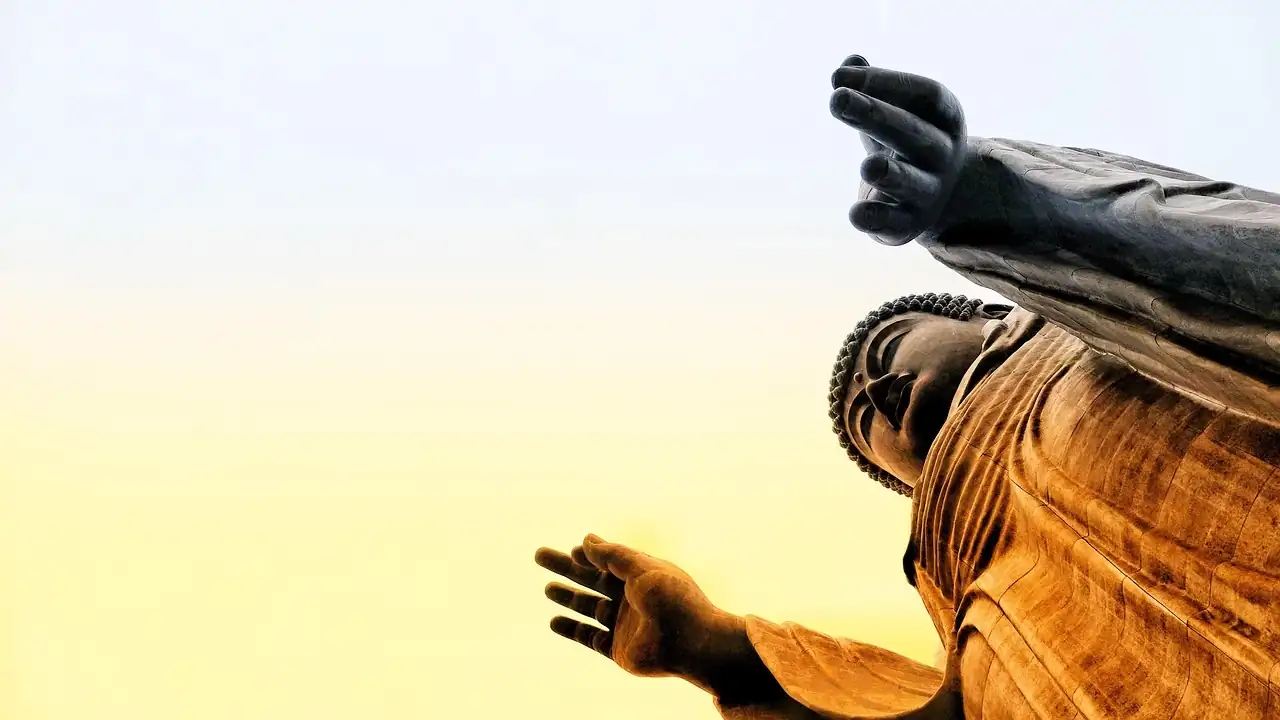
5. Stand Beneath the Colossal Ushiku Daibutsu
Rising out of the pastoral plains of southern Ibaraki, the Ushiku Daibutsu is an astonishing monument of modern religious engineering. Completed in 1993 to commemorate Shinran, the founder of the Jōdo Shinshū Buddhist sect, this colossal bronze statue of Amitabha Buddha stands 120 meters (394 feet) tall—including its ten-meter lotus throne and ten-meter pedestal base—holding title as one of the tallest freestanding statues on earth (three times the height of the Statue of Liberty).
Cast from over four thousand tons of bronze plates anchored to a massive steel core, visitors can step inside the base of the statue to explore multi-level exhibition chambers, including the World of the Lotus Sanctuary lined with 3,400 miniature golden Buddha statues. An internal high-speed elevator ascends eighty-five meters to the Buddha's chest, where observation slit windows look out over the Kanto Plain; on clear winter days, views stretch all the way to Tokyo Skytree and Mount Fuji.
---
6. Summit the Purple Peaks of Mount Tsukuba
Rising abruptly out of the flat Kanto Plain to an elevation of 877 meters, Mount Tsukuba (Tsukubasan) has been venerated as a sacred Shinto peak since antiquity, celebrated in the eighth-century Man'yōshū poetry anthology under the classic adage: "Fuji in the west, Tsukuba in the east." Known affectionately as the "Purple Peak" (Shihō) because its rocky slopes change color from indigo to deep violet as the evening sun sets, the mountain features two distinct summits: Nantai-san (Male Peak) and Nyotai-san (Female Peak).
Visitors can hike ancient boulder trails through cedar woods past bizarre natural rock formations (such as the Benkei Nana-modori stone gate), or ascend effortlessly using the historic Tsukubasan Cable Car (operating since 1925) or the Tsukubasan Ropeway. The rocky crest of Nyotai-san offers an open-air observation ledge looking out across the flat sprawl of the Kanto Basin, Lake Kasumigaura, and the distant Tokyo skyline.
7. Cross the Void at Ryūjin Suspension Bridge
Spanning 375 meters across a dramatic, V-shaped river gorge in the northern Okukuji highlands, the Ryūjin Suspension Bridge (Ryūjin Ōtsurihashi) is one of the longest pedestrian suspension footbridges in Japan. Suspended one hundred meters high above the emerald waters of Ryūjin Dam reservoir, crossing the bridge provides panoramic views across sheer mountain forests that blaze in gold and crimson each autumn.
For thrill-seekers, the bridge is internationally renowned as the site of Japan's Highest Bridge Bungee Jump: adventurers leap off a steel platform suspended one hundred meters directly above the reservoir water. In spring (mid-April to mid-May), the bridge hosts the spectacular Koinobori Festival, where over one thousand colorful carp streamers are strung across the canyon, fluttering in the mountain breeze.
Ibaraki Food Culture: Fermented Natto, Winter Anglerfish & Melon Fields
Blessed with Kuroshio and Oyashio oceanic currents, expansive alluvial river plains, and volcanic soils, Ibaraki is Japan's third-largest agricultural producer by output, boasting a distinctive and comforting regional food culture:
- Mito Natto (Fermented Soybeans): Mito is universally recognized as the Natto Capital of Japan. The regional obsession dates back to 1083, when samurai warrior Minamoto no Yoshiie camped in the province; boiled soybeans left wrapped in rice straw fermented naturally from resident Bacillus subtilis bacteria. Small, local soybeans (such as Natto Shōryū) are packed into traditional dried rice-straw bundles called Wara-natto. The straw imparts a natural earthy aroma while absorbing excess moisture, yielding a pungent, highly sticky, umami-rich breakfast staple whipped with soy sauce, mustard, and scallions over hot steamed rice.
- Ankō Nabe (Winter Anglerfish Hot Pot): The definitive winter culinary delicacy of the Ibaraki coast, particularly around Ōarai and Kitaibaraki. The deep-sea anglerfish (Ankō)—a bizarre, slippery, toothy sea predator caught between November and March—is celebrated for its "Seven Delicacies" (Ankō no Nananatsu Dōgu): meat, liver, skin, fins, stomach, gills, and ovaries, leaving virtually zero waste.
- Tsurushi-giri (Hanging Knife Technique): Because the fish is soft, rubbery, and covered in slippery mucus, chefs cannot slice it on a cutting board; instead, the massive fish is hooked to a wooden tripod by its lower jaw, filled with water to expand its body, and carved in mid-air using razor-sharp knives.
- Dobu-jiru: The most prized regional style. Fresh anglerfish liver (Ankimo, the "foie gras of the sea") is roasted dry in the bottom of a heavy iron pot until it renders rich orange oils, blended with local miso and sake, and simmered with the fish pieces, daikon, and leeks without adding water, producing a thick, unctuous stew.
- Hitachi Beef (Hitachi-gyū): Ibaraki’s premier brand of certified Japanese Black wagyu cattle. Reared for over thirty months on grain, rice straw, and mineral-rich well water in the fertile plains around Mount Tsukuba, Hitachi beef is strictly graded A4 or A5. It features fine, snowy marbling with a sweet, nutty fat profile that dissolves effortlessly on the tongue, served as teppanyaki steaks or sukiyaki across Mito.
- Ibaraki Melons: Ibaraki produces more muskmelons than any other prefecture in Japan, leading national production for over twenty consecutive years. Grown in the sun-drenched, sandy coastal soils around Hokota, varieties such as Andes and Earl's Melon are meticulously pruned so each vine concentrates its sugar into a single fruit. Savor them fresh, churned into silky gelato, or enjoyed as a half-melon crowned with soft-serve ice cream at coastal rest stops.
- Okukuji Shamo (Heritage Game Fowl): Reared in the clean mountain air and pure spring waters of northern Daigo, Okukuji Shamo is a prestigious heritage chicken breed. Raised free-range for twice as long as standard commercial broilers, the meat is low in fat, lean, and muscular, delivering a deep, gamey umami flavor and satisfying chew when charcoal-grilled on yakitori skewers or simmered in winter hot pots.
- Hoshi-imo (Dried Sweet Potatoes): Ibaraki produces over ninety percent of all dried sweet potatoes in Japan. Locally grown sweet potatoes are steamed, sliced into flat ribbons, and dried under the sunny winter skies and crisp Pacific sea breezes of Hitachinaka. The drying process concentrates natural sugars into a sweet, chewy, golden confection packed with dietary fiber.
Transportation: Rapid Express Trains & Scenic Bayside Lines
Ibaraki enjoys outstanding transit connectivity from Tokyo via high-speed commuter rail and dedicated highway express corridors:
- Tokyo to Mito via JR Jōban Line (Limited Express):
- The JR Limited Express Hitachi and Tokiwa depart frequently from Tokyo, Shinagawa, and Ueno stations, racing along the Pacific corridor to reach JR Mito Station in just 65 to 75 minutes. (Fully covered by the nationwide JR Rail Pass and JR Tokyo Wide Pass; all seats on Hitachi/Tokiwa are strictly reserved).
- To Hitachi Seaside Park: Take the Limited Express to JR Katsuta Station (one stop past Mito, approx. 70 mins from Tokyo). From Katsuta Station's East Exit, board dedicated connecting shuttle buses directly to the Seaside Park's West Gate in 15 minutes.
- Tokyo to Tsukuba via Tsukuba Express (TX):
- The Tsukuba Express (TX) departs Akihabara Station in downtown Tokyo, racing north at speeds up to 130 km/h to terminate at Tsukuba Station in just 45 minutes (Rapid Service). From Tsukuba Station, connecting shuttle buses climb Mount Tsukuba in 40 minutes.
- Scenic Regional Railways:
- Kashima Rinkai Railway (Oarai Kashima Line): Connects Mito Station south along the coast to the fishing town of Ōarai and onward to Kashima Jingū.
- Hitachinaka Seaside Railway (Minato Line): A charming, single-track vintage diesel train running from Katsuta Station through cabbage fields out to the fishing port of Nakaminato and Ajigaura Beach.
- Lake Kasumigaura Ring Ring Road:
- Designated as one of Japan's premier National Cycle Routes, this 180-kilometer flat, paved cycling trail traces the former railway lines and scenic embankments of Lake Kasumigaura (Japan's second-largest lake) and Mount Tsukuba. Dedicated bicycle rental depots are stationed right inside JR Tsuchiura Station.
- Digital Transit Cards (IC Cards): Major train stations along JR lines, the Tsukuba Express, and local municipal city buses accept digital Suica, Pasmo, and ICOCA cards loaded on smartphones. Simply tap your device across the ticket barriers.
Where to Stay in Ibaraki: Strategic Base Camps
| Base Hub | Vibe & Atmosphere | Transit Connections | Accommodation Strategy |
|---|---|---|---|
| JR Mito Station Core | Practical provincial capital, walking access to Kairaku-en and Lake Senba, lively izakaya alleys. | JR Jōban Line (Hitachi Express); Suigun Line; Kashima Rinkai Railway. | High density of modern, efficient Japanese business hotels (multiple central APAs), railway tower hotels, transit lodgings. |
| Tsukuba City (Science Hub) | Wide modern boulevards, research campuses, planetariums, direct trailhead bus links to Mount Tsukuba. | Tsukuba Express (TX) terminal (45 mins to Akihabara). | Modern international corporate hotels, clean station-front business hotels, academic conference lodges. |
| Ōarai Coastal Harbor | Relaxed seaside fishing port, ocean sunrises over the rock torii gate, fresh seafood dining. | Kashima Rinkai Railway (15 mins from Mito). | Seaside hot spring (onsen) ryokans featuring ocean-view baths, anglerfish seasonal dining, coastal guesthouses. |
| Daigo & Fukuroda (North) | Secluded mountain valley, therapeutic thermal hot springs, roaring forest waterfall vistas. | JR Suigun Line (Fukuroda Station). | Traditional hot spring ryokans featuring private open-air baths (rotenburo) and multi-course Okukuji Shamo chicken banquets. |
Regional Day Trips Across Ibaraki Prefecture
1. Kashima Jingū: The Ancient Martial Sanctuary
Located in southeastern Ibaraki between Lake Kitaura and the Pacific Ocean, Kashima Jingū is one of the most venerable and historically revered Shinto shrines in Japan, founded according to legend in 660 BC by Emperor Jimmu. Dedicated to Takemikazuchi no Ōkami, the Shinto deity of martial valor, thunder, and swordsmanship, the shrine has been worshipped by samurai generals—from Minamoto no Yoritomo to Tokugawa Ieyasu—before military campaigns for over a millennium.
The shrine is approached through an ancient, sacred forest of massive cryptomeria cedars over eight hundred years old. Key sites within the precinct include the Mitarashi Pond, a crystal-clear spring-fed pond discharging 400,000 liters of pure spring water daily, and the mysterious Kaname-ishi (Keystone)—a sacred stone protruding slightly from the ground, believed in folk mythology to pin down the head of a colossal subterranean catfish (Namazu) to prevent catastrophic earthquakes.
2. JAXA Tsukuba Space Center
Located in Tsukuba Science City, the JAXA Tsukuba Space Center (TKSC) is the beating operational heart of Japan's aerospace exploration program. Spanning fifty-three hectares, the facility manages the Japanese Experiment Module "Kibo" attached to the International Space Station (ISS) and coordinates astronaut training and satellite missions.
Visitors can tour the free Space Dome Exhibition Hall, which showcases a full-scale, fifty-meter-long authentic H-II Launch Vehicle rocket displayed horizontally outdoors, alongside full-scale test models of the Kibo space module, lunar rovers, and real scientific satellites. Guided tours allow access to active mission control rooms.
3. Nakaminato Fish Market
Situated in the coastal fishing port of Hitachinaka near the terminus of the Minato Railway, the Nakaminato Fish Market (Nakaminato Osakana Ichiba) is one of the Kanto region’s largest and most vibrant seaside fish markets, attracting over a million visitors annually. Dozens of seafood stalls line the harbor wharves, selling fresh catches landed directly from local Pacific trawlers: bluefin tuna, sea urchin, fresh rock oysters cracked open and eaten raw on the spot with lemon, and giant coastal flounder.
Best Seasons to Visit Ibaraki
- Mid-April to Early May: The peak season for Hitachi Seaside Park's Nemophila Bloom. Over 5.3 million blue flowers transform Miharashi Hill into an electric azure carpet, coinciding with Japan's Golden Week holiday. Sightseeing temperatures are pleasant and mild, averaging 15°C to 20°C (59°F–68°F).
- Late February to Mid-March (Mito Plum Blossom Festival): One of the earliest heralds of spring in eastern Japan. Over three thousand plum trees bloom in vibrant white and magenta across Kairaku-en Garden and the grounds of Kōdōkan, accompanied by evening lantern illuminations and outdoor open-air tea ceremony gatherings.
- Autumn (October to November): The premier season for weather and visual spectacles. From late September through mid-October, Miharashi Hill at Hitachi Seaside Park turns a deep, fiery crimson with thirty-three thousand fluffy Kochia bushes. In November, the river canyons around Fukuroda Falls and Ryūjin Suspension Bridge explode in brilliant yellow, gold, and scarlet maple foliage.
- Winter (December to February): Cool, crisp, and predominantly sunny. While temperatures average 1°C to 10°C (34°F–50°F), low winter precipitation gives Ibaraki clear skies with sweeping views of Mount Fuji and the Pacific Ocean. Winter is the definitive culinary season to feast on steaming pots of Ankō Nabe (anglerfish stew) along the coast and witness the frozen ice cascades of Fukuroda Falls.
- Summer (July to August): Warm, breezy, and coastal. While mid-day temperatures reach 31°C (88°F), sea breezes make beaches like Ōarai and Ajigaura lively centers for swimming and surfing. In late August, the city of Mito stages the Mito Komon Festival, featuring fireworks over Lake Senba and parades honoring historical lord Tokugawa Mitsukuni.


 東京
東京 神奈川
神奈川 栃木
栃木 千葉
千葉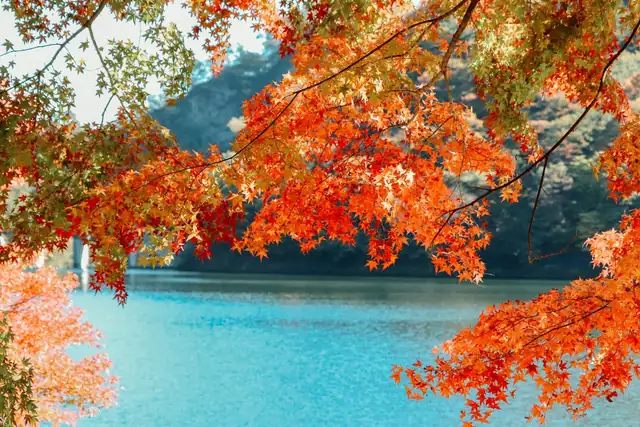 群馬
群馬 埼玉
埼玉