

On this page
Chiba Travel Guide: Pacific Surf, Edo Merchant Canals & Coastal Bounties
Forming the rugged Bōsō Peninsula immediately east and south of Tokyo, Chiba Prefecture (千葉県) borders the Pacific Ocean and Tokyo Bay. For millions of international visitors, Chiba serves as their very first footprint on Japanese soil—home to Narita International Airport (NRT) as well as the sprawling entertainment complexes of Tokyo Disney Resort. Yet looking beyond these major transit and entertainment gateways reveals a massive, diverse coastal frontier defined by ancient Shingon Buddhist monasteries, preserved Edo-period merchant waterways, sheer volcanic ocean cliffs, and world-class Pacific surf breaks.
Historically divided into three ancient provinces—Shimōsa in the north, Kazusa in the center, and Awa at the southern ocean tip—Chiba developed an identity rooted in maritime commerce and agricultural independence. The region served as the vital breadbasket and soy sauce brewing capital feeding the massive population of Edo (Tokyo) during the Tokugawa shogunate. Today, Chiba balances rural tranquility with metropolitan connectivity: from the historic canal district of Sawara (the "Little Edo" of the east) and the massive Buddhist temple complex of Narita-san Shinshō-ji to the dramatic sea cliffs of Mount Nokogiri and the sixty-kilometer continuous surf sands of Kujūkuri Beach. Positioned just an hour from central Tokyo, Chiba offers an accessible and rewarding coastal escape.
Navigating Chiba Prefecture: Core Geographic Sectors
Because the Bōsō Peninsula projects outward between Tokyo Bay and the Pacific Ocean, Chiba divides into four distinct travel corridors:
| Sector | Primary Station Hubs | Landscape & Atmosphere | Key Highlights |
|---|---|---|---|
| Northern Gateway & Narita | JR / Keisei Narita / Sawara | Ancient pilgrimage monasteries, Edo-era merchant canals, atmospheric omotesando shopping slopes, airport hubs. | Naritasan Shinshō-ji, Sawara Historical Canal District, Boso no Mura, National Museum of Japanese History. |
| Tokyo Bay Urban Shoreline | Maihama / Kaihimmakuhari / Chiba | Modern reclaimed bayfronts, world-class theme parks, massive international convention arenas, monorail lines. | Tokyo Disney Resort (Disneyland & DisneySea), Makuhari Messe, Chiba Urban Monorail, Inage Seaside Park. |
| Minamibōsō & Tokyo Bay West | Hamakanaya / Tateyama / Kisarazu | Sheer coastal cliffs, granite quarries, cliffside stone Buddhas, calm subtropical bays, highway aqua-lines. | Mount Nokogiri (Nihon-ji Daibutsu), Tokyo Bay Aqua-Line (Umihotaru), Tateyama Castle, Cape Sunosaki. |
| Sotobō & Pacific Surf Coast | Katsuura / Torami / Kamogawa | Crashing Pacific ocean swells, endless sandy beaches, morning coastal fish markets, marine life reserves. | Kujūkuri Beach, Ichinomiya Olympic surf break, Katsuura Morning Market, Kamogawa Sea World, Oyama Senmaida. |
Top Things to Do Across Chiba
1. Walk the Millennial Approach of Naritasan Shinshō-ji
Located just ten minutes from Narita International Airport, Naritasan Shinshō-ji is one of the most prominent and heavily visited Buddhist temple complexes in Japan, drawing over three million worshippers during the New Year period alone. Founded in 940 AD by Buddhist priest Kanchō under imperial edict to quell a rebellion led by samurai warlord Taira no Masakado, the temple is dedicated to Fudō Myō-ō (The Immovable Wisdom King), whose wrathful, flame-engulfed image holds a sword to sever human delusions and a rope to bind negative forces.
Visitors approach the temple via the atmospheric Naritasan Omotesando—an 800-meter-long winding stone lane lined with Edo-period timber storefronts, traditional pharmacies, and dozens of historic restaurants grilling freshwater eel (unagi) over charcoal. Within the expansive temple grounds, explore the monumental Great Peace Pagoda (Heiwa no Daitō), inspect intricate wooden carvings on the 1858 Three-Story Pagoda, and witness the ancient Goma Fire Ritual performed multiple times daily inside the Great Main Hall, where monks chant esoteric Shingon sutras while burning cedar sticks to consume worldly desires in sacred fire.
2. Cruise the Edo Merchant Canals of "Little Edo" Sawara
Situated in northeastern Chiba along the lower reaches of the Tone River, Sawara (part of Katori City) was historically a booming merchant river port that transported rice, miso, and soy sauce directly to Edo. The town’s historical wealth was so immense that local merchants famously claimed: "Sawara surpasses Edo itself."
Today, the Ono River Historical Preservation District preserves a postcard-perfect canal lined with weeping willows, arched stone footbridges, and black-plastered wooden storehouses (kura) and merchant townhouses (machiya) dating from the late Edo and Meiji eras. Travelers can board flat-bottomed wooden sightseeing boats for a guided canal cruise, or cross the Ja-Ja Bridge (Toyohashi)—a wooden bridge engineered with a central drainage trough that periodically releases a roaring waterfall of water directly into the river below. Visit the preserved home of Inō Tadataka, the 18th-century cartographer who spent seventeen years walking the perimeter of Japan to create the nation's first mathematically accurate geographic map.
3. Peer Over the Precipice of Mount Nokogiri (Nihon-ji)
Rising sheer above the coastline of Tokyo Bay in southern Chiba, Mount Nokogiri (Nokogiriyama) literally translates to "Sawtooth Mountain" due to its jagged, saw-like granite profile. From the Edo period through the 1980s, the mountain operated as a major stone quarry, supplying high-quality green and gray volcanic tuff stone used to build Tokyo's sea walls, shrines, and roads.
Take the Nokogiriyama Ropeway or hike the steep quarry trails to the summit. Perched on the highest cliff edge sits Jigoku Nozoki ("Peeping into Hell")—a terrifying, cantilevered stone promontory jutting outward into empty space over a sheer one-hundred-meter vertical drop. Looking down reveals the forested quarry canyons below, while sweeping 360-degree views stretch across Tokyo Bay to Mount Fuji and Yokohama. The mountain slopes house the ancient complex of Nihon-ji, featuring the Nihon-ji Daibutsu: a monumental 31-meter-tall Buddha carved directly into the living granite cliff face in 1783, standing even taller than the Great Buddhas of Kamakura and Nara.
4. Ride the World-Class Swells of Kujūkuri Beach & Ichinomiya
Stretching uninterrupted for sixty-six kilometers along Chiba’s northeastern Pacific coastline, Kujūkuri Beach (Kujūkurihama) is Japan's second-longest continuous sandy beach. Formed from dark coastal sand dunes meeting powerful Pacific Ocean swells without protective reefs or headlands, the coast is a national Mecca for open-ocean water sports and beach living.
At the southern end of the beach sits the coastal town of Ichinomiya and Tsurigasaki Beach (commonly known as Torami), which hosted the historic Olympic surfing competitions at the Tokyo 2020 Games. Year-round, consistent oceanic swells draw surfers from across the globe, supported by surf cafes, board rental shops, and seaside barbecue shacks roasting fresh coastal clams and sardines.
5. Drive Across Tokyo Bay: The Aqua-Line & Umihotaru
Connecting Kawasaki in Kanagawa Prefecture directly to Kisarazu in central Chiba, the Tokyo Bay Aqua-Line is a modern civil engineering marvel. The expressway consists of a 9.6-kilometer undersea tunnel (the fourth-longest underwater vehicular tunnel on earth) that transitions into a 4.4-kilometer bridge spanning Tokyo Bay.
At the exact junction where the underwater tunnel emerges above the waves sits Umihotaru ("Sea Firefly"), a five-story artificial island service station shaped like an ocean liner anchored in the middle of Tokyo Bay. The rest area features panoramic 360-degree observation decks looking back across the shipping lanes to the skylines of Tokyo, Yokohama, and Mount Fuji, packed with seafood restaurants, bakeries, and footbaths fed by deep geothermal waters.
6. Explore Rural Beauty at Oyama Senmaida Rice Terraces
Tucked into the rolling wooded hills of Kamogawa in the interior of the southern Bōsō Peninsula, Oyama Senmaida is an agricultural spectacle comprising 375 miniature, hand-shaped stepped rice paddies rising in steep amphitheater terraces. Designated as one of Japan’s Top 100 Terraced Rice Paddies, Oyama is the only rice terrace in Japan fed exclusively by natural rainwater, lacking any irrigation rivers or artificial reservoirs.
In spring (late April to early May), the flooded terraces reflect the morning sunrise and sky like hundreds of curved glass mirrors. From late autumn through January, the paddies are illuminated during the Tanada Night light festival, where thousands of solar-powered LED candles outline the borders of the terraces, glowing against the dark mountain slopes.
7. Browse 400 Years of Fresh Catch at Katsuura Morning Market
Operating continuously for over 430 years since 1591, the Katsuura Morning Market (Katsuura Asaichi) is recognized alongside Wajima in Ishikawa and Takayama in Gifu as one of Japan's Three Great Morning Markets. Held every morning (except Wednesdays) in the coastal fishing port of Katsuura, dozens of elderly local fishermen and farmers set up wooden stalls along the street.
Vendors sell super-fresh Pacific seafood: skipjack tuna (katsuo), sea bream, dried horse mackerel (himono), hand-foraged hijiki seaweed, and giant turban shells (sazae), alongside locally harvested vegetables and pickles. The atmosphere is warm, social, and authentic, offering visitors a glimpse of traditional coastal commerce.
Chiba Terroir: Soy Sauce Mastery, Fresh Catch & Roasted Peanuts
Bordered by three productive marine ecosystems (Tokyo Bay, the Pacific Ocean, and the Tone River basin), Chiba is one of the agricultural and seafood powerhouses of Japan, supplying over twenty percent of the fresh food consumed across greater Tokyo:
- Chiba Peanuts (Rakkasei): Chiba produces over seventy-five percent of all the peanuts grown in Japan. Cultivated in the fertile, well-drained volcanic ash soils of the northern plateaus around Yachimata, Chiba peanuts—particularly the prized Chiba Handa and Nakateyutaka varieties—are famous for their natural sweetness and rich oil content. Sample them freshly roasted, churned into silky peanut butter, baked into pastries, or boiled fresh in salt water as Yude-rakkasei, a savory, soft, and addictive accompaniment to cold beer.
- Historic Shoyu (Soy Sauce): Chiba is the historic heart of Japanese soy sauce brewing. In the early Edo period, coastal towns like Noda and Chōshi developed commercial brewing along the Tone River, harnessing local wheat, soybeans, and coastal sea salt to ship liquid seasoning directly into Edo's restaurants. Today, Noda remains the global corporate headquarters of Kikkoman, where visitors can tour the historic Goyōgura brewery to inspect wooden cedar fermentation vats and learn how koji mold transforms soybeans through years of aging.
- Bōsō Seafood (Bōsō Ebi & Abalone): The cold Oyashio and warm Kuroshio currents collide directly off the southern tip of the Bōsō Peninsula, producing extraordinary shellfish and crustaceans. Sample Bōsō Ise Ebi (Japanese Spiny Lobster)—prized for its sweet, muscular meat, eaten raw as sashimi or split and grilled over charcoal with sweet soy butter—alongside wild Awabi (Abalone), harvested for centuries by traditional women free-divers (Ama).
- Namero and Sangayaki: Traditional coastal fishermen's soul food, invented on fishing boats tossed by rough Pacific waves. Freshly caught horse mackerel (aji), sardines, or pacific saury are minced together on a wooden board with raw miso, scallions, ginger, and shiso leaves until the mixture forms a sticky paste. Named Namero because it is so delicious diners literally "lick the plate clean" (nameru). When the remaining minced fish paste is packed into abalone shells and pan-fried or grilled over open embers, it becomes Sangayaki.
- Katsuura Tantanmen: A fiery local noodle dish invented in the 1950s by coastal eatery owners to warm cold fishermen and Ama divers returning from the winter sea. Unlike Chinese-style sesame-based Dan Dan noodles, Katsuura Tantanmen features a crystal-clear soy sauce dashi broth aggressively laced with red rayu chili oil, loaded with tender simmered onions, minced pork, and scallions. The surface is covered in a glistening layer of fiery crimson chili oil, delivering a sharp, sweat-inducing heat.
- Narita Freshwater Eel (Unagi): Eel dining has been synonymous with Narita since the Edo period, when pilgrims completing the grueling three-day walk from Edo to Naritasan were served freshwater eel from nearby Lake Imba to restore their physical stamina. Scores of specialist restaurants along the Omotesando slope—such as Kawatoyo (operating since 1910)—slice, skewer, and grill live unagi directly in open street-facing windows, dipping the tender fillets into century-old sweet tare glazes over binchōtan charcoal.
Transportation: Rapid Airport Expresses & Vintage Coastal Lines
Chiba possesses outstanding high-speed rail connectivity to Tokyo and international air terminals, alongside nostalgic rural private trains:
- Tokyo to Narita Airport (Rapid Transit):
- Keisei Skyliner: The fastest connection. Departs Keisei Ueno and Nippori stations, racing along the Narita Sky Access Line at 160 km/h to reach Narita Airport Terminal 2/3 in just 36 minutes.
- JR Narita Express (N'EX): Connects Tokyo Station directly to Narita Airport in 55 minutes, with through-service connecting outward to Shinjuku, Shibuya, and Yokohama without transfers. (Fully covered by the nationwide JR Rail Pass and JR Tokyo Wide Pass).
- Tokyo Bay Coastal Rail (Keiyo & Sobu Lines):
- JR Keiyo Line: Races along Tokyo Bay from Tokyo Station, reaching Maihama Station (Tokyo Disney Resort) in 15 minutes, Makuhari Messe (Kaihimmakuhari) in 30 minutes, and Chiba City in 40 minutes.
- JR Sobu Rapid Line: Connects Tokyo Station and Shinagawa directly to central Chiba City and onward to Narita.
- Nostalgic Peninsula Railways (Kominato & Isumi Lines):
- For a rural journey, cross the interior mountains of the Bōsō Peninsula aboard the single-track, non-electrified vintage diesel trains of the Kominato Railway and Isumi Railway. The trains click-clack past rolling hills, unstaffed wooden stations, and valleys of blooming golden canola flowers (nanohana) in spring.
- Digital Transit Cards (IC Cards): JR lines, Keisei electric trains, the Chiba Urban Monorail, and regional highway express buses accept digital Suica, Pasmo, and ICOCA cards loaded on smartphones. Tap your device across ticket turnstiles to navigate between competing operators seamlessly.
Where to Stay in Chiba: Strategic Base Camps
| Base Hub | Vibe & Atmosphere | Transit Connections | Accommodation Strategy |
|---|---|---|---|
| Narita (Town & Airport) | Historic pilgrimage town, peaceful temple gardens, rapid international terminal shuttles. | JR and Keisei lines; direct 10-minute trains to NRT Airport; trains to Tokyo. | High density of modern, efficient Japanese business hotels (multiple central APAs), airport transit towers, historic timber ryokans along the Omotesando. |
| Maihama / Urayasu (Disney Bay) | Lively theme park excitement, wide oceanfront palm boulevards, family-centric resort atmosphere. | JR Keiyo Line (Maihama Station); Disney Resort Line monorail. | Official Disney luxury resort hotels, expansive bayside partner hotels with complimentary shuttles. |
| Chiba City Core & Makuhari | Modern commercial capital, major international convention centers, extensive shopping malls. | JR Sobu Rapid, Keiyo, and Uchibo lines; Chiba Urban Monorail. | Modern high-rise convention hotels, clean cost-effective station-front business hotels, corporate railway towers. |
| Minamibōsō & Tateyama (South) | Relaxed subtropical coast, crashing Pacific surf, palm trees, fresh seafood dining. | JR Uchibo Line; Tokyo Bay Ferry (connecting across to Kurihama in Kanagawa). | Seaside hot spring (onsen) ryokans with panoramic ocean-view baths, surf lodges, coastal glamping sites. |
Regional Day Trips Across Chiba Prefecture
1. Boso no Mura (Open-Air Living Heritage Village)
Located in Sakae near Narita, Boso no Mura is an interactive open-air museum that faithfully reconstructs a traditional Edo-to-Meiji era farming and merchant village. Visitors walk down dirt streets between historic merchant workshops—including a blacksmith, candle maker, soba shop, and traditional pharmacy—where you can step inside to try hands-on traditional crafts: forging iron nails, making tatami coasters, weaving bamboo baskets, or dressing in period kimono, samurai, or ninja garments.
2. Cape Inubōsaki & Chōshi Fishing Harbor
Marking the easternmost point of the Kanto region, Cape Inubōsaki is a rugged volcanic headland jutting into the Pacific Ocean. The cape is crowned by the stark white, 31-meter-tall brick Inubōsaki Lighthouse, designed in 1874 by British engineer Richard Henry Brunton. Because of its eastern prominence, Inubōsaki is the very first place on mainland Japan to witness the sunrise on New Year's Day. Descend the cliffs to watch powerful Pacific waves crash against the black rocks, and visit the bustling fish auctions at nearby Chōshi Port, one of Japan's leading landing centers for bluefin tuna and ocean sardines.
3. Ride the Tokyo Bay Ferry (Kanagawa Shortcut)
Departing from the port of Hamakanaya beneath the cliffs of Mount Nokogiri, the Tokyo Bay Ferry crosses the mouth of the bay to Kurihama Port in Kanagawa Prefecture in just 40 minutes. This scenic maritime route bypasses the congested urban expressway traffic of central Tokyo, connecting travelers directly from Chiba’s coastal mountains to the historic samurai temples of Kamakura and the hot springs of Hakone.
Best Seasons to Visit Chiba
- Spring (Late March to Mid-April): A splendid season of cherry blossoms and spring flowers. Somei-yoshino trees frame the pagodas of Naritasan Shinshō-ji and the moats of Inohana (Chiba) Castle. Along the southern Bōsō Peninsula, fields of golden yellow canola flowers (nanohana)—the official prefectural flower of Chiba—blanket the railway embankments of the Kominato and Isumi lines in brilliant yellow.
- Autumn (October to Late November): The premier season for comfortable outdoor exploration and hiking Mount Nokogiri. The maple groves tucked into the ravines of Yōrō Valley (Yōrōkeikoku) in central Chiba blaze in deep shades of crimson, gold, and amber, illuminated by evening lanterns along riverside walking paths. Mild, sunny weather averaging 15°C to 20°C (59°F–68°F).
- Winter (December to February): Cool, crisp, and sunny. While temperatures average 3°C to 11°C (37°F–52°F), coastal Chiba receives virtually zero snow and enjoys some of the highest winter sunshine hours in Japan. Clear skies provide unobstructed views across Tokyo Bay of a snow-capped Mount Fuji from Mount Nokogiri and Umihotaru. Winter is also the peak culinary season to feast on fiery Katsuura Tantanmen and sweet winter spiny lobster.
- Summer (July to August): Warm, breezy, and coastal. While mid-day temperatures reach 31°C (88°F), sea breezes off the Pacific make Kujūkuri Beach and the southern surf towns vibrant centers for surfing, bodyboarding, and open-ocean swimming. In mid-July, the town of Sawara stages the Sawara Grand Festival (Gion Matsuri), parading colossal, multi-tiered wooden festival floats carrying four-meter-tall statues of mythological warriors through the narrow canal streets.


 東京
東京 神奈川
神奈川 栃木
栃木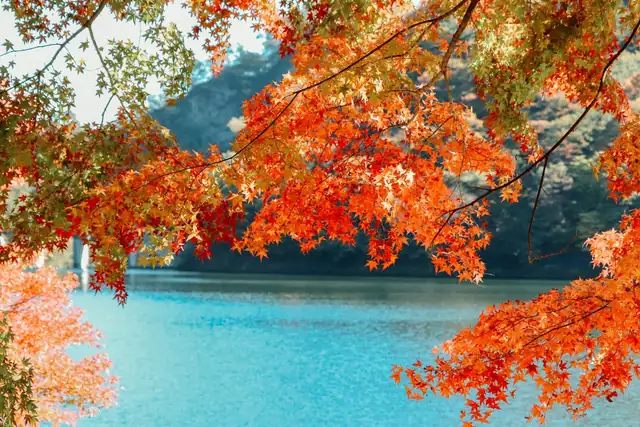 群馬
群馬 埼玉
埼玉 茨城
茨城