

On this page
Akita Travel Guide: Milky Mountain Onsens, Samurai Mansions & Ferocious Namahage
Forming the rugged northwestern spine of the Tōhoku region along the Sea of Japan, Akita Prefecture (秋田県) is a land of primeval beech forests, deep volcanic calderas, and centuries of winter isolation. Historically known as Dewa Province (its northern half), Akita's geography is hemmed in by the jagged Ōu Mountains to the east and cold maritime currents to the west. This prolonged winter seclusion fostered a distinct, highly resilient folk culture: from the fearsome, straw-clad Namahage ogre spirits of the Oga Peninsula to the hypnotic balancing feats of the summer Akita Kantō Festival.
Akita is celebrated as one of Japan's supreme geothermal and historical sanctuaries. Tucked beneath the active volcanic peaks of Towada-Hachimantai National Park lies Nyūtō Onsenkyō, an enclave of secluded, rustic hot spring inns whose milky-white, sulfurous outdoor pools have welcomed travelers since the Edo period. In the central valley sits Kakunodate—the "Little Kyoto of Michinoku"—preserving one of Japan's finest districts of black-walled samurai manor houses and weeping cherry trees. Further south, the mysterious cobalt waters of Lake Tazawa plunge to depths unmatched anywhere else in the nation. Accessible directly from Tokyo via the scenic Akita Shinkansen (Komachi), Akita provides an atmospheric journey into northern folklore, pristine craft brewing, and thermal rejuvenation.
Navigating Akita Prefecture: Core Geographic Sectors
Akita’s landscape transitions from windswept coastal capes to high volcanic ridges, dividing naturally into four distinct travel corridors:
| Sector | Primary Station Hubs | Landscape & Atmosphere | Key Highlights |
|---|---|---|---|
| Akita Coastal Capital & Oga (West) | JR Akita / Oga | Bayside commercial center, red-brick canal museums, folklore peninsulas, coastal sea cliffs. | Akita Kantō festival grounds, Senshū Park (Kubota Castle), Oga Peninsula (Namahage Museum), Cape Nyūdōzaki. |
| Kakunodate & Lake Tazawa (East) | JR Kakunodate / Tazawako | Edo-era black-timber samurai quarters, cherry blossom avenues, deepest sapphire caldera lakes. | Kakunodate Bukeyashiki samurai district, Lake Tazawa (Tatsuko Statue & Gozanoishi Shrine), Dakigaeri Gorge. |
| Nyūtō Onsen & Hachimantai (Highlands) | Tazawako (Bus transfer) / Kazuno-Hanawa | Rustic mountain beech ravines, thatched-roof ryokans, milky volcanic thermal springs, alpine plateaus. | Nyūtō Onsenkyō (Tsurunoyu, Taenoyu, Kuroyu), Tamagawa Onsen (acidic radium water), Mount Komagatake. |
| Yokote & The Southern Snow Basins | JR Yokote / Yuzawa | Fertile agricultural basins, heavy winter snowdrifts, domed snow igloo festivals, historic kura storehouses. | Yokote Kamakura Snow Festival, Masuda merchant kura district, Inaniwa udon factories. |
Top Things to Do Across Akita
1. Soak in the Secluded Milky Waters of Nyūtō Onsenkyō (Tsurunoyu)
Tucked deep into the virgin beech forests at the foot of Mount Nyūtō in eastern Akita, Nyūtō Onsenkyō ("Nipple Hot Springs") is a collection of seven secluded hot spring hamlets, universally regarded as the gold standard of authentic Japanese Hitō (hidden hot springs). Each of the seven inns (Tsurunoyu, Taenoyu, Kuroyu, Kaniyu, Magoroku, Ōgama, and Kyūkamura) taps its own distinct volcanic spring source with varying mineral chemistries.
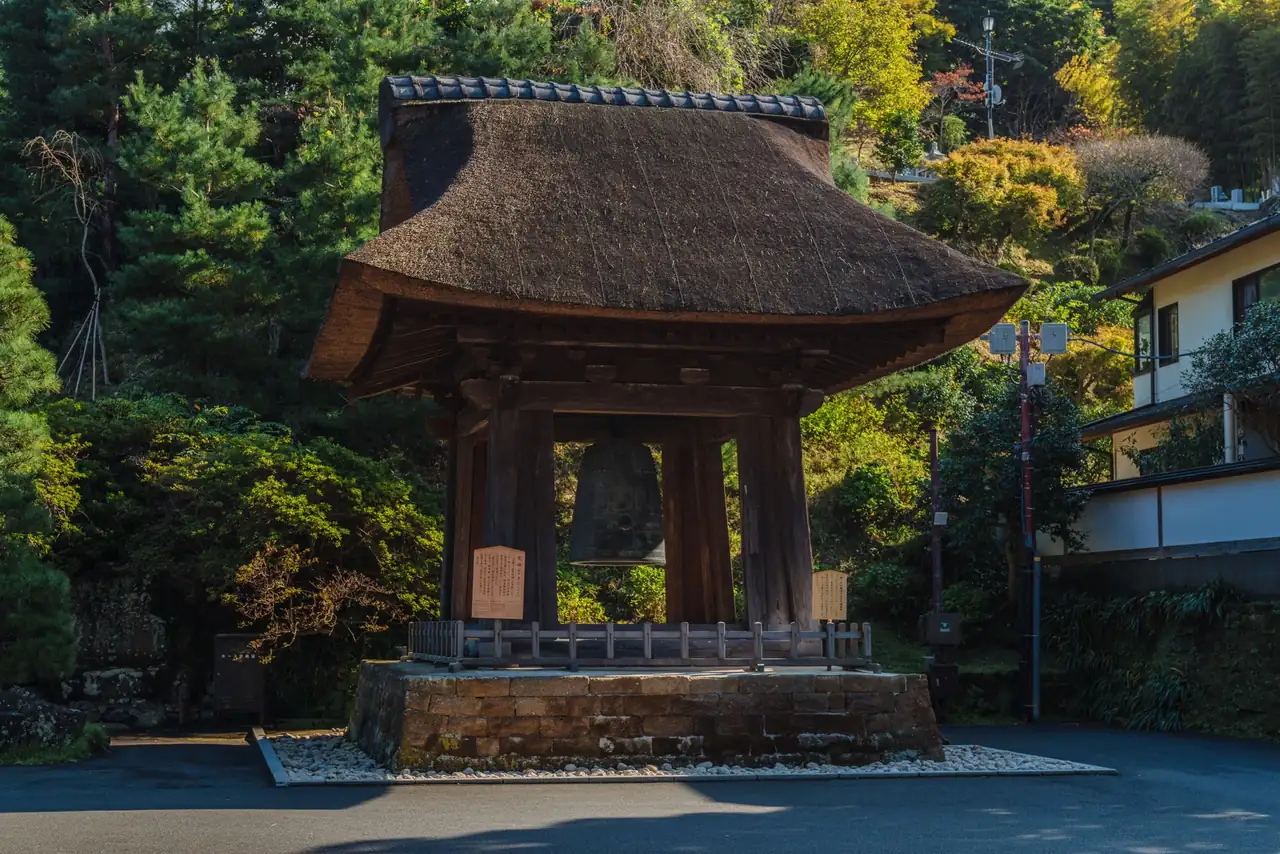
The oldest and most famous is Tsurunoyu Onsen, operating continuously since the early seventeenth century as a therapeutic retreat for the lords of the Satake clan. The inn's historic thatched-roof residential wing, the Honjin, dates from the Edo period. Its centerpiece is a massive, open-air communal pool (Rotenburo) lined with smooth river stones, where cloudy, milky-white sulfur water bubbles up directly through the pebbled floorbed. In winter, steam rises into freezing mountain air as heavy snowbanks pile meters high around the wooden bathhouse.
---
2. Walk the Black Samurai Walls of Kakunodate (Bukeyashiki)
Founded in 1620 by Ashina Yoshikatsu and later governed by the Satake-Kita samurai clan, Kakunodate preserves an exceptionally intact samurai quarter (Bukeyashiki). The district features a wide dirt avenue flanked by towering, black-lacquered wooden walls (koki-kabe) and heavy timber gates that conceal historic samurai family compounds.
Several grand estates remain open for public touring, most notably the Aoyagi Samurai Manor (an expansive compound displaying authentic armor, swords, medical tools, and clan heirlooms) and the Ishiguro House, the oldest surviving samurai estate in the district. Kakunodate is also world-renowned for its cherry blossoms: over four hundred weeping cherry trees (Shidare-zakura)—many descended from trees brought from Kyoto by feudal brides in the seventeenth century—spill their pale pink petals over the dark black walls in late April, contrasting against fresh green foliage.
---
3. Gaze into the Sapphire Depths of Lake Tazawa (Tazawako)
Sitting in eastern Akita near the border with Iwate, Lake Tazawa is a nearly circular volcanic caldera lake that holds the title as the deepest lake in Japan, plunging 423 meters (1,388 feet) into the earth. Because of its extreme depth, sunlight cannot penetrate the lowest trenches, giving the lake an intense, hypnotic sapphire-and-cobalt blue hue. Its depth also ensures the lake never freezes, even during the harshest sub-zero winter snowstorms.
Along the western shore stands the gleaming golden Statue of Tatsuko, sculpted in bronze by Yasutake Funakoshi. According to local folklore, Tatsuko was a legendary beauty who prayed desperately to the gods for eternal youth; after drinking from a sacred mountain spring, she was cursed by her vanity and transformed into a water dragon, plunging into the depths to become the guardian spirit of the lake. On the northern shore sits Gozanoishi Shrine, marked by a bright vermilion torii gate standing directly in the crystal-clear water.
---
4. Balance Glowing Towers of Light at the Akita Kantō Festival
Held annually from August 3 to 6 along the Chūō-dōri avenue in downtown Akita City, the Akita Kantō Festival (Kantō Matsuri) is celebrated alongside Aomori’s Nebuta and Sendai’s Tanabata as one of the Three Great Summer Festivals of Tōhoku. Dating back to the mid-Edo period as the Neburi-nagashi ritual, the festival was created to purge illness, sleepiness, and evil spirits while praying for an abundant autumn rice harvest.
The spectacle centers on the Kantō—a massive bamboo pole measuring twelve meters tall and weighing up to fifty kilograms, rigged with crossbeams that carry forty-six paper lanterns illuminated by real candles, arranged in the shape of a colossal ear of rice (with the lanterns representing individual rice grains). Over two hundred teams hoist these flaming towers into the night sky, accompanied by booming taiko drums and shouts of "Dokkoisho! Dokkoisho!" Master performers perform gravity-defying balance tricks, supporting the swaying 50-kilogram poles on their palms, foreheads, shoulders, and lower backs without using their hands.
---
5. Confront the Sacred Demons of the Oga Peninsula: Namahage
Projecting outward into the Sea of Japan west of Akita City, the rugged Oga Peninsula is the sacred home of the Namahage, an ancient folk ritual recognized by UNESCO as an Intangible Cultural Heritage. On New Year's Eve, local men dress as fierce mountain deities wearing terrifying wooden or papier-mâché masks with bulging eyes and horns, draped in heavy straw capes (kede), carrying wooden knives and buckets. They stomp from house to house in the freezing snow, roaring: "Are there any crybabies here? Any lazy children who don't help their parents?"
Despite their monstrous appearance, the Namahage are not evil demons; they are divine mountain messengers who strip away the laziness of the community (the name derives from namomi-hagi, peeling off the heat blisters formed on the skin of lazy people sitting too close to the winter hearth) while blessing families with health and good crops. Visit the Namahage Museum in Oga to view over 150 unique historical masks from different villages, and step into the adjacent Oga Shinzan Folklore Museum for a live, thrilling recreation of the New Year's Eve home visitation inside an authentic thatched farmhouse.
6. Step Inside Candlelit Snow Domes at the Yokote Kamakura Festival
With a history spanning over 450 years, the Yokote Kamakura Festival takes place on February 15 and 16 in the southern city of Yokote, which experiences some of the deepest winter snowfalls in Japan. Across the town, residents pack mountain snow to carve over one hundred Kamakura—spacious, domed snow igloos measuring three meters high and wide.
Inside each kamakura, a small altar is carved into the snow wall to enshrine the Water Deity (Suijin-sama), alongside an open charcoal brazier (hibachi). Local school children invite passing travelers inside to escape the freezing winter chill, serving them piping-hot cups of sweet fermented rice wine (amazake) and toasted rice mochi cakes while chatting in local dialect. Along the banks of the Yokote River, thousands of miniature snow lanterns (Mini-Kamakura) are illuminated with candles, creating a glowing sea of flickering lights across the snowfields.
7. Cross the World's Oldest Virgin Beech Forest at Shirakami-Sanchi
Straddling the northern mountainous border between Akita and Aomori, Shirakami-Sanchi preserves the largest remaining virgin stand of Siebold's beech forest (buna) in East Asia, inscribed as a UNESCO World Natural Heritage site in 1993. On the Akita side, access centers around the picturesque town of Fujisato and the Dake-tai Beech Forest Trail.
Hikers walk along pristine wooden boardwalks through moss-draped, primeval deciduous woods that have flourished undisturbed by commercial logging since the last Ice Age. The forest floor acts as a massive natural water sponge, filtering rain and snow through mineral-rich moss layers into crystal-clear mountain streams that sustain black bears, Japanese serows, and rare golden eagles.
Akita Terroir: Kiritanpo Hot Pot, Hinai Jidori & Inaniwa Udon
Blessed with cold mountain snowmelt runoff, vast fertile rice plains, and prolonged winter freezing temperatures, Akita boasts one of the most distinctive and comforting regional food cultures in Japan:
- Kiritanpo Nabe: The undisputed soul food of Akita, originally devised by winter woodsmen and charcoal burners in the northern mountains. Freshly harvested new-crop white rice is pounded with wooden pestles until partially mashed (hantoki), molded tightly around skewers of fragrant cedar wood, and lightly toasted over open charcoal hearths until a golden, savory crust forms. The skewers are pulled out, and the toasted rice cylinders are sliced diagonally into cylinders (Kiritanpo).
- The Hot Pot Harmony: The rice cylinders are simmered in an iron pot filled with a rich, golden dashi broth brewed from Hinai Jidori chicken, loaded with fragrant mountain maitake mushrooms, leeks, burdock root, and the earthy, peppery leaves and roots of wild seri (water dropwort). The toasted rice absorbs the rich chicken broth while maintaining its chewy, rustic texture.
- Hinai Jidori Chicken: Celebrated alongside Satsuma Jidori (Kagoshima) and Nagoya Cochin (Aichi) as one of the Three Great Heritage Chickens of Japan. Bred from the native Hinai gamecock crossed with Rhode Island Reds, Hinai Jidori chickens are raised free-range for up to 180 days across the northern Akita valleys. The meat is lean, deeply muscular, and contains virtually no unwanted fat, yielding an intense, rich umami depth and firm, toothsome chew when skewered as charcoal yakitori or simmered into broths.
- Inaniwa Udon: Handcrafted for over 350 years in Inaniwa in southern Akita, this noodle was so prized during the Edo period that its production was strictly controlled by the Satake clan, reserved exclusively as imperial and shogunal tribute. Ranked alongside Sanuki (Kagawa) and Mizusawa (Gunma) as one of the Three Great Udon Noodles of Japan.
- The Artisanal Craft: Unlike thick, extruded udon, Inaniwa udon is made through a four-day, multi-stage hand-kneading, stretching, and air-drying process that flattens the noodles to a thin, ribbon-like profile with tiny internal air bubbles. The noodles are silky, translucent, and exceptionally smooth, served chilled on woven bamboo mats accompanied by dashi-soy dipping sauce, grated ginger, and wasabi.
- Shottsuru & Hatahata (Sandfish): Akita’s definitive marine tradition. Hatahata (Sailfin Sandfish) are scaleless, deep-water coastal fish that migrate in massive schools toward Akita’s rocky shores during violent winter storms in late November and December. The fish are prized for their crunchy, gelatinous egg masses (buriko). The historical condiment of the prefecture is Shottsuru—one of Japan’s oldest traditional fish sauces, produced by fermenting salted hatahata in wooden cedar barrels for several years until it clarifies into a pungent, amber liquid packed with savory amino acids, used to season Shottsuru Nabe stews.
- Iburigakko (Smoked Pickled Daikon): Because Akita's freezing winter weather and heavy snowfalls made it impossible to sun-dry vegetables outdoors, clever farming families devised a unique method: hanging long white daikon radishes from the ceiling rafters directly above the open indoor wood hearth (irori). The radishes were smoked continuously for several days over fragrant cherry and oak firewood, then pickled in rice bran, salt, and sugar. The result is a crisp, crunchy yellow pickle with a deep, smoky aroma. Modern izakayas serve thin slices of iburigakko topped with creamy Western cream cheese, pairing with dry junmai sake.
- Akita Sake Brewing: Known throughout Japan as the "Sake Country" (Shukoku Akita). Blessed with heavy snowpacks that purify the air and provide mineral-soft snowmelt water, combined with high-grade local sake rice (such as Akita Sake Komachi), regional master brewers (San'yō Tōji) utilize ultra-low-temperature winter fermentation techniques. Breweries (such as Aramasa, Takashimizu, and Yuki no Bosha) produce sakes known for their clean, soft, aromatic, and fruity elegance.
Transportation: The Akita Shinkansen & Scenic Coastlines
Akita is linked seamlessly to Tokyo via high-speed bullet trains and scenic coastal rail routes:
- Tokyo to Akita via Akita Shinkansen (Komachi):
- The Akita Shinkansen (Komachi Express) departs Tokyo Station coupled to the Tohoku Shinkansen (Hayabusa), racing north at speeds up to 320 km/h before decoupling at Morioka in Iwate.
- From Morioka, the Komachi continues as a "mini-shinkansen" along converted narrow-gauge mountain tracks, winding past Tazawako (Lake Tazawa) in roughly 2 hours and 50 minutes, Kakunodate in 3 hours, and terminating at JR Akita Station in roughly 3 hours and 40 minutes. (Fully covered by the nationwide JR Rail Pass and JR East Tohoku Area Pass; all seats on Komachi are strictly reserved).
- Connecting to Nyūtō Onsenkyō:
- From JR Tazawako Station, board the local Ugo Kōtsū Nyūtō Line bus from Bus Stop 1. The bus climbs through mountain forests to the Nyūtō Onsen area in roughly 45 to 50 minutes (¥840).
- To reach Tsurunoyu, disembark at Arupa Komakusa bus stop and transfer to the complimentary Tsurunoyu guest shuttle van (advance reservation with the ryokan required for staying guests).
- The JR Resort Shirakami (Gono Line):
- Departing from Akita Station, this scenic sightseeing train traces the wave-swept rocky coastline of the Sea of Japan northward toward Aomori, passing the cliffs of Shirakami-Sanchi. Carriages feature oversized panoramic observation windows, wooden interior fittings, and live onboard performances of the Tsugaru shamisen.
- Akita Nairiku Jūkan Railway (The Inland Heartland Line):
- A nostalgic, single-track local diesel train that cuts 94 kilometers through the mountainous agricultural heart of Akita from Kakunodate to Takanosu. The train click-clacks over timber river bridges, past pristine terraced rice paddies, and unstaffed wooden stations, offering sweeping views of snowy valleys in winter.
- Digital Transit Cards (IC Cards): Major stations around Akita City accept digital Suica, Pasmo, and ICOCA cards. However, rural bus lines to Nyūtō Onsen and Lake Tazawa, as well as the Akita Nairiku Railway, generally require physical cash payments.
Where to Stay in Akita: Strategic Base Camps
| Base Hub | Vibe & Atmosphere | Transit Connections | Accommodation Strategy |
|---|---|---|---|
| JR Akita Station Core | Modern prefectural capital, multi-level retail malls, rapid Shinkansen access, lively nightlife. | Akita Shinkansen; JR Ōu and Uetsu lines; airport limousine bus terminus. | High density of modern, efficient Japanese business hotels (multiple central APAs), railway towers, corporate lodgings. |
| Nyūtō Onsenkyō (Mountain Valley) | Deep alpine wilderness, historic thatched roofs, steamy milky outdoor pools, total winter quiet. | Ugo Kōtsū bus from JR Tazawako Station. | Rustic wooden hot spring (onsen) ryokans featuring natural mineral baths and multi-course wild mountain vegetable (sansai) and Kiritanpo dinners. |
| Kakunodate Samurai Town | Edo-period samurai nostalgia, lantern-lit black timber avenues, peaceful evening walks. | Akita Shinkansen stop; Akita Nairiku Line. | Atmospheric restored storehouse (kura) boutique hotels, traditional Japanese ryokans, cozy local minshuku. |
| Oga Peninsula (Coastal Hot Springs) | Ocean sea cliffs, traditional folklore villages, crashing Sea of Japan waves. | JR Oga Line from Akita Station (approx. 60 mins). | Seaside hot spring resort hotels (Oga Onsenkyo) featuring open-air oceanfront baths and theatrical Ishiyaki (stone-boiled seafood) dining. |
Regional Day Trips Across Akita Prefecture
1. Dakigaeri Gorge (Dakigaeri Keikoku)
Located in Senboku between Kakunodate and Lake Tazawa, Dakigaeri Gorge is celebrated as the "Yabakei of Tōhoku." The name literally means "embracing and turning back"—derived from ancient times when the mountain trail was so narrow and steep that two travelers passing each other in opposite directions had to physically embrace to avoid tumbling off the cliff into the river below.
Today, a flat, well-maintained pedestrian walking trail winds through dramatic tunnels and over suspension footbridges (notably the bright red Kami-no-Iwahashi bridge) along a rushing mountain river of deep, glowing turquoise water. The trail culminates at Mikaeri Falls, a graceful thirty-meter cascade surrounded by dense virgin beech and maple forests that burst into brilliant gold, bronze, and crimson foliage each autumn.
2. The Masuda Merchant Storehouse District (Yokote)
Tucked into the agricultural plains of southern Akita, the town of Masuda was a prosperous merchant center during the Edo and Meiji eras, trading in silk, tobacco, and timber. To shield their wealth and perishable trade goods from the colossal winter snowpacks that bury the town annually, wealthy merchants constructed Uchigura ("Inner Storehouses").
Unlike standard freestanding storehouses built outdoors, Masuda’s merchants constructed entire fireproof, clay-plastered two-story storehouses completely enclosed inside the main residential wooden townhouse. Walking through an unassuming, narrow shopfront reveals an opulent, hidden interior facade featuring jet-black, polished plaster walls, ornate wooden joinery, and private living quarters used for entertaining high-ranking guests.
3. Tamagawa Onsen & The Radium Vents
Located on the rugged volcanic slopes of Mount Yakeyama in northern Akita, Tamagawa Onsen is a legendary therapeutic hot spring renowned for two extreme geological properties: it is fed by the most acidic single hot spring source in Japan (pH 1.2, composed of hydrochloric acid so potent it dissolves aluminum), and discharges over 9,000 liters of 98°C water every minute from a roaring fissure called Obuki.
Furthermore, Tamagawa’s riverbed contains deposits of Hokutolite (Pehtoelite), an extremely rare radioactive mineral (found only here and in Beitou, Taiwan) that emits natural low-dose radiation. The resort functions as a dedicated medical wellness retreat (Tōji-ba), where visitors from across the country lie on straw mats placed directly on heated bedrock in the steamy volcanic valley for natural radiant heat therapy.
Best Seasons to Visit Akita
- Winter (January to Early March): The ultimate deep-snow and hot spring season. Temperatures average -3°C to 2°C (27°F–36°F), blanketing the mountain forests in meters of powder. Soaking in the steaming, milky-white waters of Nyūtō Onsen amidst snowbanks is the quintessential northern Japan winter experience. In mid-February, visit the Yokote Kamakura Festival (Feb 15–16) to sip warm amazake inside candlelit snow igloos, and witness the roaring Namahage Sedo Festival in Oga.
- Spring (Late April to Early May): The world-famous sakura season. Because of its northern climate, cherry blossoms in Akita bloom in late April. In Kakunodate, over four hundred weeping cherry trees spill over dark samurai walls, while a two-kilometer tunnel of 1,600 somei-yoshino trees blooms along the embankments of the Hinokinai River. Temperatures are mild and refreshing, averaging 13°C to 18°C (55°F–64°F).
- August 3–6 (Akita Kantō Festival): The cultural highlight of the summer. Downtown Akita City comes alive as over two hundred teams balance colossal, candle-lit bamboo lantern poles representing ears of rice in mid-air to the thunder of taiko drums. Daytime temperatures reach 29°C to 32°C (84°F–90°F), with refreshing evening breezes off the Sea of Japan.
- Autumn (October to Early November): The premier hiking season for Dakigaeri Gorge, Mount Komagatake, and Shirakami-Sanchi. The primeval beech, katsura, and maple forests blaze in brilliant shades of yellow, gold, and scarlet, reflecting across the deep sapphire waters of Lake Tazawa. Crisp, clear autumn weather averages 12°C to 17°C (54°F–63°F), coinciding with the autumn harvest of new-crop rice and steaming pots of Kiritanpo Nabe.


 宮城
宮城 青森
青森 山形
山形 福島
福島 磐梯
磐梯 岩手
岩手