

On this page
Tokushima Travel Guide: Roaring Tidal Vortexes, Deep River Gorges & The Fools' Dance
Forming the eastern gateway to the island of Shikoku across the Kii Channel, Tokushima Prefecture (徳島県) is a dramatic territory defined by kinetic marine forces, remote mountain sanctuaries, and exuberant folk celebrations. Historically designated as Awa Province, the region accumulated vast commercial wealth during the Edo period through its virtual national monopoly on the cultivation and processing of Awa Ai (natural indigo dye), as well as refined white sugar (Wasanbon). This mercantile prosperity provided the financial foundation for Tokushima’s most world-renowned cultural export: the electrifying four-hundred-year-old street carnival of the Awa Odori.
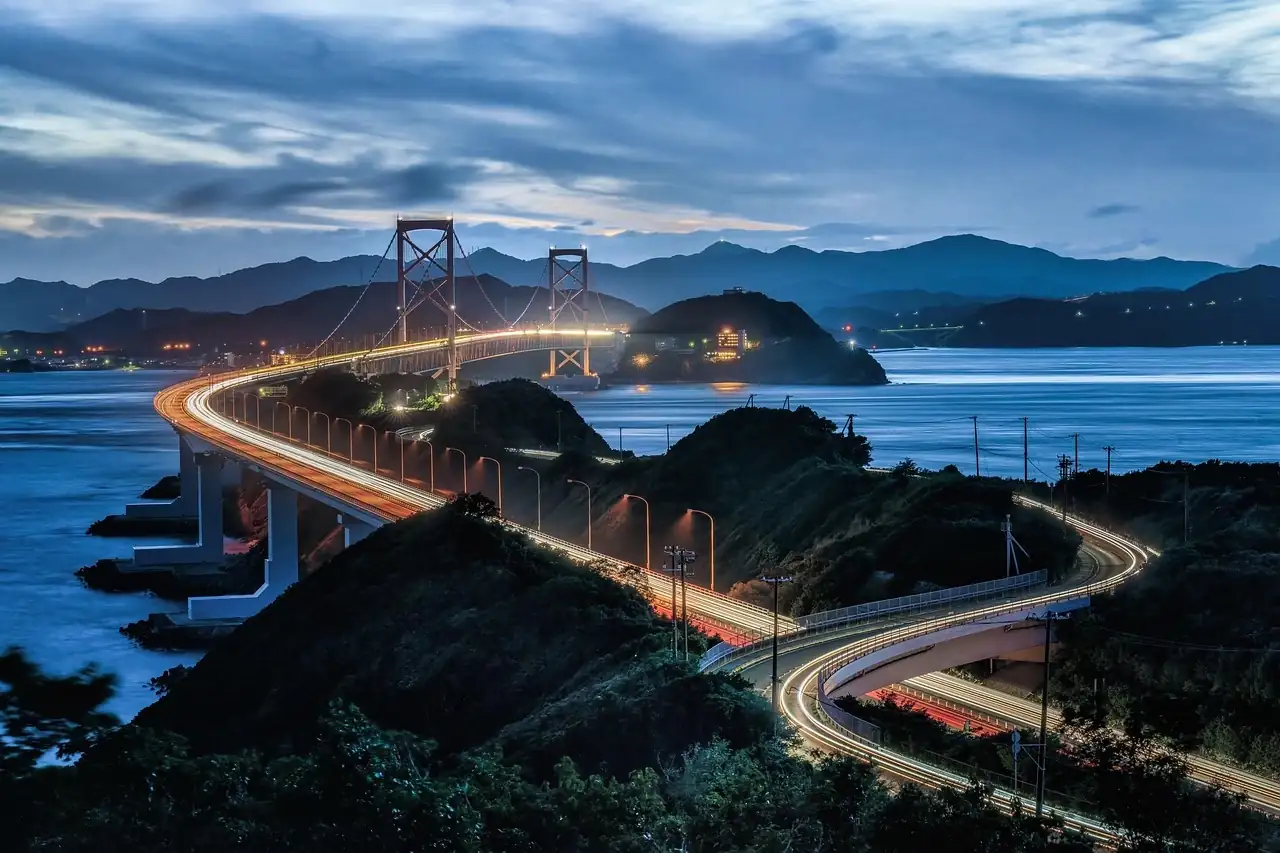
Geographically, Tokushima spans a wild terrain that transitions from the turbulent tidal straits of the Seto Inland Sea down to the precipitous, mist-shrouded limestone gorges of the Iya Valley—one of Japan’s "Three Hidden Regions" (Nihon San-dai Hikkyō), where defeated Heike samurai clan warriors took refuge in the twelfth century, weaving living suspension bridges out of mountain vines. In the north, the astronomical tidal differential between the Pacific Ocean and the Seto Inland Sea generates the colossal Naruto Whirlpools beneath the Ōnaruto Bridge. At the same time, the coastal temple of Ryōzen-ji stands as the sacred Starting Point (Temple 1) of the legendary 88-Temple Shikoku Pilgrimage (Ohenro). Connected directly to Kansai via the Kobe-Awaji-Naruto Expressway and across Shikoku by rail, Tokushima provides a gateway into ancient engineering, raw river adventures, and culinary terroir.
<Image src="image_agent_tag_16111803398484409726" alt="A massive ocean whirlpool spinning beneath the Ōnaruto suspension bridge in the Naruto Strait" caption="Naruto Strait tidal whirlpool" />
---
Navigating Tokushima Prefecture: Core Geographic Sectors
Tokushima's geography is shaped by the wide, silty alluvial basin of the Yoshino River (the "Shikoku Saburō"), dividing into four distinct travel corridors:
| Sector | Primary Station Hubs | Landscape & Atmosphere | Key Highlights |
|---|---|---|---|
| Tokushima City & Coastal Hub | JR Tokushima / Sako | Bustling river delta capital, traditional dance halls, ropeway lookouts, ramen alleys, indigo craft workshops. | Awa Odori Kaikan, Mount Bizan (Bizan Ropeway), Tokushima Castle park, Awa Ai indigo dyeing studios. |
| Naruto & The Northern Straits | JR Naruto | Churning ocean whirlpool straits, massive suspension bridges, colossal ceramic art institutions, sacred pilgrimage gates. | Naruto Whirlpools (Uzushio), Uzu no Michi walkway, Otsuka Museum of Art, Ryōzen-ji (Temple 1 of 88 Pilgrimage). |
| Iya Valley & Ōboke Gorges (West) | JR Ōboke / Awa-Ikeda | Deep limestone river ravines, swaying mountain vine footbridges, mist-veiled thatch farmsteads, clifftop cable cars. | Iya Kazurabashi (Vine Bridge), Ōboke & Koboke gorges boat cruises, Ochiai hamlet, Manneken Pis statue cliff. |
| Mima & The Yoshino River Basin | JR Anabuki / Sadamitsu | Preserved Edo indigo merchant streets, fireproof wing-wall architecture (Udatsu), sword mountain hiking gateways. | Mima Wakimachi Udatsu Townscape, Mount Tsurugi (Tsurugisan), Sadamitsu giant cedar trees. |
Top Things to Do Across Tokushima
1. Peer Down into the Churning Vortexes of the Naruto Whirlpools (Uzushio)
Connecting Tokushima to Awaji Island across the narrow 1.3-kilometer Naruto Strait, the Naruto Whirlpools (Naruto no Uzushio) are a natural wonder. The phenomenon is driven by the massive tidal exchange between the Pacific Ocean and the Seto Inland Sea: because the water level difference between the two bodies can reach up to 1.5 meters during peak tides, seawater rushes through the narrow, shallow strait at speeds up to twenty kilometers per hour—making it the fastest tidal current in Japan and the fourth-fastest on earth.
When the rapid central current collides with slower coastal water flows, it creates colossal marine vortices measuring up to twenty meters in diameter. Travelers can experience the whirlpools via two vantage points:
- From the Sea: Board sightseeing cruise boats (such as the Wonder Naruto or the underwater-viewing vessel Aqua Eddy) from Kameura Port to drift right up to the roaring edges of the spinning vortexes.
- From Above (Uzu no Michi): Walk 450 meters enclosed inside the lower structural steel truss of the Ōnaruto Bridge, forty-five meters directly above the ocean surface, peering straight down at the spinning currents through reinforced glass floor panels.
Timing Tip: Whirlpool intensity peaks twice daily during high and low tides, with the largest formations occurring during spring and autumn full and new moons (spring tides).
2. Cross the Swinging Vine Bridge of the Iya Valley (Iya no Kazurabashi)
Tucked deep into the secluded, mist-shrouded mountain ravines of western Tokushima, the Iya Valley was a remote haven where defeated samurai of the Taira (Heike) clan fled following their catastrophic loss at the Battle of Dan-no-ura in 1185. To defend their hidden mountain settlements against imperial pursuers, the samurai constructed defensive suspension footbridges woven from wild mountain vines.
The premier surviving example is the Iya no Kazurabashi, spanning forty-five meters across the roaring Iya River fourteen meters above the rocky riverbed. Weighing roughly five tons, the bridge is woven from heavy wild hardy kiwi vines (Shirakuchikazura), anchored to massive cedar trees on either riverbank. Historically, if enemies approached, the samurai could sever the vines with a single katana stroke to isolate the valley. Walking across the swinging bridge is a thrilling physical challenge: the wooden cedar slats underfoot are spaced several inches apart, revealing the rushing, crystal-clear emerald river current plunging directly below. Safety Note: For modern visitor safety, the bridge is reinforced internally with hidden high-tension steel cables and completely rewoven every three years by master craftsmen.
<Image src="image_agent_tag_16111803398484408548" alt="A rustic suspension bridge woven from thick vines and wooden planks crossing an emerald green river in the lush forest of the Iya Valley" caption="Iya no Kazurabashi Vine Bridge" />
---
3. Dance in the Streets at the Awa Odori Festival
Held annually from August 12 to 15 in Tokushima City, the Awa Odori is the largest and most famous dance festival in Japan, attracting over 1.3 million spectators each summer. Dating back to 1587 when daimyo Hachisuka Iemasa distributed free sake to the populace to celebrate the completion of Tokushima Castle—prompting a citywide drunken dance in the streets—the celebration is immortalized by its famous folk chant:
"Odoru aho ni miru aho; onaji aho nara odoranya son, son!"
("The dancers are fools, the watchers are fools; both are fools alike, so why not dance!")
During the four-day festival, downtown streets are closed to vehicles as tens of thousands of dancers organized into choreographed troupes called Ren parade down outdoor spectator avenues (Enbujō). The performance is divided into distinct styles:
- Onna-odori (Women's Dance): Dancers wear pink and indigo cotton yukatas, wooden geta sandals raised high onto their tiptoes, and semi-circular woven braided straw hats (Amigasa) pulled low over their faces, performing graceful, synchronized arm movements.
- Otoko-odori (Men's Dance): Energetic, dynamic, and comical, with dancers crouching low, leaping, and gesturing with paper fans or cloth hand towels.
The dancers move to the hypnotic rhythm of the Zomeki beat—driven by booming taiko drums, three-stringed shamisen, brass bells (Kane), and bamboo flutes. If visiting outside August, the Awa Odori Kaikan in Tokushima City hosts live daily indoor performances year-round where audience members are invited onto the stage to learn the dance steps.
<Image src="image_agent_tag_16111803398484410315" alt="Awa Odori female dancer in traditional white and pink yukata and braided straw amigasa hat smiling with arms raised" caption="Awa Odori Festival dancer" />
---
4. Stand Inside Masterpiece Recreations at the Otsuka Museum of Art
Located on the coastal bluffs of Naruto, the Otsuka Museum of Art (Ōtsuka Kokusai Bijutsukan) was founded in 1998 by the Otsuka Pharmaceutical Group to celebrate its 75th anniversary. Covering roughly 30,000 square meters across five subterranean and above-ground floors, it holds title as the largest exhibition space in Japan.
The museum displays over 1,000 full-scale ceramic tile reproductions (Itabi) of Western art masterworks spanning antiquity through the twentieth century. Using specialized ceramic printing and firing techniques, master technicians recreated the exact dimensions, brushstrokes, and pigment colors of works by Leonardo da Vinci, Michelangelo, El Greco, Monet, Van Gogh, and Picasso onto durable ceramic plates that will not fade or degrade for over two thousand years.
The centerpiece is the Sistine Hall, an astonishing 1:1 scale architectural recreation of Michelangelo’s Sistine Chapel in Vatican City, complete with barrel-vaulted ceilings and the monumental Last Judgment fresco. Visitors can physically touch the ceramic surfaces, photograph the works freely, and walk through an outdoor courtyard pool filled with living water lilies surrounding Monet’s ceramic murals.
<Image src="image_agent_tag_16111803398484409137" alt="The massive Sistine Hall at the Otsuka Museum of Art in Tokushima recreating the painted ceilings and Last Judgment fresco of the Vatican" caption="Otsuka Museum Sistine Hall" />
---
5. Drift Through the Prehistoric Chasm of Ōboke & Koboke Gorges
Carved over two hundred million years by the raging white waters of the Yoshino River cutting through the Shikoku Mountain Range, Ōboke and Koboke Gorges are dramatic geological canyons. The names translate colloquially to "Big Step Dangerous" (Ōboke) and "Small Step Dangerous" (Koboke)—referencing how perilous it was for ancient travelers to navigate the razor-sharp, narrow cliff paths along the river.
The canyon walls are composed of crystalline schist rock tilted at forty-five-degree angles, creating jagged, layered rock formations designated a National Natural Monument. Visitors board flat-bottomed motorboats for the Ōboke Gorge Sightseeing Boat Cruise (Ōboke-kyō Yūransen), a peaceful 30-minute cruise drifting between sheer rock walls and emerald-green river pools. For thrill-seekers, the Yoshino River through Koboke Gorge is celebrated as Japan's premier whitewater rafting destination, featuring Grade III and IV rapids that hosted the World Rafting Championships.
6. Walk the Indigo Merchant Quarter: Mima Wakimachi (Udatsu Townscape)
Situated along the northern bank of the Yoshino River in Mima, Wakimachi flourished during the Edo and Meiji eras as the primary inland river port for shipping precious Awa Ai (Indigo) dye to Osaka and Edo. The wealth of the town’s indigo merchant magnates is preserved along the 430-meter-long Udatsu Townscape (Udatsu no Machinami), lined with over eighty traditional timber merchant mansions.
The street is celebrated for its distinctive Udatsu—elaborate, raised fireproof wing-walls projecting upward from the second-story eaves, tiled with ceramic roof caps and family crests. Originally engineered to prevent fires from spreading between tightly packed wooden townhouses, constructing an ornate Udatsu was so expensive that it became the ultimate architectural status symbol, giving rise to the Japanese idiom "Udatsu ga agaranai" ("Cannot raise an Udatsu," meaning unable to advance in life or gain wealth). Step inside the Yoshida Residence to tour palatial tatami courtyards, and visit the Odeon-za, a classic 1934 wooden Kabuki playhouse.
7. Begin the 88-Temple Pilgrimage at Ryōzen-ji (Temple 1)
Located in the quiet rural town of Naruto, Ryōzen-ji is the official Starting Point (Dai-Ichi-ban Fudasho) of the celebrated 88-Temple Shikoku Pilgrimage (Ohenro). Established in the eighth century by the monk Gyōki and later consecrated by Kōbō Daishi (Kūkai), the temple is where thousands of pilgrims embark on their 1,200-kilometer spiritual circuit around the perimeter of Shikoku.
The atmosphere is charged with anticipation. Visitors pass through the two-story wooden Niōmon Gate into manicured courtyards featuring a two-story Tahōtō pagoda and carp ponds. Inside the temple shop, prospective pilgrims (Henro-san) purchase their essential white cotton vestments (Hakue), woven bamboo conical sedge hats (Sugegasa), and wooden walking staffs (Kongōzue, representing the living spirit of Kōbō Daishi), receiving their very first red-ink calligraphy seal (Goshuin) before beginning the journey.
Tokushima Terroir: Tokushima Ramen, Awa Odori Chicken & Sudachi
Nourished by the clear waters of the Yoshino River, the nutrient-rich currents of the Naruto Strait, and sunny coastal hillsides, Tokushima boasts a savory and comforting food culture:
Tokushima Ramen: One of Japan’s most distinct and recognizable regional ramen styles, dating back to post-war food stalls. Rather than a light broth, the signature Chairo-kei (Brown Style) soup features an intensely concentrated, savory-sweet broth brewed from pork bones and dark soy sauce (Tamari).
- The Distinct Toppings: Unlike standard ramen served with sliced chashu and boiled eggs, Tokushima Ramen is crowned with thinly sliced, sweet-and-savory simmered pork belly (Bara-niku) reminiscent of sukiyaki, accompanied by menma bamboo shoots and green onions.
- The Raw Egg Finish: Diners crack a raw egg yolk directly into the center of the steaming bowl; the velvety yolk melts into the rich, salty broth, softening its edge. Tokushima Ramen is so rich and savory that locals almost universally order it alongside a bowl of plain white rice, using the pork belly as a side dish.
Sudachi Citrus: Tokushima produces over ninety-eight percent of all the Sudachi citrus grown in Japan. A small, round, dark-green citrus fruit about the size of a golf ball, Sudachi possesses a zesty, sharp acidity and refreshing herbal aroma superior to standard lemons or limes. Locals squeeze fresh sudachi juice over everything: grilled sweetfish (ayu), bowls of soba, cold draft beer, and sashimi. Thin cross-sections of fresh sudachi are arranged to blanket bowls of chilled Sudachi Soba, creating a fragrant summer meal.
Awaodori Heritage Chicken (Awa-odori Jidori): Tokushima’s premier certified free-range chicken brand, playfully named after the famous festival. Reared in low-density open-air mountain coops across the western valleys for over eighty days, Awaodori chicken is lean, muscular, and low in unwanted fat. It delivers a toothsome, springy chew and an intense, rich umami flavor when grilled over charcoal embers on yakitori skewers or simmered into winter hot pots.
Naruto Sea Bream (Naruto Tai): Red sea bream (Tai) harvested from the raging tidal currents of the Naruto Strait. Because the fish must swim constantly against twenty-kilometer-per-hour whirlpool currents, they develop firm, muscular meat with fine ribbons of sweet, healthy fat. Naruto Tai is enjoyed as translucent raw sashimi, simmered whole in clay pots with dashi and local rice as Tai-Meshi, or salt-baked whole inside a crust of sea salt.
Iya Soba: A rustic, traditional noodle native to the high mountain hamlets of the Iya Valley. Because the steep, rocky slopes could not support wet rice paddies, mountain villagers cultivated high-altitude buckwheat. Iya Soba is made with 100% pure buckwheat flour bound without wheat flour binders, using mineral-rich mountain spring water. The noodles are thick, short, and rustic, breaking easily under chopsticks, served in a steaming bowl of dashi broth topped with local mountain vegetables (Sansai) and sweet fried tofu.
Naruto Kintoki Sweet Potatoes: Grown in the sandy, mineral-rich coastal fields around Naruto, these sweet potatoes are famous across Japan for their golden-yellow flesh, fluffy texture resembling roasted chestnuts, and natural honey sweetness. Savor them roasted whole over hot stones, fried into tempura, or baked into sweet potato cakes.
Transportation: Express Highway Buses & Mountain Rail Logistics
Tokushima's transit landscape is unique: it is one of the only prefectures in Japan with no passenger railway electrification (all JR trains run on diesel engines), relying on an extensive network of express highway buses linking it directly to Kansai:
Direct Highway Express Buses from Kansai (Fastest & Preferred):
- Because the Kobe-Awaji-Naruto Expressway links Honshu directly to Tokushima via bridges across Awaji Island, express highway buses are significantly faster and cheaper than train travel:
- From Kobe (Sannomiya Station): Direct highway buses reach Naruto in roughly 75 minutes and JR Tokushima Station in 1 hour and 50 minutes.
- From Osaka (Osaka/Umeda or Namba): Direct buses reach JR Tokushima Station in roughly 2 hours and 30 minutes.
- From Kansai International Airport (KIX): Direct airport buses run straight to Tokushima Station in 2 hours and 45 minutes.
- Because the Kobe-Awaji-Naruto Expressway links Honshu directly to Tokushima via bridges across Awaji Island, express highway buses are significantly faster and cheaper than train travel:
Connecting to Honshu via Rail (JR Kotoku Line):
- If traveling by rail with a JR Rail Pass, take the Sanyō Shinkansen to JR Okayama Station, transfer to the Marine Liner Rapid across the Great Seto Bridge to JR Takamatsu Station (Kagawa), and transfer to the JR Limited Express Uzushio onward to JR Tokushima Station (roughly 65 mins from Takamatsu).
Reaching the Iya Valley & Ōboke Gorges:
- Board the JR Limited Express Nanpū or Shimanto along the JR Dosan Line to JR Ōboke Station (approx. 1 hour 45 mins from Tokushima with a transfer at Awa-Ikeda; or 1 hour direct from Kochi).
- From JR Ōboke Station, local municipal buses (operated by Shikoku Kōtsū) connect to the Iya Kazurabashi Vine Bridge in roughly 25 to 30 minutes. Travel Note: Mountain bus departures are infrequent (often 2 to 4 buses daily); checking timetables in advance or renting a car at Tokushima, Takamatsu, or Kochi is strongly recommended for exploring the deep valley.
Digital Transit Cards (IC Cards): JR lines around Tokushima City operate on physical paper tickets or limited IC validation; many rural buses in the Iya Valley and Naruto require cash payment at the driver's fare box.
Where to Stay in Tokushima: Strategic Base Camps
| Base Hub | Vibe & Atmosphere | Transit Connections | Accommodation Strategy |
|---|---|---|---|
| JR Tokushima Station Core | Practical provincial capital, walkable dining alleys, direct airport buses, lively ramen shops. | JR Kotoku, Tokushima, and Mugi lines; central highway bus terminal; Bizan Ropeway. | High density of modern, efficient Japanese business hotels (multiple central APAs), railway towers, comfortable mid-tier transit properties. |
| Iya Valley & Ōboke (Highlands) | Deep alpine canyon wilderness, mist-veiled forests, thermal mountain springs, utter tranquility. | JR Dosan Line (Ōboke Station); Shikoku Kōtsū valley buses. | Secluded luxury hot spring (onsen) ryokans featuring private cable cars descending to open-air riverside rock baths (such as Hotel Iya Onsen and Kazurabashi Hotel), restored thatched farmhouse stays (Chiiori). |
| Naruto Coastal Resort Strip | Ocean straits, crashing surf, panoramic views across the Ōnaruto Bridge and Seto Inland Sea. | JR Naruto Station; direct highway buses to Kobe/Osaka. | Full-service oceanfront resort hotels (such as AoAwo Naruto Resort) featuring open-air hot spring baths overlooking the sea, fresh sea bream banquets. |
| Mima & Wakimachi | Historic merchant town nostalgia, lantern-lit earthen walls, peaceful evening quiet along the river. | JR Tokushima Line (Anabuki Station). | Renovated traditional merchant storehouse (Kura) boutique hotels, local countryside guesthouses. |
Regional Day Trips Across Tokushima Prefecture
1. Mount Bizan & The Tokushima Panorama
Rising abruptly 290 meters directly behind the city center, Mount Bizan (Bizansan) is the geographic landmark of Tokushima City. The mountain earned its name in ancient poetry because its rounded, symmetrical ridge resembles an arched eyebrow (Mayu or Bi). The summit is reached in six minutes via the Bizan Ropeway, which departs directly from the fifth floor of the Awa Odori Kaikan.
The mountaintop observation deck provides sweeping vistas looking across the delta channels of the Yoshino River, the red-tiled roofs of the city, and out across the Kii Channel toward the distant mountains of Wakayama Prefecture on Honshu. At night, the summit LED illumination arrays glow, offering a glittering night-view panorama.
2. The Clifftop Peeing Boy of the Iya Valley (Manneken Pis)
Perched precariously along the narrow, winding switchbacks of the old Iya highway (Route 32) deep in the northern valley, a bronze statue of a Peeing Boy (Shōben Kozō) stands balanced on the edge of a sheer, vertical rock precipice. The statue was erected in 1968 to honor a daredevil legend among local children and mountain travelers, who allegedly tested their courage by standing on this exact rock spur to urinate into the chasm below.
Gazing over the railing reveals an adrenaline-inducing drop: the statue perches two hundred meters straight down into the turquoise, winding ribbon of the Iya River below, surrounded by sheer, mist-shrouded mountain walls that blaze in gold, orange, and crimson foliage each autumn.
3. Mount Tsurugi: Shikoku's Sacred Second Summit
Rising 1,955 meters in western Tokushima, Mount Tsurugi (Tsurugisan) is the second-highest mountain on the island of Shikoku (behind Mount Ishizuchi in Ehime) and one of Japan's 100 Famous Mountains. In ancient folklore, the mountain is steeped in esoteric mystery: legends state that the legendary lost Ark of the Covenant was concealed deep within its subterranean caverns, and that the child Emperor Antoku’s sacred sword was buried here following the Battle of Dan-no-ura (giving the mountain its name, Tsurugi, meaning "Sword").
Climbers take a scenic open-air chairlift from Minokoshi station up to 1,750 meters elevation, ascending gently through subalpine dwarf bamboo grasslands and rocky ridges along wooden boardwalks to reach the summit in roughly forty-five minutes. The sweeping peak offers unobstructed views across the Shikoku mountains to the Seto Inland Sea and Pacific Ocean.
Best Seasons to Visit Tokushima
August 12–15 (The Awa Odori Festival): The undisputed cultural climax of the year. Tokushima City transforms into a high-energy dance carnival, drawing over a million spectators. Downtown avenues are filled with the booming thunder of taiko drums, swinging paper lanterns, and tens of thousands of dancers moving in hypnotic synchronization. Crucial Logistics Note: Hotel rooms in Tokushima City book out months in advance for the festival week; reserve accommodations six to nine months ahead or arrange base camps in nearby Takamatsu or Kobe.
Autumn (October to Late November): The premier season for wilderness exploring and driving the Iya Valley and Ōboke Gorges. The sheer limestone canyon walls and mountain beech forests blaze in brilliant shades of yellow, gold, and crimson. Crisp, temperate weather averaging 14°C to 19°C (57°F–66°F) makes hiking Mount Tsurugi and walking the swinging vine bridge exceptionally pleasant.
Spring (Late March to May): The peak season for viewing the Naruto Whirlpools. Astronomical spring tides during the vernal equinox generate the largest and most violent marine whirlpool formations of the year. Down on land, cherry blossoms bloom across the stone moats of Tokushima Castle park and surround the hillside pagodas of Temple 1 (Ryōzen-ji) as pilgrimage season reaches its peak. Mild sightseeing weather averages 13°C to 18°C (55°F–64°F).
Winter (December to February): Cool, crisp, and quiet. While temperatures average 3°C to 10°C (37°F–50°F), coastal Naruto and Tokushima City receive minimal snow and enjoy high winter sunshine. In the deep mountains of the Iya Valley, winter dusts the thatched roofs of historic farmhouses and vine bridges in white snow, creating a serene, monochrome retreat. Winter is the definitive culinary season to feast on rich, steaming bowls of Tokushima Ramen, savor fresh catches of sweet Naruto Sea Bream, and soak in secluded open-air river hot springs.
Summer (Late June to August): Lush, green, and river-centric, with temperatures reaching 31°C to 33°C (88°F–91°F). The clear waters of the Yoshino River offer world-class conditions for whitewater rafting through Koboke Gorge, while coastal Naruto buzzes with ocean cruisers.


 香川
香川 愛媛
愛媛 高知
高知