

On this page
Aomori Travel Guide: Fiery Lantern Floats, Primeval Beeches & The Tsugaru Strait
Forming the northernmost tip of Honshu, Aomori Prefecture (青森県) is the wild, maritime terminus of Japan's main island. Framed by the crashing currents of the Sea of Japan to the west, the Pacific Ocean to the east, and the turbulent Tsugaru Strait facing Hokkaido to the north, Aomori is fundamentally shaped by water, wind, and colossal winter snowpacks. Siberian weather systems sweeping across the sea dump massive blankets of powder across the Hakkōda Mountains, making Aomori City officially the snowiest populated city on earth, with seasonal accumulations regularly exceeding eight meters.
Historically divided into the rival domains of Tsugaru in the west (ruled from Hirosaki Castle) and Nanbu in the east (centered on Hachinohe), Aomori developed a fiercely distinct folk identity born of prolonged winter isolation. This harsh climate forged explosive summer energy, immortalized in the roaring taiko drums, flutes, and colossal illuminated paper floats of the world-famous Nebuta Festivals. Beyond its folklore, Aomori holds ancient roots: it is home to the UNESCO-inscribed Sannai-Maruyama archaeological site (showcasing complex hunter-gatherer settlements dating back 5,900 years), the virgin primeval beech forests of Shirakami-Sanchi, the emerald waters of Lake Towada, and the pristine mountain gorge of the Oirase Stream. Sliced through by the Tōhoku and Hokkaido Shinkansen lines via the undersea Seikan Tunnel, Aomori is the ultimate deep-north frontier.
Navigating Aomori Prefecture: Core Geographic Sectors
Aomori’s terrain wraps around Mutsu Bay like two curved pincers (the Tsugaru Peninsula to the west and the axe-shaped Shimokita Peninsula to the east), dividing into four distinct travel corridors:
| Sector | Primary Station Hubs | Landscape & Atmosphere | Key Highlights |
|---|---|---|---|
| Aomori Bay & Hakkōda | JR Aomori / Shin-Aomori | Bayside capital, sleek harbor museums, prehistoric settlements, volcanic peaks, steaming mountain bathhouses. | Nebuta Museum WA-RASSE, Sannai-Maruyama Site, Aomori Museum of Art, Hakkōda Ropeway, Sukayu Onsen. |
| Hirosaki & Tsugaru Plains | JR Hirosaki / Goshogawara | Feudal castle moat capital, apple orchards, Tsugaru shamisen folk halls, winter stove trains. | Hirosaki Castle & Park, Fujita Memorial Garden, Tsugaru-han Neputa Village, Tsugaru Railway stove train. |
| Towada & Oirase Gorge | Hachinohe / Shichinohe-Towada (Bus) | Glacial caldera lakes, moss-draped river gorges, cascading waterfalls, cutting-edge contemporary art. | Oirase Mountain Stream, Lake Towada, Towada Art Center, Mount Yakeyama trailheads. |
| Shimokita Peninsula & Hachinohe | JR Hachinohe / Shimokita | Wind-sculpted coastal sea cliffs, tuna fishing capes, sacred Buddhist purgatory calderas, morning seafood markets. | Mount Osore (Osorezan), Cape Ōma (Bluefin tuna), Tatehana Wharf Morning Market, Tanesashi Coast. |
Top Things to Do Across Aomori
1. Experience the Fire and Thunder of Nebuta Museum WA-RASSE
Nothing defines Aomori’s spirit like the Aomori Nebuta Matsuri, held annually from August 2 to 7, when millions gather to watch massive, three-dimensional illuminated paper floats depicting legendary warriors, samurai, and gods paraded through the night streets to the thunder of taiko drums and the chants of "Rassera! Rassera!" dancers (haneto).
Located right along the waterfront next to Aomori Station, Nebuta Museum WA-RASSE preserves this spectacle year-round inside an award-winning building wrapped in red steel louvers. The darkened main hall houses four actual full-scale, award-winning floats from recent festivals. Up to nine meters wide and five meters tall, these monumental sculptures are hand-crafted from wire armatures, delicate Washi paper, and thousands of internal LED bulbs. Visitors can walk beneath the floats to inspect master brushwork, touch real Nebuta paper, and participate in daily live taiko drum and dance workshops.
2. Stroll the Moats and Original Keep of Hirosaki Castle
Constructed in 1611 by the Tsugaru clan, Hirosaki Castle (Hirosaki-jō) is one of only twelve surviving original castle keeps in Japan, and the only original keep standing anywhere in the northern Tōhoku or Hokkaido regions. The compact, three-story wooden keep sits inside the expansive 49-hectare Hirosaki Park, encircled by three concentric defensive moats and fortified earthen ramparts.
Hirosaki Castle is universally celebrated as one of the top cherry blossom destinations on earth. Over 2,600 cherry trees representing fifty varieties bloom across the grounds in late April. As the blossoms reach peak bloom, falling petals blanket the wide outer moats in a thick, velvety layer of pink, creating the world-famous Hanaikada (Flower Raft) phenomenon, where the water vanishes entirely under a floating carpet of sakura petals. Engineering Note: Between 2015 and 2025, the 400-ton wooden keep was moved seventy meters inland using hydraulic jacks without dismantling it (hikiya technique) to allow master stonemasons to dismantle and repair the collapsing 400-year-old stone foundation wall.
3. Walk the Mossy Cataracts of the Oirase Mountain Stream
Carving a pristine fourteen-kilometer path through virgin deciduous forests between Yakeyama and Nenokuchi at Lake Towada, the Oirase Mountain Stream (Oirase Keiryū) is one of Japan's most celebrated river corridors. Designated a Special Place of Scenic Beauty and Natural Monument, the trail runs parallel to a rushing, emerald-green mountain river punctuated by fourteen dramatic cascades, including the roaring, twenty-meter-wide Chōshi Ōtaki (Sake Pitcher Waterfall) and the delicate multi-tiered Ashura Falls.
A well-maintained, flat dirt footpath borders the water, allowing hikers to complete the entire 14-kilometer walk in roughly 4 to 5 hours, or hop between sights using frequent JR buses that stop at intermediate trailheads. The gorge is famous for its miniature biodiversity: hundreds of varieties of rare mosses, liverworts, and lichens blanket every river boulder, tree trunk, and wooden railing, giving the entire forest a luminous green glow.
4. Cruise the Volcanic Caldera of Lake Towada
Sitting at an elevation of four hundred meters on the border between Aomori and Akita prefectures, Lake Towada (Towadako) is a colossal double-crater volcanic caldera lake formed by violent volcanic collapses over the past 200,000 years. Plunging to depths of 327 meters (the third-deepest lake in Japan), the water is exceptionally clear and surrounded by towering, primeval caldera rims blanketed in Japanese beech, birch, and katsura trees.
Board sightseeing catamarans from Yasumiya pier to cruise beneath the sheer volcanic headlands of the Ogura and Nakayama peninsulas. On shore, walk to the iconic Statue of Maidens (Otome no Zō)—two bronze women facing each other sculpted in 1953 by renowned poet and artist Kōtarō Takamura—and visit the quiet, forested precinct of Towada Shrine, nestled beneath massive ancient cryptomeria pines.
5. Step into Jomon Prehistory at the Sannai-Maruyama Site
Discovered during pre-construction surveying for a baseball stadium on the outskirts of Aomori City in 1992, the Sannai-Maruyama Site revolutionized global archaeological understanding of the Jōmon Period (c. 3900–2200 BC). Rather than being small, nomadic hunter-gatherer bands, the excavation revealed a massive, permanent, highly organized agrarian community that thrived continuously for over 1,500 years.
Now a UNESCO World Heritage site, visitors walk among excavated and reconstructed longhouses, subterranean pit dwellings, raised storage storehouses, and the iconic Six-Pillar Monument—a colossal wooden structure constructed from massive chestnut-tree trunks measuring one meter in diameter, aligned with surgical astronomical precision. The adjacent Jomon Theater and Museum displays thousands of artifacts, including fine woven textiles, polished jade beads, and mysterious hollow ceramic cross-shaped clay figurines (dogū).
6. Cross the Threshold of Purgatory at Mount Osore (Osorezan)
Perched inside an active volcanic caldera on the remote Shimokita Peninsula, Mount Osore (Osorezan) literally translates to "Fear Mountain." Founded in 862 AD by the Tendai monk Jikaku Daishi, it is venerated alongside Mount Hiei and Mount Kōya as one of the Three Sacred Mountains of Japan. In folk mythology, Osorezan is the geographic threshold where the realm of the living meets the realm of the dead.
The landscape is intensely surreal: barren fields of bleached grey volcanic rocks, bubbling pits of boiling sulfur mud, and yellow sulfuric steam vents representing the Buddhist hells, which give way abruptly to the white sandy shores and turquoise waters of Lake Usori, representing Paradise. Thousands of small stone Jizō statues, colorful children's pinwheels, and hand-stacked pebble cairns dot the volcanic flats, placed by grieving parents to help deceased children cross the mystical Sanzu River (the Buddhist River Styx). During the Osorezan Taisai festival in late July, blind female spirit mediums known as Itako gather at the temple of Bodai-ji to perform ritual séances, channeling the voices of the dead for pilgrims.
7. Soak in the Historical Acidic Waters of Sukayu Onsen
Perched 900 meters high on the slopes of the Hakkōda Mountains, Sukayu Onsen is a historic 300-year-old hot spring lodge designated in 1954 as Japan's very first "National Health Resort Hot Spring." The centerpiece of the historic dark timber lodge is the Sennin-buro ("1,000-Person Bath")—a massive, 240-square-meter communal bath hall built entirely from fragrant Aomori hiba cypress wood without a single metal nail.
The bathhouse is filled with milky-white, highly acidic, sulfur-rich volcanic water that bubbles upward directly from the floorboards at temperatures varying across separate pools: Netsu-no-yu and Shibu-roku-no-yu. Bathing Note: The Sennin-buro remains one of the few surviving authentic Konyoku (mixed-gender) communal baths in Japan, though strict rules enforce a gender-divided layout across the large pool, and women can purchase modesty bathing dresses (yuami-gi) at the front desk, alongside dedicated women-only bathing hours twice daily.
Aomori Terroir: Sweet Apples, Bluefin Tuna & Nokkedon
Surrounded by three cold-water oceanic currents and blessed with mineral-rich volcanic mountain soils, Aomori boasts some of the most prestigious food products in Japan:
- Aomori Apples (Ringo): Aomori produces roughly sixty percent of all apples grown in Japan. Cultivated since 1875, local orchards specialize in prized varieties such as Fuji (developed in Aomori), Tsugaru, and Ohrin. Every single apple is meticulously cared for: farmers prune leaves by hand to ensure 360-degree sunlight exposure and place individual protective paper bags over fruit while still on the branch. The result is sweet, crisp, highly aromatic fruit. Sample freshly baked apple pies along Hirosaki's designated "Apple Pie Route," sip unfiltered sparkling apple ciders, or try sweet apple soft-serve ice cream.
- Ōma Bluefin Tuna (Hon-Maguro): Caught in the treacherous, churning currents of the Tsugaru Strait off the northern tip of Cape Ōma, Ōma Tuna is universally recognized as the "Black Diamond" of the sushi world. The fish feed on squid and Pacific saury in icy waters, developing extraordinarily thick, sweet, marbled fat. Ōma tuna is caught exclusively via traditional single-line pole-and-hook fishing (ippon-zuri) by lone fishermen battling giant 200-to-300-kilogram tuna one-on-one, preventing bruising or lactic acid buildup in the meat. Slices of raw otoro and chutoro from Ōma regularly command record-breaking millions at Tokyo's Toyosu New Year fish auctions.
- Aomori Nokkedon: The ultimate seafood market breakfast at Furukawa Fish Market (Aomori Gyosai Center). Visitors purchase a sheet of tickets (¥2,000 for 10 tickets) and receive a bowl of warm steamed rice from the counter. You then walk through the market stalls, trading individual tickets for whatever fresh toppings you desire: a ticket for fresh sea urchin (uni), another for scallops, fatty tuna slices, salmon roe (ikura), or sweet shrimp—crafting a 100% custom sashimi bowl.
- Mutsu Bay Scallops (Hotate): Mutsu Bay’s calm, cold waters are fed by nutrient-dense river runoff from the surrounding Hakkōda and Shirakami forests, creating the premier scallop beds in Japan. Scallops here are sweet, thick, and firm. Savor them raw as sashimi, or prepared as Kaiyaki Miso: fresh scallops, leeks, and mushrooms simmered with local miso and beaten egg inside an enormous wild scallop shell over a small tabletop burner.
- Tsugaru Jūbako & Kenoshiru: Aomori’s agrarian winter comfort food. Kenoshiru is a hearty, nourishing winter stew made from finely diced root vegetables (daikon, burdock, carrots), wild mountain greens (warabi), freeze-dried tofu, and fried bean curd simmered in a dashi-soybean miso broth. Rich in fiber and plant proteins, it was historically cooked in massive cauldrons to sustain farming families through freezing snowstorms.
- Hachinohe Senbei Jiru: A comforting regional hot pot originating from the southern Nanbu region. A savory soy sauce broth loaded with chicken, shiitake mushrooms, leeks, and burdock root is brought to a boil, followed by breaking pieces of Nanbu Senbei (hard, savory wheat-and-salt crackers) directly into the soup. As the crackers absorb the chicken broth, they soften to an al-dente texture resembling Italian pasta dumplings.
Transportation: Shinkansen Arteries & Nostalgic Winter Trains
Aomori’s high-speed rail links make reaching this northern outpost fast, while scenic regional lines connect the coasts:
- Tokyo to Aomori via Tōhoku Shinkansen:
- Hayabusa Express: Races along the Tōhoku mainline at speeds up to 320 km/h, connecting Tokyo Station directly to JR Shin-Aomori Station in just 3 hours and 10 minutes. (Fully covered by the nationwide JR Rail Pass and JR East Tohoku Area Pass; all seats are strictly reserved).
- Connecting to Aomori City Center: Shin-Aomori is a bullet-train bypass station. Transfer to the local JR Ōu Main Line for a quick 6-minute hop into central JR Aomori Station.
- The Undersea Seikan Tunnel to Hokkaido:
- From Shin-Aomori, the Hokkaido Shinkansen plunges beneath the Tsugaru Strait through the monumental 53.8-kilometer Seikan Tunnel (the world’s longest undersea railway tunnel), reaching Shin-Hakodate-Hokuto Station in Hokkaido in roughly 1 hour.
- Scenic Regional Railways:
- JR Resort Shirakami (Gono Line): One of Japan's most celebrated scenic coastal trains. Operates between Aomori/Hirosaki and Akita along the rugged, wave-swept coast of the Sea of Japan, featuring panoramic windows, live onboard Tsugaru shamisen performances, and stops along Shirakami-Sanchi.
- Tsugaru Railway Stove Train (Stove Resha): Operates in deep winter (December to March) across the snowy Tsugaru plain. Vintage passenger cars are heated by cast-iron, coal-fired potbelly stoves inside the carriage, where conductors and passengers roast fresh dried squid (surume) directly on the stove griddle while sipping hot sake.
- Digital Transit Cards (IC Cards): Major stations (Shin-Aomori, Aomori, Hirosaki, Hachinohe) accept digital Suica, Pasmo, and ICOCA cards for train lines and city buses. However, rural bus lines (such as those to Lake Towada and Sukayu Onsen) and private scenic lines often require cash or dedicated regional transport passes.
Where to Stay in Aomori: Strategic Base Camps
| Base Hub | Vibe & Atmosphere | Transit Connections | Accommodation Strategy |
|---|---|---|---|
| JR Aomori Station Core | Harborfront capital buzz, walking distance to Nebuta museum, fish markets, and ferry docks. | JR Ōu & Tsugaru lines; Aoimori Railway; central bus terminal for Hakkōda & Towada. | High density of modern, efficient Japanese business hotels (multiple central APAs), bayside hotels, transit properties. |
| Hirosaki Core | Historic castle town atmosphere, Western Meiji architecture, apple cafes, live shamisen pubs. | JR Ōu Main Line (35 mins from Aomori); Kōnan Railway. | Clean, cost-effective station-front business hotels, boutique traditional ryokans, retro city hotels. |
| Hakkōda & Sukayu Mountains | High-altitude alpine wilderness, geothermal sulfur steam, deep powder snow retreats. | JR Bus Tōhoku from Aomori Station (approx. 70–80 mins). | Historic rustic wooden onsen lodges (such as Sukayu Onsen and Hakkōda Hotel) with natural hot spring baths and mountain vegetable banquets. |
| Oirase Gorge & Lake Towada | Tranquil riverside forest solitude, roaring waterfalls, clear alpine waters. | JR Bus Tōhoku from Aomori or Hachinohe (seasonal operation). | High-end forest resort lodges (such as Hoshino Resorts Oirase Keiryu Hotel), lakeside onsen ryokans. |
| Hachinohe (Pacific Coast) | Vibrant coastal fishing harbor, massive morning markets, gateway to Sanriku coast. | Tōhoku Shinkansen stop; JR Hachinohe Line. | Modern station-front corporate business hotels, downtown izakaya-district hotels. |
Regional Day Trips Across Aomori Prefecture
1. Shirakami-Sanchi (UNESCO World Heritage Beech Forest)
Straddling the mountainous border between southwestern Aomori and Akita, Shirakami-Sanchi preserves the last remaining virgin stand of Siebold's beech forest (buna) that once blanketed northern Japan. Inscribed as a UNESCO World Natural Heritage site in 1993, this undisturbed ecosystem has flourished since the last Ice Age without commercial logging. Explore the Juniko (Twelve Lakes) on the western slopes, particularly the mystical Aoike (Blue Pond)—a small forest pond whose waters shine in a surreal, luminous cobalt-blue so intensely clear that submerged fallen beech trunks appear frozen in glass.
2. Towada Art Center
Situated in Towada City along the tree-lined Kanchōgai Avenue, the Towada Art Center is one of the most innovative contemporary art museums in East Asia. Designed by Ryue Nishizawa (SANAA), the museum consists of independent white glass cubes linked by transparent corridors, integrating art directly with the street. The permanent collection features massive site-specific installations by international luminaries, anchored by Ron Mueck’s startling, hyper-realistic four-meter-tall sculpture "Standing Woman," alongside vibrant outdoor installations by Yayoi Kusama and Choi Jeong Hwa.
3. Tatehana Wharf Morning Market (Hachinohe)
Held only on Sunday mornings from dawn until roughly 9:00 AM (from mid-March to December), the Tatehana Wharf Morning Market (Tatehana Ganpeki Asaichi) in Hachinohe is one of the largest open-air morning markets in Japan. Stretching nearly a kilometer along the commercial shipping wharf, over three hundred vendor stalls assemble to feed tens of thousands of visitors: freshly charcoal-grilled squid, steaming bowls of ramen, fresh sashimi, fried chicken cutlets, craft coffees, and vintage clothing, set against the backdrop of ocean fishing trawlers.
Best Seasons to Visit Aomori
- August 2–7 (Aomori Nebuta Festival): The undisputed cultural highlight of the year. Over three million spectators gather as twenty colossal, illuminated paper warrior floats parade through downtown Aomori accompanied by hundreds of taiko drummers, flutists, and thousands of chanting haneto dancers. Hirosaki holds its companion Hirosaki Neputa Festival (August 1–7), featuring fan-shaped floats painted with dramatic scenes from the Water Margin and Romance of the Three Kingdoms.
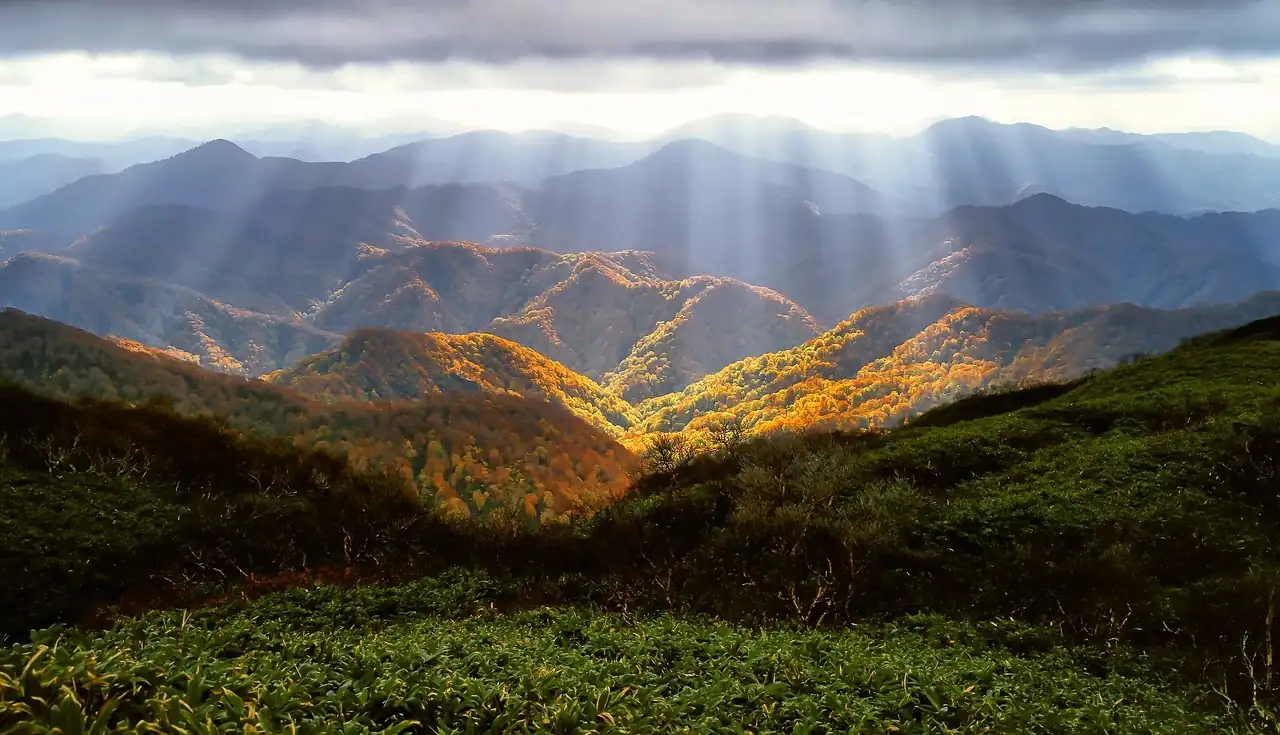
- Autumn (October to Early November): The premier hiking season for the Oirase Mountain Stream, Lake Towada, and the Hakkōda Mountains. The dense beech, katsura, and maple forests turn breathtaking shades of golden yellow, bronze, and scarlet, framed against the rushing emerald river waters. Crisp, clear days with temperatures averaging 12°C to 17°C (54°F–63°F).
- Spring (Late April to Early May): The world-famous sakura season. Because of its northern latitude, cherry blossoms in Hirosaki Park peak in late April, coinciding with Golden Week. Over 2,600 trees bloom around the castle moats, culminating in the magical pink Hanaikada petal rafts filling the waterways. Mild, refreshing sightseeing weather averaging 13°C to 18°C (55°F–64°F).
- Winter (December to March): The ultimate deep-snow experience. Temperatures average -2°C to 4°C (28°F–39°F). The Hakkōda Mountains receive monumental snowfalls, transforming mountain forests into the famous Juhyō (Snow Monsters)—towering evergreen trees entombed in meters of windblown hoarfrost and rime ice, viewed via the Hakkōda Ropeway. Hirosaki Castle hosts the magical Hirosaki Castle Snow Lantern Festival in February, while the Tsugaru Railway operates its historic potbelly stove train across the frozen plains.


 宮城
宮城 山形
山形 福島
福島 磐梯
磐梯 秋田
秋田 岩手
岩手