

On this page
Ishikawa Travel Guide: Samurai Estates, Gold Leaf & Sea of Japan Terroir
Jutting outward from the central coast of Honshu into the Sea of Japan, Ishikawa Prefecture (石川県) is one of the cultural capitals of classical Japanese arts. Historically ruled during the Edo period by the Maeda clan—the leaders of the Kaga Domain—Ishikawa was the wealthiest feudal domain in Japan outside the Tokugawa shogunate itself, boasting an agricultural wealth evaluated at over one million koku of rice (the Kaga Hyakumangoku). Because the Maeda lords were constantly scrutinized by the shogun in Edo for signs of military ambition, they deliberately channeled their vast fortunes away from weapons and castles, investing instead in high culture: master tea ceremonies, classical Nō theatre, lacquer carving, ceramic firing, and the delicate art of hammering pure gold leaf.
Spared from the devastating bombing runs of World War II, the prefectural capital of Kanazawa preserves an architectural streetscape second only to Kyoto: preserved Edo-period samurai residential compounds, three active geisha (geiko) pleasure quarters, and one of Japan's Three Great Landscape Gardens, Kenroku-en. Beyond the artistic riches of Kanazawa lies the rugged coast of the Noto Peninsula to the north, defined by wild sea cliffs, rural salt pans, and centuries-old fishing communities, alongside the historic hot spring gorges of Kaga Onsen in the south. With direct bullet train access via the Hokuriku Shinkansen, Ishikawa provides a deep dive into Japanese craftsmanship, refined seafood, and living samurai heritage.
Navigating Ishikawa: Key Geographic Sectors
Ishikawa’s long, narrow north-to-south shape borders Toyama and Fukui prefectures, cleanly dividing into three distinct travel zones:
| Sector | Primary Station Hubs | Landscape & Atmosphere | Key Highlights |
|---|---|---|---|
| Kanazawa Urban Core | JR Kanazawa Station | Historic samurai quarters, preserved geisha alleys, world-class modern art, bustling seafood markets, master artisan studios. | Kenroku-en Garden, Kanazawa Castle Park, Higashi Chaya District, Nagamachi Samurai District, 21st Century Museum of Contemporary Art, Omicho Market. |
| Kaga Hot Spring Region (South) | Kaga-Onsen Station | Ancient geothermal river ravines, historic public bathhouses, traditional porcelain kilns, lacquerware workshops. | Yamanaka Onsen, Yamashiro Onsen, Kakusenkei Gorge, Kutani porcelain workshops, Awazu Onsen. |
| Noto Peninsula (North) | Wajima / Wakura-Onsen / Anamizu | Rugged coastal cliffs, terraced ocean rice paddies, traditional lacquerware crafts, open-air morning markets, scenic coastal drives. | Shiroyone Senmaida (Thousand Rice Paddies), Wajima Morning Market, Wakura Onsen, Chirihama Nagisa Driveway, Ganmon Sea Caves. |
Top Things to Do Across Ishikawa
1. Wander the Six Attributes of Kenroku-en Garden
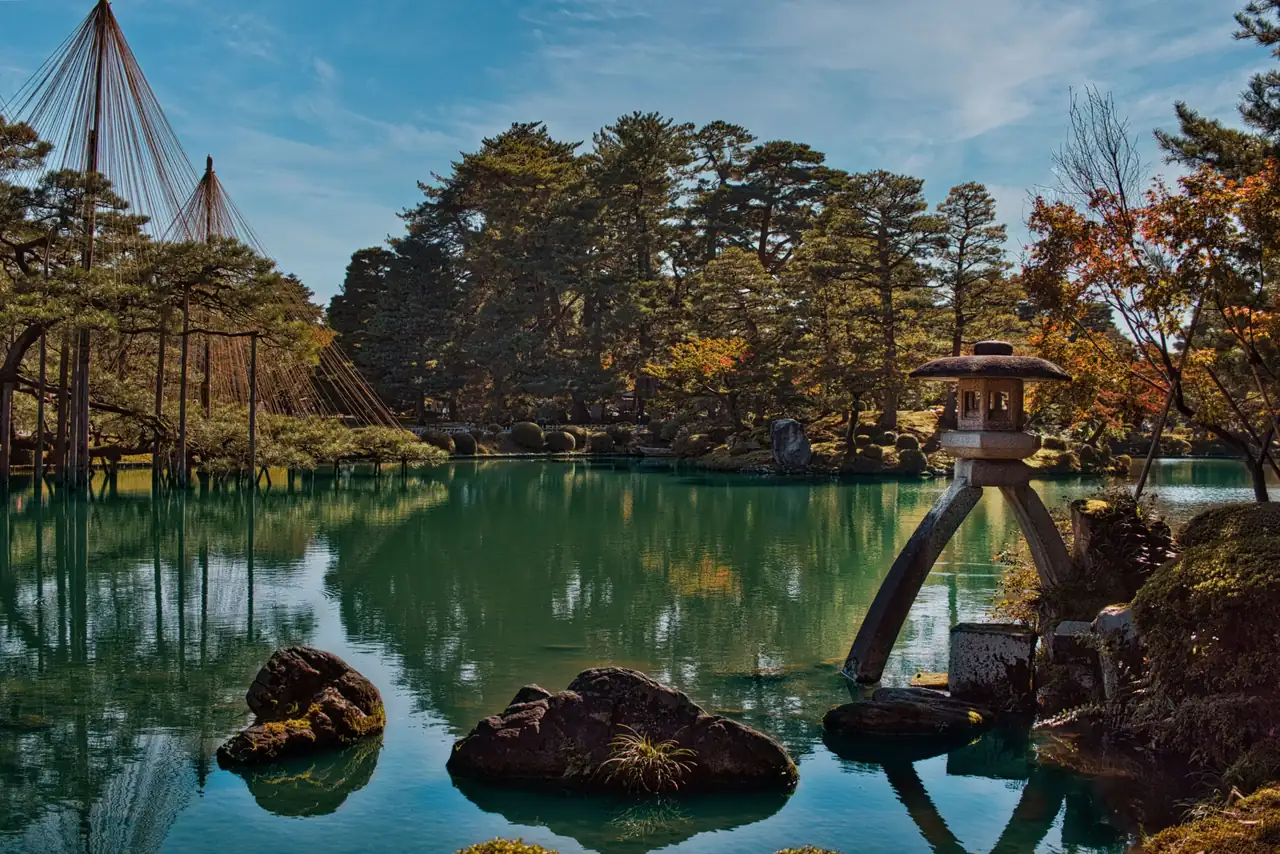
Universally celebrated alongside Mito’s Kairaku-en and Okayama’s Kōraku-en as one of the Three Great Gardens of Japan (Nihon Sanmeien), Kenroku-en was developed over nearly two centuries by successive Maeda clan lords as their private strolling garden. The name literally translates to the "Garden of Six Attributes," derived from a classical Chinese landscape gardening treatise by Li Gefei, which asserts that no garden can naturally balance six contradictory qualities: spaciousness (kōkairu) versus seclusion (yūkyoku), artifice (jinryoku) versus antiquity (koki), and water courses (suisen) versus expansive panoramic vistas (chōbō). Kenroku-en is praised for achieving harmony across all six.
Highlights include the iconic two-legged Kotojitorō stone lantern framing the waters of Kasumigaike Pond, the Midori-taki Waterfall, and the oldest fountain in Japan, which operates entirely on natural water pressure via siphon piping from the Saigawa River. In late autumn, gardeners construct Yukizuri—elaborate conical teepees of split bamboo poles and radiating ropes tied to the limbs of ancient pine trees (including the 200-year-old Karasaki Pine) to protect the branches from snapping under the heavy, wet snowfalls of the Sea of Japan.
2. Step Back into the Edo Era: Higashi Chaya District
Kanazawa is one of the few cities outside Kyoto that maintains active traditional geiko entertainment quarters (chaya). Established in 1820, the Higashi Chaya District is the largest and most atmospheric of the city's three historic entertainment quarters. The flagstone street is lined with two-story wooden teahouses featuring kimusuko—fine wooden vertical lattice window screens designed to shield private banquet guests from view while allowing those inside to look out onto the street.
Step inside Shima, a preserved 1820 teahouse operating as an authentic public museum. Visitors walk across tatami mats to view antique shamisen lutes, hairpins, and waiting rooms, finishing with a bowl of matcha and seasonal sweets served in an inner garden room. Further down the lane sits Kaikarō, an active teahouse that hosts public geiko performances and tea experiences. Many historic buildings now house boutique shops selling gold leaf crafts, regional sakes, and sweets.
3. Explore Mud-Walled Samurai Mansions in Nagamachi
Located just west of the castle grounds, Nagamachi was the residential quarter for middle-to-high-ranking samurai warriors serving the Maeda clan. The narrow alleys remain flanked by traditional dobei (earthen walls made of compressed mud and stone beneath ceramic tile caps) and heavy wooden entry gates (nagayamon). Small fresh-water canals, including the Onosho Canal (the oldest canal in Kanazawa, excavated in 1605), run along the base of the walls, historically used for fire prevention and transporting timber.
Visit the Nomura Samurai House (Nomura-ke), a restored residence featuring cypress-wood ceilings, intricate painted screen doors, and a small courtyard garden voted among the finest in Japan. The garden features a crystal-clear koi stream running beneath an arched stone bridge, framed by stone lanterns and weeping Japanese maples. Winter sight: In December, residents hang protective woven straw mats known as komo over the exterior mud walls to prevent freezing rain and snow from eroding the clay.
4. Experience Contemporary Masterpieces at the 21st Century Museum
Designed by Pritzker Prize-winning architects Kazuyo Sejima and Ryue Nishizawa (SANAA), the 21st Century Museum of Contemporary Art provides a sleek architectural contrast to Kanazawa’s feudal heritage. The building is a low, single-story circular glass pavilion with no formal front or rear entrance, designed to encourage free exploration from any direction.
Its most celebrated installation is "The Swimming Pool" by Argentine artist Leandro Erlich. From above, visitors look down through ten centimeters of water resting atop transparent glass into what appears to be a fully submerged, dry turquoise swimming pool room; from below, visitors walking through the basement look upward through shimmering water ripples to see people peering down at them from the museum courtyard.
5. Browse the Bounties of the Sea of Japan at Omicho Market
Operating continuously since 1721, Omicho Market is known as "Kanazawa's Kitchen." Covering an active network of covered alleys, over 170 stalls display fresh seafood pulled from the cold waters of the Sea of Japan: sweet botan shrimp, giant octopus tentacles, rock oysters, and the prized winter Kano-gani (local male snow crab). In addition to raw seafood, vendors sell sweet Kaga vegetables (Kaga yasai), mountain pickles, and fruit. Many small restaurants on the upper floors and market corners specialize in Kaisendon (overflowing bowls of sushi rice blanketed in fresh sashimi).
6. Discover Golden Craftsmanship: The Gold Leaf Studios
Ishikawa produces over 99 percent of all the gold leaf (kinpaku) crafted in Japan. Thanks to humid coastal weather, pure river waters, and centuries of patronage under the Maeda lords, master craftsmen beat gold alloyed with minute amounts of silver and copper between sheets of handmade paper until it reaches a thickness of just 1/10,000th of a millimeter—so thin it can disintegrate if touched with bare fingers.
Visit studios like Hakuichi in Higashi Chaya to sample soft-serve ice cream wrapped in a shimmering, edible sheet of pure gold leaf, or participate in hands-on workshops at Kanazawa Katani where you can apply real gold leaf using cut stencils onto lacquer chopstick cases, compact mirrors, or jewelry boxes.
7. Soak in Ancient Thermal Springs at Kaga Onsen
Located thirty minutes south of Kanazawa, the four historic hot spring towns of Kaga Onsen (Yamanaka, Yamashiro, Awazu, and Katayamazu) have welcomed bathers for over 1,300 years. Famous poets, monks, and artists—including haiku master Matsuo Bashō—retreated here to take the waters:
Yamashiro Onsen: Arranged around the Soyu (public bathhouse). Tour the Ko-Soyu, a faithful timber reconstruction of a Meiji-period public bathhouse featuring hand-painted Kutani ceramic wall tiles and stained glass windows, where bathers soak in pure mineral water without modern shower heads.
Yamanaka Onsen: Set in a scenic mountain valley along the Kakusenkei Gorge. Walk the shaded stone trail along the Daishoji River, crossing the iconic bent-wood Korogi Bridge and the modern steel Ayatori Bridge, stopping for tea on wooden platforms built out over the river currents in summer.
8. Explore the Terraced Oceanside Rice Fields of Noto: Shiroyone Senmaida
Located on the northern coastal cliffs of the Noto Peninsula, Shiroyone Senmaida is an agricultural marvel comprising 1,004 miniature terraced rice paddies tumbling down steep hillsides directly into the Sea of Japan. Designated a Globally Important Agricultural Heritage System (GIAHS), the paddies are so small and sharply sloped that all planting and harvesting must be conducted entirely by hand. In spring, the flooded fields reflect the sunset sky over the ocean like hundreds of mirrors; in winter, the paddies are outlined with tens of thousands of solar-powered LED lights during the Aze no Kirameki light festival.
Ishikawa Food Culture: Kaga Haute Cuisine & Winter Crustaceans
With immediate access to deep-sea oceanic trenches and the fertile alluvial plains of Mount Hakusan, Ishikawa cuisine is celebrated as some of the most sophisticated in Japan:
Kano-gani and Kobako-gani (Snow Crab): When the crab fishing season officially opens in early November, Ishikawa’s culinary scene centers entirely on snow crab. The large male crabs, called Kano-gani, are prized for their sweet, firm leg meat and rich tomalley (kani miso). Even more sought-after by locals is the smaller female crab, Kobako-gani, celebrated for its dense, crunchy orange exterior roe (sotoko) and rich, creamy interior eggs (uchiko), served inside the cleaned crab shell.
Kaga Kaiseki and Jibuni: Ishikawa’s formal banquet tradition combines seasonal ingredients served on handcrafted Kutani porcelain and Wajima lacquerware. The central dish is Jibuni: slices of duck (or chicken) lightly dusted in wheat flour and poached in a sweet, savory dashi broth thickened with grated wasabi, simmered with seasonal mountain vegetables, shiitake, and sudare-fu (a chewy, accordion-pleated wheat gluten unique to Kanazawa).
Nodoguro (Blackthroat Seaperch): Often called the "truffle of white fish," this deep-water coastal catch has a distinctive black lining inside its throat. Despite being a white-fleshed fish, Nodoguro possesses an extraordinarily high fat content. When lightly torched over binchōtan charcoal as nigiri sushi or grilled with sea salt (shioyaki), the rich oils melt into the meat, delivering an unctuous, buttery texture.
Kanazawa Curry: A distinctive regional B-grade comfort food invented in the 1960s. Unlike standard Japanese curry, Kanazawa curry features an intensely thick, dark, almost chocolate-hued roux simmered for hours, served over rice on an oval stainless steel plate. It is traditionally topped with a crispy breaded pork cutlet (tonkatsu) drizzled with tonkatsu sauce, accompanied by a mountain of finely shredded cabbage, and eaten exclusively with a fork or spork at chains like Curry no Champion.
Kutani-yaki and Wajima-nuri: Dining in Ishikawa is inseparable from its artisan vessels. Kutani porcelain is famous for its bold, opaque five-color glazing technique (green, yellow, red, purple, and navy blue), while Wajima lacquerware from the Noto Peninsula uses layers of natural urushi sap mixed with powdered diatomaceous earth, creating bowls and trays durable enough to last for generations.
Transportation: Regional Rail Lines & Highway Buses
Following the extension of the Hokuriku Shinkansen, reaching and traveling through Ishikawa is fast and efficient:
Tokyo to Kanazawa (2 hours 30 minutes): The Hokuriku Shinkansen (Kagayaki Express) connects Tokyo Station directly to JR Kanazawa Station in roughly 150 minutes. (Fully covered by the nationwide JR Rail Pass and JR East/West regional passes).
Osaka/Kyoto to Kanazawa (2 hours): Board the JR Thunderbird Limited Express from Osaka or Kyoto to the new Shinkansen transfer station at Tsuruga, transferring directly to the Hokuriku Shinkansen onward to Kanazawa.
Kanazawa City Loop Bus: Kanazawa does not have a subway system. Instead, the Kanazawa Loop Bus departs from Kanazawa Station’s East Gate every 15 minutes, operating in both clockwise and counter-clockwise directions to connect all major tourist sights (Kenroku-en, Higashi Chaya, 21st Century Museum, Nagamachi) for a flat fare of ¥210, or ¥800 for an unlimited 1-day pass.
Accessing the Noto Peninsula: The JR Nanao Line connects Kanazawa Station to Wakura-Onsen. Exploring the outer coastline, Shiroyone Senmaida, and remote capes is best done via rental car picked up at Kanazawa Station or Wakura Onsen, allowing you to drive along the Chirihama Nagisa Driveway—one of the only beaches in the world where private passenger cars and tour buses can drive directly on the hard-packed surf sand.
Where to Stay in Ishikawa: Base Camp Comparison
| Base Hub | Vibe & Atmosphere | Transit Connections | Accommodation Strategy |
|---|---|---|---|
| Kanazawa Station Area | Modern transit hub, clean boulevards, shopping malls, under the monumental wooden Tsuzumi Gate. | Hokuriku Shinkansen terminal; central bus terminal for city loops and Shirakawa-go buses. | High density of modern Japanese business hotels (multiple central APAs), international upscale hotels, efficient travel lodges. |
| Korinbo & Katamachi (Downtown) | Lively dining district, central boutique shopping, walking distance to Nagamachi and museums. | Direct bus lines to Kanazawa Station (10 mins); walking access to nightlife. | Stylish design hotels, comfortable mid-tier business hotels, boutique urban inns. |
| Kaga Onsen (Yamanaka / Yamashiro) | Atmospheric riverside gorges, therapeutic mineral baths, quiet mountain tranquility. | Hokuriku Shinkansen stop at Kaga-Onsen Station; local hot spring loop buses (CANBUS). | Traditional hot spring ryokans with multi-course Kaga Kaiseki dining and private wooden baths. |
| Wakura Onsen (Noto Gateway) | Seaside hot spring town along Nanao Bay, ocean breezes, fresh seafood morning markets. | JR Nanao Line limited express from Kanazawa. | Historic luxury waterfront ryokans (including the famed Kagaya), mid-range hot spring hotels. |
Day Trips from Kanazawa
1. Shirakawa-go & Gokayama (UNESCO Thatched Villages)
Located just 75 minutes southeast of Kanazawa Station via highway express bus (Hokutetsu/Nohi Bus; advance booking required), the mountain hamlets of Shirakawa-go and Gokayama sit nestled in deep river valleys across the Gifu prefecture border. The villages are celebrated for their steep, triangular thatched-roof farmhouses built in the Gasshō-zukuri ("constructed like hands in prayer") architectural style, designed to withstand several meters of heavy winter snowfall while accommodating silkworm breeding lofts in the attics.
2. Eihei-ji Temple (Fukui)
An easy 80-minute direct highway bus or train trip southwest of Kanazawa leads to Eihei-ji, the historic head monastery of the Sōtō sect of Zen Buddhism, founded in 1244 by master Dōgen. Set deep in a grove of towering ancient cedar trees on a mountain slope, over seventy wooden temple halls are linked by covered wooden walkways, where over one hundred monks live, clean, and practice silent seated meditation (zazen) daily.
Best Seasons to Visit Ishikawa
Winter (December to February): The definitive season for atmosphere and culinary indulgence. The snow-capped branches of Kenroku-en are suspended beneath radiating ropes of conical Yukizuri, while samurai mud walls in Nagamachi are lined with straw mats. Temperatures hover between 1°C and 7°C (34°F–45°F). This is the peak season for fresh snow crab (Kano-gani), rich Nodoguro, and fatty winter yellowtail (buri).
Spring (Late March to Mid-April): The moats of Kanazawa Castle and the banks of the Asano and Sai rivers burst into pink bloom with somei-yoshino cherry trees. During peak blossom week, Kenroku-en opens its gates to the public free of charge for evening illuminations. Mild, comfortable daytime temperatures average 14°C to 18°C (57°F–64°F).
Autumn (October to Late November): Perhaps the most comfortable time for walking tours. The maple groves and moss hills of Kenroku-en, Kakusenkei Gorge in Yamanaka Onsen, and the hillsides of Mount Utatsu blaze in deep shades of scarlet, gold, and amber. Crisp, clear skies make exploring coastal drives and artisan villages effortless.
Early Summer (June): June brings the celebrated Hyakumangoku Matsuri, Kanazawa’s largest annual festival, commemorating Lord Maeda Toshiie’s historic entry into Kanazawa Castle in 1583. Over three days, the city stages a magnificent parade of costumed samurai warriors, geiko performances, and night torchlit Nō dramas (Kaga Hoshō Nō) on the castle grounds.


 山梨
山梨 長野
長野 岐阜
岐阜 愛知
愛知 静岡
静岡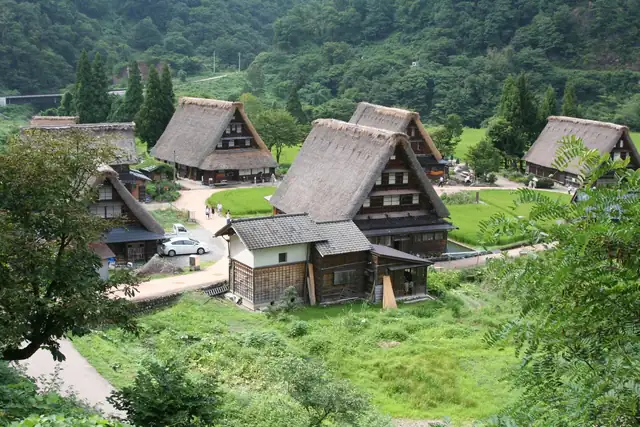 富山
富山 新潟
新潟 福井
福井