

On this page
Kumamoto Travel Guide: Impregnable Strongholds, Smoking Calderas & Pure Spring Waters
Positioned on the western coast of central Kyushu facing the Ariake Sea, Kumamoto Prefecture (熊本県) is a dramatic land of contrasts, historically designated as Hi no Kuni—the "Land of Fire." This ancient title stems directly from its restless geological heart: Mount Aso (Aso-san), an active volcanic complex boasting one of the largest inhabited volcanic calderas on earth. Yet balancing this fiery volcanic subterranean energy is an equally profound abundance of water. Kumamoto City is celebrated as the only metropolis in Japan whose entire municipal tap water supply is drawn 100% from pristine, mineral-filtered underground aquifers fed by centuries of volcanic rainfall, earning it the complementary title of the "Land of Water."
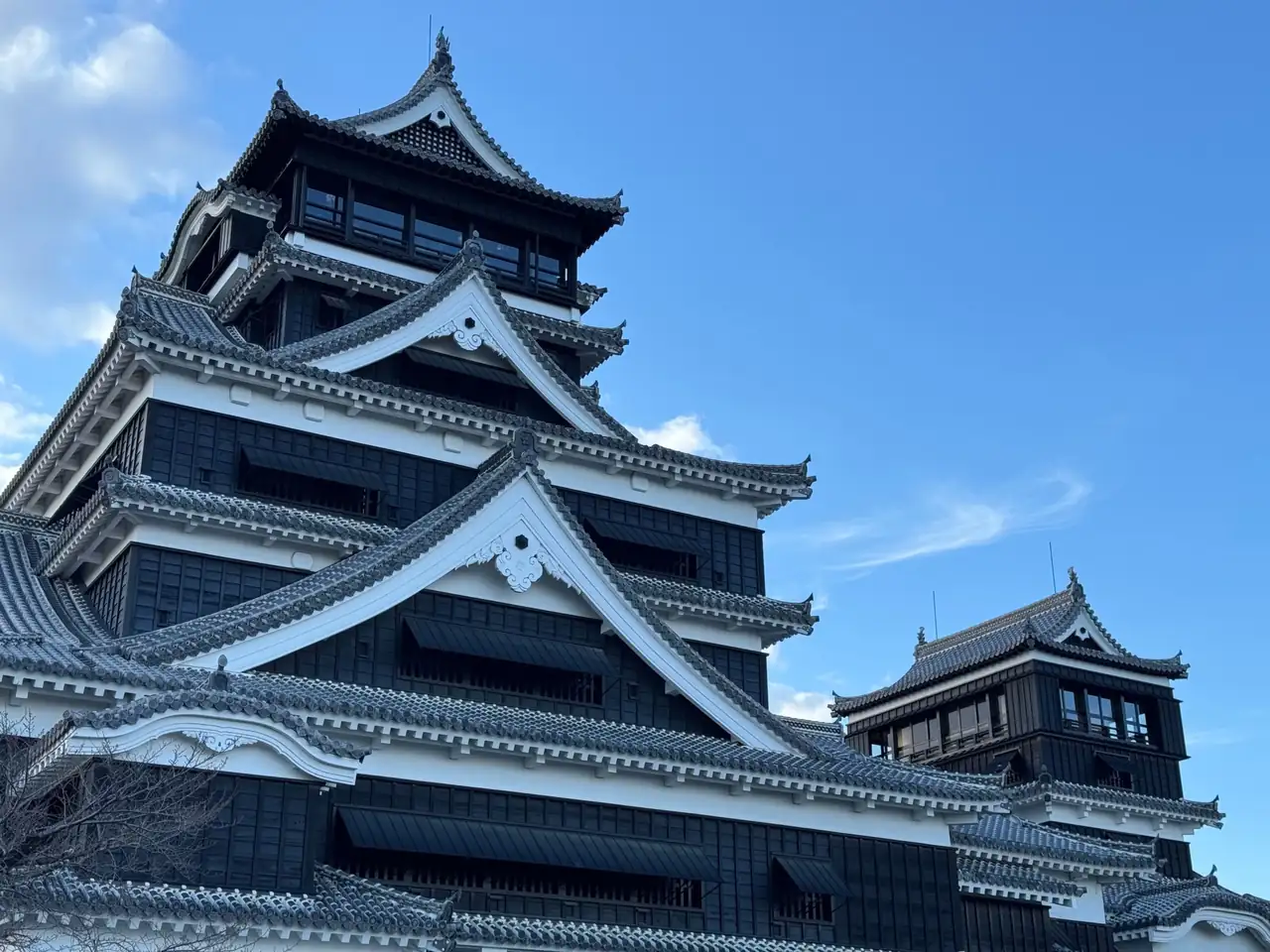
Historically known as Higo Province, Kumamoto was the formidable domain of the master castle-builder Katō Kiyomasa, who erected the monumental, dark-timbered ramparts of Kumamoto Castle at the dawn of the seventeenth century. Later governed by the scholarly Hosokawa clan, Kumamoto was also the final sanctuary of Japan's legendary sword-saint Miyamoto Musashi, who spent his final reclusive years in a local cave penning The Book of Five Rings (Go Rin No Sho). Following the devastating twin earthquakes of April 2016, Kumamoto launched one of the most ambitious and technologically advanced cultural restoration projects in modern Japanese history. Today, the restored black keep stands as an inspiring symbol of regional resilience. Positioned directly along the Kyūshū Shinkansen line, Kumamoto offers travelers a powerful mix of martial history, raw volcanic wilderness, pastoral highland hot springs, and distinct regional gastronomy.
Navigating Kumamoto Prefecture: Core Geographic Sectors
Kumamoto stretches from coastal island archipelagos across fertile agricultural plains up into massive alpine calderas, dividing into four well-defined travel corridors:
| Sector | Primary Station Hubs | Landscape & Atmosphere | Key Highlights |
|---|---|---|---|
| Kumamoto City Core | JR Kumamoto / Torichōsuji | Historic samurai castle town, vintage streetcars, bustling covered shopping arcades, subterranean spring-fed gardens. | Kumamoto Castle, Suizen-ji Jōju-en Garden, Reigandō Cave (Musashi), Sakuramachi terminal & Kumamon Square. |
| Mount Aso & Caldera Highlands | JR Aso / Higo-Ozu | Colossal volcanic caldera, active sulfur craters, boundless emerald grasslands, grazing cattle ranches. | Mount Nakadake Crater, Kusasenri-ga-hama plain, Aso Shrine, Daikanbō Viewpoint, Kuju foothills. |
| Kurokawa Onsen & Northern Valleys | JR Hita / Aso (Bus access) | Secluded forested river gorges, unified cedar architecture, natural open-air thermal bath circuits. | Kurokawa Onsen (Rotenburo bath-hopping pass), Nabegataki Falls, Yamaga lanterns & Yachiyoza theater. |
| Amakusa Archipelago (Southwest) | Misumi / Amakusa (Ferry / Bus) | Subtropical coastal islands, dolphin-filled sea channels, historic Hidden Christian stone churches, white sand bays. | Amakusa Five Bridges, Sakitsu Church (UNESCO), wild dolphin watching cruises, fresh tiger prawn farms. |
Top Things to Do Across Kumamoto
1. Scale the Impregnable Ramparts of Kumamoto Castle (Kumamoto-jō)
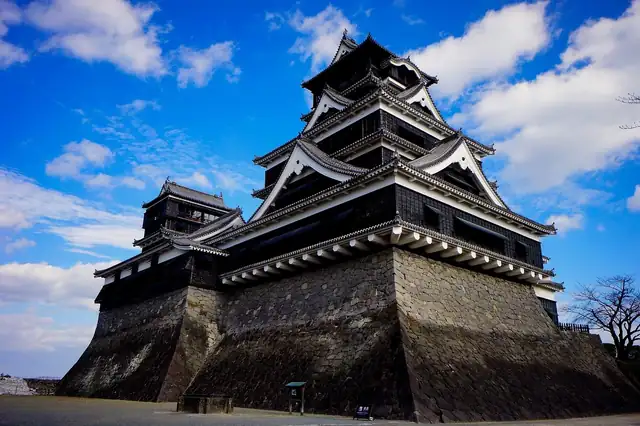
Built between 1601 and 1607 by warrior Katō Kiyomasa, Kumamoto Castle is widely regarded alongside Himeji and Matsumoto as one of Japan's "Three Premier Castles." Covering a massive 98 hectares, the fortress was designed from the ground up as a self-sustaining defensive bastion capable of enduring prolonged sieges. Its most famous engineering feature is the Musha-gaeshi ("warrior repeller") stone walls: dry-laid stone embankments that begin with a gentle, climbable slope but curve sharply outward into a sheer, vertical ninety-degree precipice at the summit, making scaling impossible even for agile samurai attackers.
When the devastating 6.5 and 7.3 magnitude earthquakes struck Kumamoto in April 2016, roughly one-third of the castle's monumental stone walls collapsed and multiple historic wooden turrets were severely damaged. In response, Kumamoto executed a landmark historical reconstruction. The grand six-story Main Keep (Tenshukaku) was completely reinforced with earthquake-isolation dampers and fully reopened to the public. Visitors walk along an innovative, elevated glass-and-steel Special Viewing Path that winds safely through the inner ward, allowing close-up views of the ongoing, multi-decade restoration of the remaining dry-stone masonry, where every individual boulder is 3D-scanned and cataloged before being reset by master stonemasons.
2. Step Inside the Living Caldera of Mount Aso (Nakadake Crater)
Covering an astonishing 380 square kilometers with a circumference of roughly 120 kilometers, the Aso Caldera is one of the largest active volcanic calderas in the world, formed by four cataclysmic super-eruptions between 300,000 and 90,000 years ago. Unlike barren volcanic wastelands, the caldera floor is populated by over fifty thousand residents living in thriving farming towns surrounded by terraced rice fields.
At the center of the caldera rises the central cone group, anchored by Mount Nakadake—one of Japan’s most active volcanoes. When volcanic gas levels and alert conditions permit, visitors can drive or take a shuttle bus right to the edge of the crater rim to gaze down into the boiling, steaming, milky-turquoise acidic lake sitting at the bottom of the volcanic vent. Safety Note: Mount Nakadake regularly emits toxic sulfur dioxide (SO2) fumes; access to the crater rim is automatically restricted during elevated gas spikes or volcanic unrest. People with asthma or respiratory conditions must not approach the rim.
3. Ride Horses Across the Grassy Plains of Kusasenri-ga-hama
Spreading out across the northern base of Mount Nakadake, Kusasenri-ga-hama is a vast, 785-meter-high plateau formed from the remnants of an ancient circular volcanic crater. The landscape is a sweeping expanse of green grassland centered around two rain-fed seasonal ponds, framing the steaming volcanic plume of Nakadake in the background. Semi-wild Japanese horses graze across the plateau, and visitors can take guided horseback trail rides across the plains or visit the adjacent Aso Volcano Museum to learn about the geological mechanics of caldera formation.
4. Gaze Out from the "Great Cold Peak": Daikanbō
Perched on the northern outer rim of the caldera 936 meters above sea level, the Daikanbō Viewpoint offers the definitive panoramic vista of Kumamoto Prefecture. Looking south across the flat expanse of the caldera floor, the five central volcanic peaks of Aso—Mounts Neko, Taka, Naka, Eboshi, and Kishima—form a dramatic undulating silhouette known locally as the Nehanzo (Sleeping Buddha), because the ridgeline resembles the shape of a colossal Buddha lying peacefully on his back. On cool, clear mornings in autumn, a dense sea of clouds (unkai) regularly fills the entire caldera basin, causing the volcanic peaks to rise out of the white mist like islands in the sky.
5. Don Yukata and Soak the Forest Baths of Kurokawa Onsen
Tucked into a secluded river valley on the northern foothills of Mount Aso near the Oita border, Kurokawa Onsen is celebrated as one of Japan's most preserved and atmospheric hot spring villages. Unlike mega-resort towns with concrete high-rises and flashing neon, Kurokawa’s hot spring guild enforced a strict communal zoning code in the 1980s: all thirty ryokans are constructed with dark stained timber, earthen plaster walls, and flagstone pathways, surrounded by natural bamboo and mountain beech trees.
The town’s defining innovation is the Nyūtō Tegata (Onsen Pass): a circular wooden cedar coaster purchased for ¥1,500 that grants access to any three outdoor hot spring baths (rotenburo) across the village. Visitors slip into cotton yukatas and wooden geta clogs, wandering along the lantern-lit Tanohara River to soak in standing-depth baths, riverside forest pools, and natural cavern steam chambers hollowed out of the rock.
6. Walk the Miniaturized Tokaido Highway at Suizen-ji Jōju-en
Created in 1636 by Lord Hosokawa Tadatoshi as a tranquil tea retreat, Suizen-ji Jōju-en is an exquisite 73,000-square-meter circular strolling garden (kaiyūshiki teien). The garden's central spring-fed lake is filled with crystal-clear, mineral-rich subterranean water naturally filtering upward from Mount Aso's aquifers, maintaining a steady, clear water line year-round.
The garden’s landscaping is an ingenious miniature representation of the fifty-three post stations along the historic Tokaido Highway connecting Edo (Tokyo) with Kyoto. The most famous element is a perfectly clipped, grassy conical mound designed to mimic the symmetrical form of Mount Fuji. Stop at the thatched-roof Kokin-Denju-no-Ma teahouse—a historic wooden pavilion relocated from the Kyoto Imperial Palace in 1912—to sip freshly whisked matcha while gazing out over the water.
7. Discover the Sacred Solitude of Reigandō Cave
Tucked into the densely forested slopes of Mount Kinbo fifteen kilometers west of Kumamoto City, Reigandō ("Spirit Rock Cave") is a sacred natural cavern where Japan's legendary swordsman Miyamoto Musashi retreated in 1643. Unbeaten in over sixty samurai duels, Musashi spent his final two years here living as an ascetic hermit, meditating before a carved stone statue of the Kannon goddess to pen his definitive masterpiece on military strategy and mindset: The Book of Five Rings (Go Rin No Sho). The winding forest stone path leading to the cave mouth is lined with the Gohyaku Rakan (Five Hundred Disciples of Buddha)—five hundred moss-draped stone statues, each carved with completely unique facial expressions and postures.
8. Explore Hidden Christian Heritage in the Amakusa Islands
Connected to the mainland by a series of five scenic bridges spanning the emerald waters of the Ariake Sea, the Amakusa Archipelago comprises over 120 islands. Amakusa was the epic struggle ground of the 1637 Shimabara-Amakusa Rebellion, where impoverished Japanese Christian peasants fought against shogunal persecution under teenage samurai leader Amakusa Shiro.
Today, Amakusa preserves remarkable UNESCO World Heritage Hidden Christian sites, anchored by Sakitsu Village. Here, tucked into a quiet, traditional fishing cove of wooden boat wharves, stands Sakitsu Church—a Gothic-style Catholic basilica built in 1934 featuring stained glass windows, rib-vaulted wooden ceilings, and an interior floor laid entirely with traditional tatami mats. The coastal channels around Amakusa are also home to a wild pod of over two hundred Indo-Pacific bottlenose dolphins, viewed year-round via boat tours with sighting rates exceeding 95%.
Kumamoto Food Culture: Basashi, Rich Tonkotsu & Lotus Roots
Shaped by abundant volcanic spring water and deep agrarian traditions, Kumamoto’s cuisine is celebrated for rich, deeply savory, and unique flavors:
- Kumamoto Ramen: While neighboring Hakata (Fukuoka) serves straight pork-bone broth, Kumamoto ramen takes the bowl to an entirely different level of complexity. The soup combines a rich broth boiled from pork bones and chicken frames, paired with medium-thick, smooth wheat noodles. The signature additions are two transformative garlic elements:
- Māyu (Black Garlic Oil): A fragrant, jet-black oil made by scorching garlic cloves, sesame oil, and lard across multiple heat stages, imparting a smoky, rich, roasted aroma.
- Fried Garlic Chips: Crispy, toasted garlic flakes sprinkled generously over the top of the bowl alongside chashu pork, scallions, and wood-ear mushrooms.
- Basashi (Horse Meat Sashimi): Kumamoto is the undisputed capital of horse meat culinary culture in Japan, a tradition dating back four hundred years to military campaigns led by Katō Kiyomasa. High-grade horse meat (known poetically as Sakura-niku, or "cherry blossom meat," due to its vibrant ruby-pink color) is served raw, sliced paper-thin. Cuts range from lean red meat (akami) to beautifully marbled fatty brisket (shimofuri) and crisp white mane fat (tategami). Eaten dipped in thick sweet soy sauce mixed with freshly grated raw garlic and ginger.
- Karashi Renkon (Spicy Mustard Lotus Root): Kumamoto’s most famous historical side dish. The nine hollow chambers of fresh, crisp lotus root are hand-packed with a fiery paste made from Japanese hot yellow mustard (karashi), barley miso, and honey. The root is coated in an egg-and-turmeric wheat batter, deep-fried until crisp, and cut into rounds. Originally invented in 1632 by a Zen monk to restore the health of frail Lord Hosokawa Tadatoshi, it delivers a sharp sinus-clearing kick that pairs with local shōchū.
- Akaushi Wagyu (Japanese Brown Cattle): Unlike the heavily fatted black wagyu cattle common across Honshu, Akaushi (Kumamoto Brown Cattle) graze freely on the boundless wild grasslands of the Aso Caldera. Because they graze actively on mountain pasture grasses, Akaushi beef features a high proportion of lean red meat balanced by fine, delicate intramuscular marbling. The meat is tender, healthy, and has a rich, deep, beefy flavor without feeling greasy. Best enjoyed as charcoal-grilled steaks or served rare as Akaushi-don (sliced steak fanned over rice with a soft-poached egg).
- Taipi-en: A beloved Chinese-fusion comfort noodle soup unique to Kumamoto City, originating in local Fujianese immigrant kitchens in the early 1900s. Glass cellophane vermicelli noodles (harusame) are served in a rich chicken-and-pork bone soup loaded with cabbage, shrimp, squid, sliced pork, and a signature deep-fried hard-boiled egg (toratama).
- Kuma Shōchū: Produced exclusively in the Hitoyoshi basin of southern Kumamoto along the pristine Kuma River, Kuma Shōchū holds protected geographical indication status from the World Trade Organization (alongside Champagne and Scotch whisky). Distilled 100% from polished Japanese white rice and pure volcanic underground water in single-batch pot stills, it yields a clean, aromatic, fruity spirit enjoyed neat, on the rocks, or cut with hot water (oyuwari).
Transportation: Kyūshū Shinkansen & Regional Tramways
Kumamoto sits squarely in the geographic center of Kyushu, making it an effortless transport junction:
- The Kyūshū Shinkansen (Bullet Train Spine):
- High-speed bullet trains (Mizuho, Sakura, and Tsubame) connect JR Hakata Station (Fukuoka) to JR Kumamoto Station in just 32 to 38 minutes.
- Continuing south, bullet trains reach JR Kagoshima-Chūō Station in roughly 43 minutes. (Fully covered by the nationwide JR Rail Pass and JR Kyushu Rail Pass).
- Reaching Mount Aso:
- JR Hōhi Main Line: The scenic JR Limited Express Aso Boy! (a family-friendly sightseeing train designed by Eiji Mitooka) and Kyushu Odan Tokkyu run directly from Kumamoto Station through the caldera breach into JR Aso Station in roughly 70 minutes.
- Sanko Resort Buses: Frequent tourist express buses connect Kumamoto Station, Aso Station, and the Kurokawa Onsen valleys daily.
- Kumamoto City Tramway (Streetcars): Kumamoto City features an efficient streetcar network operating two primary lines (Line A and Line B). Trams run every 5 to 7 minutes, linking Kumamoto Station directly to the downtown shopping quarters of Torichōsuji, Kumamoto Castle, and Suizen-ji Garden. Fares are a flat ¥180 per ride, and streetcars fully accept digital Suica, Pasmo, and ICOCA cards tapped on your smartphone.
- Ferries to Shimabara (Nagasaki): From Kumamoto Port, the high-speed Kyusho Ocean Arrow Ferry crosses the Ariake Sea to Shimabara Port in just 30 minutes, providing a fast, scenic maritime shortcut to Nagasaki Prefecture without needing to detour around the northern bays by train.
Where to Stay in Kumamoto: Strategic Base Camps
| Base Hub | Vibe & Atmosphere | Transit Connections | Accommodation Strategy |
|---|---|---|---|
| Torichōsuji / Karashimacho (Downtown) | Lively dining district, massive covered shopping arcades, walking distance to Kumamoto Castle. | Central streetcar interchange; Sakuramachi Bus Terminal. | High density of modern, efficient Japanese business hotels (multiple central APAs), lifestyle boutique hotels, apart-hotels. |
| JR Kumamoto Station Area | Modern terminal hub, multi-story Amu Plaza shopping complex, rapid Shinkansen bullet train access. | Kyūshū Shinkansen; JR Hōhi Line (to Aso); streetcar terminus. | Clean, cost-effective station-front business hotels, railway corporate towers, modern transit lodges. |
| Kurokawa Onsen (Highland Valley) | Secluded riverside tranquility, unified dark timber ryokan streetscape, outdoor hot spring bath circuits. | Direct Sanko express bus from Kumamoto / Aso Station. | Authentic traditional hot spring ryokans featuring private open-air baths (rotenburo) and multi-course Akaushi beef kaiseki banquets. |
| Aso Caldera Basin (Minamiaso / Uchinomaki) | Expansive pastoral landscapes, wide open skies, grazing cattle ranches, volcanic views. | JR Hōhi Main Line; rental car recommended. | Sprawling hot spring resort hotels, family-run countryside pensions, farmstay minshuku. |
Regional Day Trips Across Kumamoto Prefecture
1. Yamaga Onsen & The Historic Yachiyoza Theater
Located forty minutes north of Kumamoto City, Yamaga is a historic thermal post town along the Buzen Kaidō road, famous for its smooth alkaline hot springs and delicate handmade Yamaga Toro lanterns crafted entirely from Japanese washi paper and rice glue without a wooden frame. The town’s crown jewel is the Yachiyoza Theater—a magnificent, fully operational Kabuki playhouse constructed in 1910. Step inside on guided tours to walk across the tatami box seating (masu-seki), explore the wooden revolving stage (mawari-butai), and descend into the dark underground manual turning mechanism (naraku) beneath the stage.
2. Nabegataki Falls: The Curtain of Water
Tucked into the forested hillsides of Oguni near Kurokawa Onsen, Nabegataki Falls is a natural geological marvel formed by ancient eruptions of the Aso volcano. Rather than tumbling down a narrow crevice, the river cascades ten meters down across a wide, twenty-meter-wide volcanic overhang, creating a broad, translucent sheet of falling water that resembles an elegant silk curtain. The unique rock formation allows visitors to walk completely behind the roaring waterfall inside a cavernous recess, looking out through the shimmering curtain of water into the sunlit forest beyond. Booking note: Entry requires an advance online reservation during peak travel seasons to preserve trail safety.
3. Tsujunkyo: The Feudal Samurai Aqueduct
Built in 1854 in Yamato Town by local master stonemasons, Tsujunkyo Bridge is the largest arched stone aqueduct in Japan, spanning eighty-four meters across a deep river gorge. Constructed to divert mountain irrigation water to the drought-prone Shiraito plateau, the bridge operates via an ingenious inverted siphon mechanism. Today, the bridge periodically opens its massive central wooden drainage valves, releasing a colossal jet of high-pressure river water arching dramatically out of the side of the stone bridge down into the canyon below.
Best Seasons to Visit Kumamoto
- Spring (Late March to Mid-April): A breathtaking time of year across the city. Over eight hundred somei-yoshino cherry trees bloom along the dark stone ramparts of Kumamoto Castle, framing the illuminated black keep at night. Daytime temperatures are mild and comfortable, averaging 14°C to 19°C (57°F–66°F).
- Autumn (October to Late November): The premier season for exploring the Aso Caldera and Kurokawa Onsen. The boundless grasslands of Kusasenri turn a shimmering golden-amber hue, and the maple groves lining the gorges of Kikuchi Valley blaze in deep shades of scarlet and crimson. Crisp, clear skies make highland driving and outdoor onsen bathing comfortable.
- Mid-September (Fujisaki Hachimangū Grand Autumn Festival): Kumamoto City’s largest and most spirited annual festival. Dating back over a millennium, the finale of the five-day event features the thunderous Zuishō (Horse Chase) Procession, where dozens of neighborhood teams dressed in traditional samurai garments escort adorned, spirited horses through the city streets to the rhythmic chant of "Dōkai! Dōkai!" accompanied by clashing cymbals and booming taiko drums.
- Winter (December to February): Cool, crisp, and peaceful. While Kumamoto City experiences mild coastal winters averaging 4°C to 11°C (39°F–52°F), the high-altitude plateaus of Mount Aso receive dusting snowfalls. Winter is the definitive season to experience Kurokawa Onsen's magical Yuakari Light Event, where hundreds of hand-carved spherical bamboo lanterns (take-akari) are floated down the dark river gorge, illuminating the steamy water.
- Summer (July to August): Hot, lush, and verdant. While mid-day temperatures in Kumamoto City can reach 34°C (93°F), the highlands of Aso (sitting at 800+ meters elevation) offer refreshing, breezy day trips. In mid-August, the historic town of Yamaga hosts the Yamaga Toro Festival, where one thousand women wearing cotton yukatas and glowing paper lanterns balanced upon their heads dance in concentric circles late into the summer night.


 福岡
福岡 長崎
長崎 大分
大分 鹿児島
鹿児島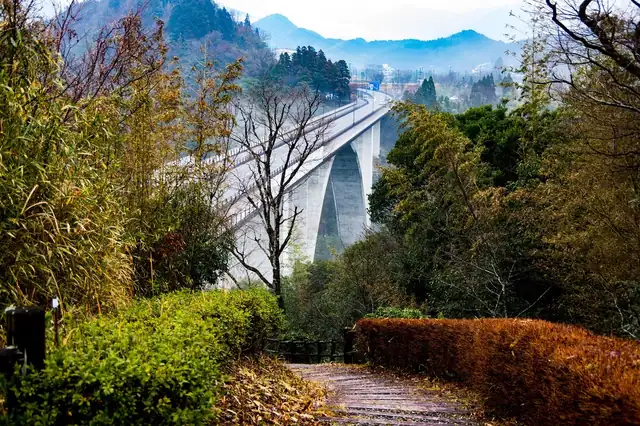 宮崎
宮崎 佐賀
佐賀