

On this page
Aichi Travel Guide: Samurai Unifiers, Industrial Mastery & Nagoya Meshi
Positioned along the Pacific coastline of central Honshu within the expansive Nōbi Plain, Aichi Prefecture (愛知県) occupies a pivotal geographic position bridging eastern and western Japan. Historically divided into the provinces of Owari in the west and Mikawa in the east, this fertile region was the cradle of Japan’s feudal military leadership. All three of Japan’s "Great Unifiers" who ended over a century of civil conflict during the Sengoku (Warring States) period—Oda Nobunaga, Toyotomi Hideyoshi, and Tokugawa Ieyasu—were born and raised on Aichi soil, fundamentally forging the political and cultural destiny of the nation.
Today, Aichi stands as Japan’s indisputable manufacturing titan and economic engine, globally renowned as the world headquarters of the Toyota Motor Corporation, aerospace engineering facilities, and centuries-old ceramic production centers. Yet beneath its industrial powerhouse reputation lies a prefecture rich in cultural heritage. Anchored by the sprawling, modern metropolis of Nagoya—Japan's fourth most populous city—Aichi combines reconstructed feudal castles topped with golden roof ornaments, sacred imperial Shinto shrines, living artisan pottery towns, and one of the most distinctive, fiercely defended regional food scenes in the country, known proudly as Nagoya Meshi. Positioned directly along the Tokaido Shinkansen mainline between Tokyo and Kyoto, Aichi provides a grounded, highly rewarding look at Japan’s martial past and modern engineering prowess.
Navigating Aichi Prefecture: Core Geographic Sectors
Aichi divides into four well-defined travel corridors, linking metropolitan rail hubs with coastal peninsulas and historic craft basins:
| Sector | Primary Station Hubs | Landscape & Atmosphere | Key Highlights |
|---|---|---|---|
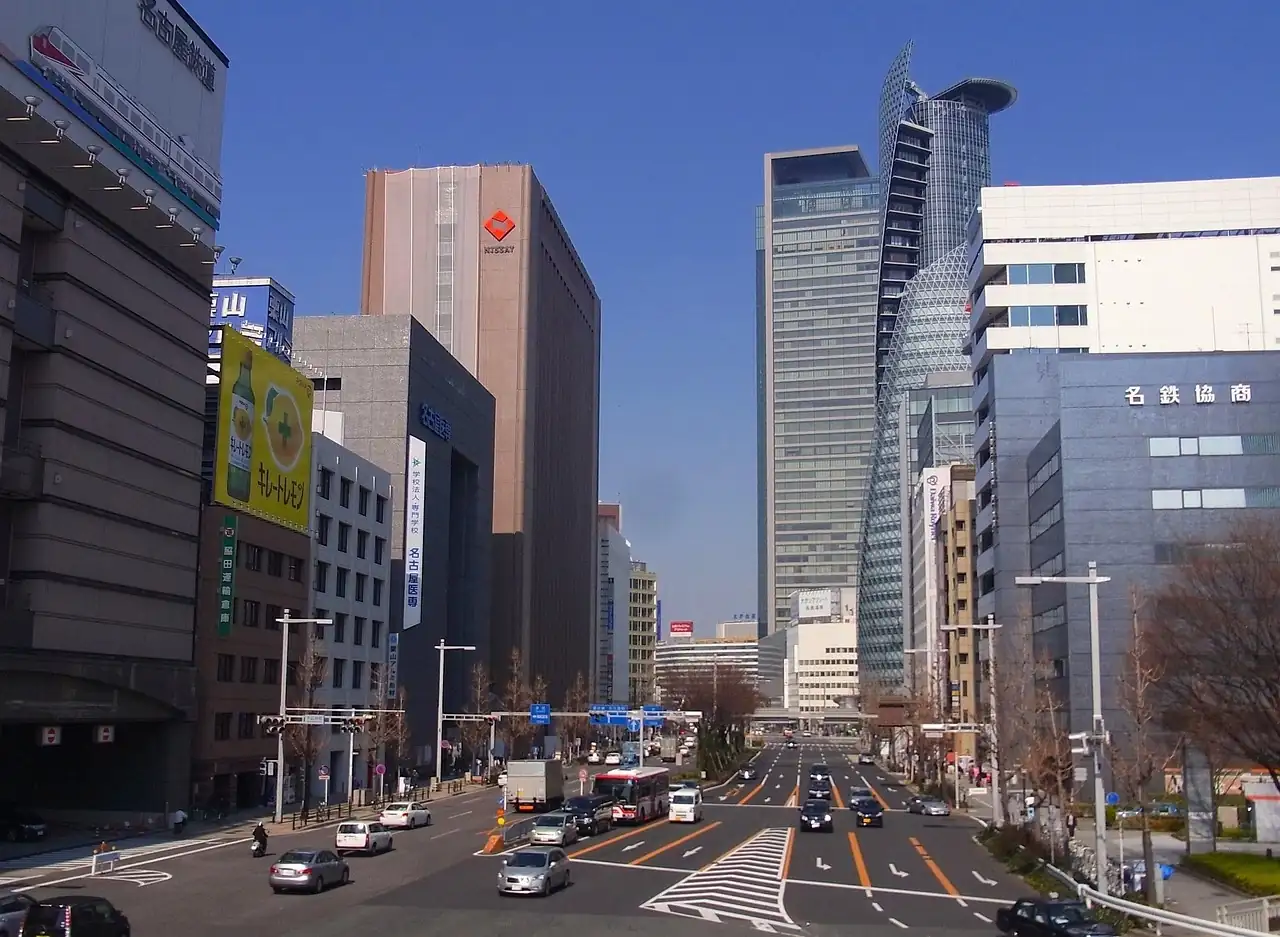
| Nagoya Urban Core | JR Nagoya / Sakae / Kanayama | Wide modern boulevards, multi-level rail retail towers, reconstructed samurai palaces, vibrant underground shopping grids. | Nagoya Castle & Hommaru Palace, Atsuta Shrine, Sakae entertainment district, Osu Kannon & Shopping Arcade, Toyota Commemorative Museum. |
| Inuyama & Northern Owari | Meitetsu Inuyama / Inuyama-Yuen | Scenic river valleys, original feudal mountain keeps, architectural heritage open-air museums, bamboo groves. | Inuyama Castle, Meiji-Mura Open-Air Museum, Urakuen Garden (Joan Teahouse), Kiso River cormorant fishing. |
| Chita Peninsula & Centrair | Tokoname / Central Japan Int'l Airport (NGO) | Coastal bays, ancient climbing ceramic kilns, centuries-old sake and vinegar brewing storehouses, international airport. | Tokoname Pottery Footpath, FLIGHT OF DREAMS, Handa Canal brewery district, Himakajima Island. |
| Mikawa & Toyota Heartland | Okazaki / Toyohashi / Toyotashi | Feudal castle towns, massive modern automotive assembly plants, rolling tea hills, deep hatcho miso storehouses. | Okazaki Castle (Ieyasu birthplace), Toyota Kaikan Museum & Plant Tours, Hatcho Miso Kakukyu storehouses, Toyokawa Inari. |
Top Things to Do Across Aichi
1. Step Inside the Golden Splendor of Nagoya Castle & Hommaru Palace
Commissioned in 1610 by Shogun Tokugawa Ieyasu to safeguard the western approaches along the Tokaido highway against rival southern warlords, Nagoya Castle stood as one of the largest and most strategically formidable strongholds ever constructed. Crowned with two iconic two-meter-tall golden kinshachi (mythological tiger-headed fish) on its roof ridge to ward off fire and evil spirits, the main keep was historically renowned for having the largest floor area of any castle keep in Japan.
While the concrete main tower remains closed for structural timber rebuilding, the crown jewel of the complex is the fully restored Hommaru Palace (Honmaru Goten). Rebuilt over a decade using traditional master carpentry techniques without a single modern nail, this sprawling residential palace is constructed entirely from fragrant Japanese cypress (hinoki). Visitors walk barefoot across tatami mats beneath soaring coffered and coved ceilings, marveling at hundreds of faithfully recreated sliding screens (fusuma) hand-painted by master artists with radiant gold leaf and mineral pigments in the style of the Kanō school, depicting ferocious tigers, leopards, and delicate cherry blossoms.
2. Pay Homage at Atsuta Shrine: Guardian of the Imperial Sword
Set within a tranquil, forty-five-acre sacred grove of ancient cypress, camphor, and pine trees in southern Nagoya, Atsuta Shrine (Atsuta Jingū) is one of the most revered Shinto sanctuaries in Japan, drawing over nine million worshippers annually. Established nearly two thousand years ago during the reign of Emperor Keikō, the shrine is venerated as the consecrated home of the Kusanagi no Tsurugi (The Grass-Cutting Sword)—the legendary divine blade that constitutes one of the Three Imperial Regalia of Japan, alongside the Mirror at Ise and the Jewel at the Tokyo Imperial Palace.
While the sacred sword is hidden permanently from public view in the inner sanctum, visitors pass beneath towering wooden torii gates, wash at stone basins, and view the massive Nobunaga Wall (Nobunaga-bei)—a mud-and-tile defensive wall donated by warlord Oda Nobunaga in 1560 as a thanksgiving offering after praying here and securing a legendary upset victory against massive forces at the Battle of Okehazama. Don't miss the shrine's Kusanagi-kan sword museum, which exhibits hundreds of master-forged samurai katanas designated as National Treasures.
3. Explore Japan's Oldest Castle Keep: Inuyama Castle
Perched high on a rocky cliff forty-five meters above the swirling currents of the Kiso River thirty minutes north of Nagoya, Inuyama Castle (Inuyama-jō) is an architectural treasure. Built in 1537 by Oda Nobuyasu (uncle to Nobunaga), it is one of only twelve surviving original castle keeps in Japan, and its compact, three-tier, four-story wooden tower is officially classified as a National Treasure—holding claim to the oldest original keep tower standing in Japan.
Unlike modern reconstructed castles with elevators and concrete cores, climbing Inuyama requires ascending treacherous, near-vertical wooden stairs polished smooth by five centuries of socked feet. Reaching the top floor (Bōrō) rewards travelers with an extraordinary open-air wraparound wooden balcony secured only by a low timber railing, offering sweeping 360-degree views across the Kiso River valley, dense bamboo groves, and distant alpine ridges.
4. Wander Architectural Time-Capsules at Meiji-Mura
Located on the rolling wooded hillsides overlooking Lake Iruka near Inuyama, the Museum Meiji-Mura is one of the world’s premier open-air architectural museums. Spanning over one million square meters, the park was founded in 1965 to rescue and preserve over sixty historic structures dating to the Meiji (1868–1912) and Taisho eras—a pivotal period when Japan rapidly modernized, blending traditional timber joinery with European stone, brick, and glass engineering.
The museum’s definitive architectural highlight is the original lobby and reflecting pool entrance of Tokyo’s 1923 Imperial Hotel, designed by visionary American architect Frank Lloyd Wright. Built from textured Oya volcanic stone and custom yellow scratch bricks, it was salvaged and painstakingly reconstructed here piece by piece when the Tokyo hotel was dismantled in 1967. Visitors can ride operational 19th-century steam locomotives and vintage Kyoto streetcars through the park, stepping inside historic consular offices, wooden kabuki playhouses, hospitals, and samurai schools.
5. Follow the Clay and Chimneys on the Tokoname Pottery Footpath
Located on the western coast of the Chita Peninsula adjacent to the international airport, Tokoname is the oldest and largest of Japan’s "Six Ancient Kilns" (Rokkoyo), having produced ceramics continuously since the twelfth century. Today, visitors follow the self-guided Pottery Footpath (Yakimono Sanpomichi), a winding pedestrian trail cutting through historic hillside kiln quarters.
The narrow path is flanked by weathered black timber pottery workshops, brick climbing kilns (noborigama), and retaining walls constructed entirely from discarded, clay-fired earthenware drainage pipes and ceramic sake fermentation jugs. Tokoname is world-renowned for its fine, iron-rich red clay teapots (shudei kyusu)—prized by tea masters for smoothing the bitterness of green tea—and holds title as Japan's leading producer of ceramic Maneki-neko (Beckoning Lucky Cats), celebrated by the giant ceramic cat head Tokonyan watching over the town bypass from the bluffs above.
6. Explore Cutting-Edge Mobility at the Toyota Museums
For engineering and technology enthusiasts, Aichi is the global industrial capital of mobility. Visitors can explore two distinct institutions dedicated to Japan’s automotive transformation:
- Toyota Commemorative Museum of Industry and Technology: Set inside an original 1911 red-brick textile mill in downtown Nagoya where Sakichi Toyoda invented the automated wooden loom. The museum displays working industrial textile machinery running live on the museum floor, alongside robotic metal presses, casting foundries, and assembly lines that showcase the birth of the Toyota Production System.
- Toyota Automobile Museum: Located in Nagakute, displaying an immaculate, curated collection of roughly 140 historically significant automobiles spanning Europe, America, and Japan from the late 19th century to the modern day.
7. Browse Subcultures and Heritage at Osu Kannon
Centered around the bright vermilion halls of Osu Kannon Temple, the surrounding Osu Shopping Arcade comprises eight covered streets packed with over 1,200 independent shops. The neighborhood represents an energetic juxtaposition of old merchant culture and modern pop trends: traditional kimono merchants, incense shops, and vintage clothing boutiques sit directly alongside retro video game emporiums, electronic component dealers, cosplay shops, and buzzing street-food counters serving piping-hot Taiwanese fried chicken (karaage) and dango skewers.
Nagoya Meshi: A Bold, Unapologetic Regional Food Culture
While Kyoto emphasizes delicate dashi broths and Tokyo champions clean soy sauces, Nagoya and Aichi are celebrated nationwide for Nagoya Meshi—a deeply comforting, intensely flavored regional culinary tradition characterized by the heavy use of long-fermented dark red soybean miso (Aka Miso), generous garlic, black pepper, and rich, thick glazes:
- Hitsumabushi (Grilled Eel Feast): Nagoya’s premier culinary masterpiece. Premium freshwater eel (unagi) is grilled over scorching binchōtan charcoal until the skin turns crisp and charred, glazed with a sweet, dark soy-mirin tare, sliced into fine strips, and served over a bed of steamed rice in a circular wooden tub (ohitsu). Eaten in four distinct stages:
- Divide the bowl into quarters. Spoon the first quarter into your bowl and eat it pure to appreciate the crisp texture and rich glaze.
- Spoon the second quarter and mix with provided aromatic seasonings: freshly grated wasabi, chopped green onions, and shredded nori seaweed.
- Spoon the third quarter, add the seasonings, and pour hot, fragrant dashi tea broth over the rice to enjoy it as a comforting ochazuke soup.
- Enjoy the final quarter prepared whichever of the first three styles was your favorite.
- Miso Katsu: Nagoya's iconic comfort dish. A thick, juicy, panko-breaded pork loin or fillet cutlet deep-fried until golden crisp, blanketed not with standard Worcestershire tonkotsu sauce, but with a piping-hot, thick, sweet-savory sauce brewed from local fermented Hatcho Miso, dashi, and sugar. Savor it over a bed of shredded raw cabbage at institutions like Yabaton.
- Tebasaki (Spicy Peppery Chicken Wings): The ultimate accompaniment to cold beer at local izakayas. Chicken wingettes are deep-fried twice without heavy batter until the skin becomes blistered and crackling crisp, brushed with a savory garlic-soy glaze, and aggressively dusted with coarse white and black pepper and toasted sesame seeds. Chains like Sekai no Yamachan and Furaibo are legendary for their secret peppery seasoning blends.
- Miso Nikomi Udon: Thick, extra-firm, chewy wheat noodles simmered directly in an unctuous, boiling red-miso and bonito dashi broth inside individual earthenware clay pots (donabe). The stew is loaded with chicken thigh chunks, raw egg (which poaches in the bubbling broth), aburaage tofu, and green scallions. Diners famously use the pot's clay lid (which has no steam release hole) as a side bowl to cool the scalding noodles before eating.
- Ogura Toast: The signature breakfast staple of Nagoya’s beloved café culture (the famous Morning Service, where ordering a morning coffee automatically comes with free toast and a hard-boiled egg). A thick slab of fluffy Japanese milk bread toasted golden brown, slathered with rich salted butter, and generously topped with sweet Ogura-an (chunky sweetened adzuki red bean paste)—yielding a delightful harmony of sweet and salty flavors.
- Kishimen: Broad, flat, ribbon-like wheat noodles (resembling Italian tagliatelle) boiled tender and served in a clear, highly concentrated bonito-dashi soy broth, garnished with boiled spinach, fried fish cakes, and dancing heaps of dried bonito flakes (katsuobushi).
Transportation: Tokaido High-Speed Rail & Gateway Air Links
Aichi possesses world-class transportation infrastructure, serving as central Japan’s primary domestic and international transit hub:
- Tokaido Shinkansen (High-Speed Spine):
- JR Nagoya Station is a primary stop for every single Shinkansen train (Nozomi, Hikari, and Kodama). High-speed bullet trains connect Nagoya to Tokyo in just 1 hour 40 minutes, Kyoto in 35 minutes, and Shin-Osaka in 50 minutes. (Fully covered by the nationwide JR Rail Pass for Hikari/Kodama services).
- Chubu Centrair International Airport (NGO): Located on an artificial island in Ise Bay thirty minutes south of Nagoya. Centrair connects directly to JR Nagoya Station via the Meitetsu Airport Express (μ-SKY) in just 28 minutes. The airport features an open-air Sky Deck runway viewing platform and the FLIGHT OF DREAMS exhibition hall, which houses the very first Boeing 787 Dreamliner prototype.
- Nagoya Municipal Subway & Private Lines: Six subway lines cover the city core. The Higashiyama Line (Yellow) and Sakura-dori Line (Red) link Nagoya Station directly with the central shopping and entertainment hubs of Sakae and Fushimi, while the circular Meijo Line (Purple) connects to Nagoya Castle and Atsuta Shrine.
- Digital Transit Cards (IC Cards): Regional train lines (JR, Meitetsu, Kintetsu), municipal subways, and city buses fully accept digital Suica, Pasmo, and ICOCA cards loaded on your smartphone. Simply tap your phone across the ticket barriers.
Where to Stay in Aichi: Strategic Base Camps
| Base Hub | Vibe & Atmosphere | Transit Connections | Accommodation Strategy |
|---|---|---|---|
| JR Nagoya Station Area (Meieki) | Modern corporate skyscraper hub, sprawling underground dining malls, rapid bullet train access. | Tokaido Shinkansen, JR lines, Meitetsu airport trains, Kintetsu lines, subway junction. | High density of modern, efficient Japanese business hotels (multiple central APAs), upscale railway towers, luxury international brands. |
| Sakae & Fushimi (Downtown) | Lively shopping district, department stores, neon entertainment alleys, izakayas, and nightlife. | Subway Higashiyama, Meijo, and Tsurumai lines; central bus terminals. | Modern lifestyle boutique hotels, clean chain business hotels, design apart-hotels. |
| Inuyama Core | Atmospheric riverside castle town, relaxed evening pace, walking distance to original keep. | Meitetsu Inuyama Line (approx. 25–30 mins from Nagoya). | Historic hot spring ryokans with river-view open-air baths, boutique traditional inns. |
| Centrair Airport / Tokoname | Seaside coastal harbor, relaxed pottery town alleys, immediate terminal access. | Direct Meitetsu airport express trains. | Airport transit hotels, modern cost-effective chain properties; excellent for early morning international departures. |
Regional Day Trips Across Aichi Prefecture
1. Okazaki Castle: The Birthplace of Tokugawa Ieyasu
Located thirty minutes east of Nagoya on the Meitetsu Main Line, Okazaki Castle is the revered birthplace of Tokugawa Ieyasu, who was born here in 1542 as Matsudaira Motoyasu. The reconstructed wooden keep sits inside expansive parklands surrounded by stone ramparts, moats, and a museum detailing the founding of the Edo shogunate. Just a short walk away along the river sits the historic Hatcho Miso district, where traditional manufacturers like Kakukyu have produced dark, unsweetened soybean miso since 1645. Tour the cavernous timber storehouses to view towering six-foot cedar vats weighted down by tons of hand-stacked river boulders.
2. Toyokawa Inari: The Sacred Fox Sanctuary
Situated in southeastern Aichi, Toyokawa Inari (Myōgon-ji) is a fascinating syncretic Buddhist temple dedicated to the deity Dakiniten, associated with the Shinto god Inari. The expansive forested grounds are famous worldwide for the Reikoko (Fox Mound)—a mystical hillside clearing densely blanketed with over one thousand carved stone fox statues wearing red cloth bibs, donated by merchants and business leaders from across Japan praying for commercial prosperity. The temple approach is lined with historic shops selling local Inari-zushi (sweet braised fried tofu pockets stuffed with seasoned rice).
3. Ghibli Park (Expo 2005 Aichi Commemorative Park)
Located in Nagakute (accessible via the Linimo magnetic levitation train from Fujigaoka Station), Ghibli Park is an imaginative, low-impact theme park celebrating the animated worlds of Studio Ghibli. Built without large roller coasters, the park seamlessly integrates into the surrounding forest and parklands across distinct areas: Ghibli's Grand Warehouse, Hill of Youth (featuring the antique shop from Whisper of the Heart), Dondoko Forest (home to Satsuki and Mei’s house from My Neighbor Totoro), and Mononoke Village. Booking note: Admission requires advance date-specific and time-stamped ticket reservations released months ahead online.
Best Seasons to Visit Aichi
- Spring (Late March to Mid-April): A magnificent season of cherry blossoms. Over one thousand sakura trees bloom along the historic moats of Nagoya Castle, the riverbanks of Inuyama Castle, and the banks of the Gojo River in Iwakura (ranked among Japan's top 100 blossom spots). Mild, comfortable sightseeing weather averaging 14°C to 19°C (57°F–66°F).
- Autumn (Late October to Late November): The premier season for foliage and outdoor walking tours. In northern Aichi, the Korankei Gorge in Toyota City is celebrated as one of central Japan's finest autumn foliage spectacles, where over four thousand native maple trees blaze in deep scarlet and amber along the Tomoe River, illuminated by evening lanterns. Crisp, sunny skies make exploring pottery trails and castle grounds pleasant.
- Mid-October (Nagoya Festival - Nagoya Matsuri): The city’s headline autumn historical event. The streets of central Nagoya host a grand parade featuring the Three Feudal Heroes Procession, where hundreds of participants dressed in meticulously researched samurai armor, helmets, and banners escort actors portraying Oda Nobunaga, Toyotomi Hideyoshi, and Tokugawa Ieyasu alongside authentic festival floats (dashi).
- Winter (December to February): Cool, dry, and sunny. While temperatures average 4°C to 11°C (39°F–52°F), winter brings clear visibility and fewer crowds. It is the definitive season to savor bubbling pots of Miso Nikomi Udon, piping-hot unagi Hitsumabushi, and explore indoor institutions like the Toyota museums and SCMAGLEV and Railway Park.
- Summer (July to August): Hot, humid, and energetic, with temperatures regularly reaching 34°C to 36°C (93°F–97°F). Summer brings the traditional Kiso River Ukai (cormorant fishing) in Inuyama, evening beer gardens atop Nagoya's department store rooftops, and the world-famous World Cosplay Summit in early August, which gathers costume teams from over forty nations in the central plazas of Sakae.


 山梨
山梨 長野
長野 石川
石川 岐阜
岐阜 静岡
静岡 富山
富山 新潟
新潟 福井
福井