

On this page
Wakayama Travel Guide: Sacred Mountain Citadels, Ancient Pilgrimage Paths & Pacific Headlands
Forming the rugged southern anchor of the Kii Peninsula directly south of Osaka, Wakayama Prefecture (和歌山県) is the spiritual and natural cradle of Japanese mountain asceticism and sacred geography. Historically designated as Kii Province (or Kishū), its territory is over seventy-five percent blanketed by dense, temperate rainforests, jagged mountain massifs, and dramatic Pacific coastline carved by powerful oceanic swells. Long before written history, these mist-shrouded mountain valleys were revered as the mystical dwelling grounds of the kami (Shinto deities) and spirits of the dead.
In 816 AD, the Buddhist monk Kūkai (Kōbō Daishi) ascended to the high mountain basin of Kōyasan (Mount Kōya) to establish the worldwide headquarters of Shingon Esoteric Buddhism, creating an isolated monastic highland citadel that flourishes with over one hundred active temples today. Deep in the southern interior lies the Kumano Sanzan—the Three Grand Shrines of Kumano—linked by the ancient stone-paved highways of the UNESCO-inscribed Kumano Kodō pilgrimage network, which has welcomed retired emperors, samurai lords, and barefoot pilgrims for over a millennium. Along its coastal perimeter, Wakayama shifts from the white sand beaches and geothermal cliffside baths of Shirahama to the historic soy sauce and citrus towns of Yuasa and Arida. Positioned within easy reach of Kansai International Airport, Wakayama is an essential pilgrimage for hikers, spiritual seekers, and cultural travelers.
Navigating Wakayama Prefecture: Core Geographic Sectors
Because the central Kii Mountain range forms a steep natural barrier, transit naturally follows an elevated northern mountain plateau and a sweeping coastal loop around the southern sea cape:
| Sector | Primary Station Hubs | Landscape & Atmosphere | Key Highlights |
|---|---|---|---|
| Kōyasan & Kinokawa Valley (North) | Kōyasan / Gokurakubashi / Hashimoto | High-altitude mountain basin (800m), ancient cedar cemeteries, active Buddhist monasteries, temple stays. | Okunoin Cemetery, Danjō Garan, Kongōbu-ji, Torokko cable cars, Shukubō temple lodgings. |
| Wakayama City & Northern Coast | JR Wakayama / Nankai Wakayamashi | Prefectural castle capital, coastal fishing villages, ancient birthplace of Japanese soy sauce. | Wakayama Castle, Kimiidera, Yuasa traditional preservation district (shoyu birth site), Kada harbor. |
| Kumano Heartland & Hongū (Interior) | Kii-Tanabe / Shingu | Sacred mountain river valleys, ancient stone-paved trails, monumental torii gates, riverboat pilgrimages. | Kumano Hongū Taisha, Oyunohara, Kumano Hayatama Taisha, Yunomine Onsen (Tsuboyu), Kawayu Onsen. |
| Nachi & Pacific South Coast | Kii-Katsuura / Kushimoto / Shirahama | Crashing Pacific waves, Japan's tallest single-drop waterfall, coastal hot springs, tuna auction ports. | Kumano Nachi Taisha, Nachi Falls (Nachi no Otaki), Seiganto-ji pagoda, Shirahama beach, Hashigui-iwa rocks. |
Top Things to Do Across Wakayama
1. Walk the Millennial Shadows of Okunoin Cemetery (Kōyasan)
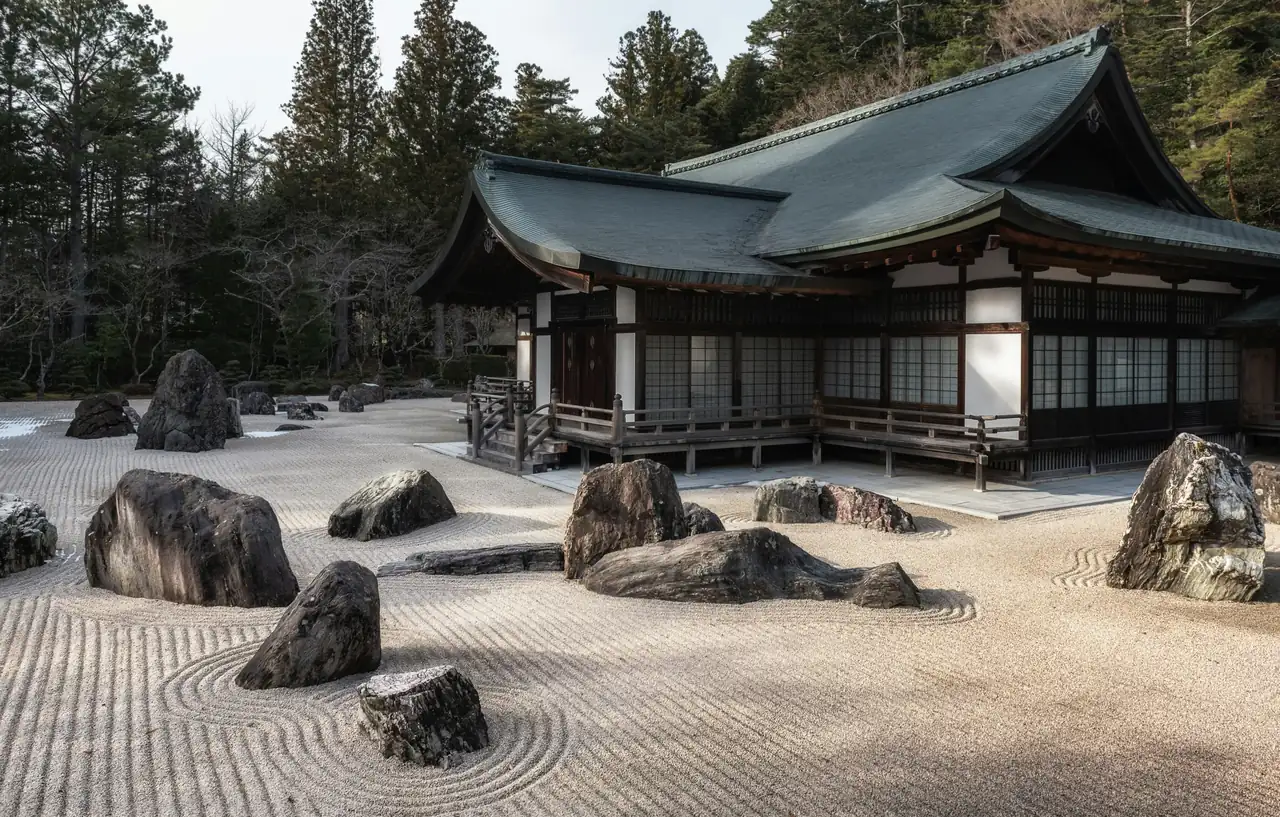
Nestled 800 meters high in a secluded mountain basin ringed by eight peaks resembling a blooming lotus flower, Kōyasan is the monastic heartbeat of Shingon Esoteric Buddhism. Its spiritual epicenter is Okunoin, the largest and most sacred cemetery in Japan. Approached via a two-kilometer stone pathway flanked by over 200,000 moss-covered stone stupas and centuries-old monumental cryptomeria cedars, Okunoin holds the graves of samurai warlords, emperors, monks, and corporate founders alike.
At the terminus of the stone path crosses the Gobyo-bashi Bridge, where visitors bow and cease all photography before stepping into the sacred inner precinct. Beyond lies the Tōrōdō (Lantern Hall), illuminated by over ten thousand brass lanterns that have burned continuously for centuries, and the Mausoleum of Kōbō Daishi. Shingon doctrine holds that Kūkai did not die in 835 AD, but entered Nyūjō—an eternal state of deep meditative samadhi—praying continuously for the salvation of all living beings. Twice daily, monks carry ritual meals (Shōjingu) to his sealed chamber in a solemn ceremonial procession.
2. Experience Shukubō: A Monastic Temple Stay at Kōyasan
More than fifty of Kōyasan’s 117 working temples offer Shukubō (temple lodging), providing travelers an immersive look into monastic life. Guests sleep on tatami mats inside historic wooden timber halls—many featuring sliding paper doors (fusuma) hand-painted with gold leaf and classic brushwork by Kanō school masters—overlooking manicured moss and rock gardens.
Stays include participating in pre-dawn Otsutome (Morning Buddhist Prayers), where resident monks chant rhythmic sutras to the strike of wooden fish drums, followed by the esoteric Goma Fire Ritual to cleanse negative karma. Guests are served multi-course Shōjin-ryōri (Buddhist Vegetarian Cuisine), prepared strictly without meat, fish, garlic, or onions, using local seasonal root vegetables, wild mountain herbs, and silken sesame tofu (Goma-dōfu).
3. Hike the Sacred Stone Paths of the Kumano Kodō
Inscribed as a UNESCO World Heritage cultural route (one of only two pilgrimage routes on earth to hold this distinction, alongside the Camino de Santiago in Spain), the Kumano Kodō is an ancient network of walking trails connecting Kyoto and Ise to the sacred Three Shrines of Kumano. For over a thousand years, pilgrims across all social strata—from abdicated Heian emperors to peasant women—embarked on this arduous trek through the Kii mountains to pray for spiritual rebirth.
The most popular and accessible route is the Nakahechi Route, departing from Kii-Tanabe. Walk through towering cypress and pine groves past stone Oji shrines (subsidiary resting places for mountain guardian spirits). Key sections include the mossy stone steps of Daimon-zaka in Nachi, and the ridge paths leading to Kumano Hongū Taisha, which sits above Oyunohara—a colossal 33.9-meter-tall black steel torii gate (the largest in the world) marking the original riverbed site where the shrine stood before an 1889 flood.
4. Stand Before the Thundering Drop of Nachi Falls & Seiganto-ji
Rising out of the primeval rainforest above the town of Nachikatsuura, Nachi Falls (Nachi no Ōtaki) is the tallest uninterrupted single-drop waterfall in Japan, plunging 133 meters sheer down a vertical volcanic basalt rock cliff. The roaring cascade is not merely a natural wonder; in original Shinto animist belief, the waterfall itself is the living deity (shintai) of Hiro Shrine, venerated for millennia before the arrival of Buddhism.
Directly adjacent sits the sacred complex of Kumano Nachi Taisha and the Tendai Buddhist temple of Seiganto-ji. This site provides one of the most famous visual compositions in Japan: an elegant, crimson three-story wooden pagoda (Sanjūnotō) framed against the plunging white ribbon of the waterfall and the green mountain ridges. The site is a living testament to Shinbutsu-shūgō—the syncretic fusion of Shinto and Buddhist practices that defined Japanese spirituality before the Meiji separation edicts.
5. Soak in Millennial Geothermal Waters at Yunomine Onsen
Tucked into a narrow, wooded river ravine near Kumano Hongū, Yunomine Onsen was discovered roughly 1,800 years ago, recognized as one of the oldest hot springs in Japan. Historically, Kumano pilgrims performed Misogi (ritual hot-water ablution) here to purify their bodies before approaching the grand shrines.
The heart of the village is Tsuboyu—a tiny, rustic wooden bathhouse built directly over a natural stone cleft in the riverbed. Accommodating only one or two bathers at a time (30-minute private turns), it is the only hot spring in the world inscribed as a UNESCO World Heritage site that bathers can actually soak in. The sulfuric, mineral-rich water changes color naturally up to seven times a day, shifting between milky white, light violet, and turquoise blue. In the village square, visitors purchase raw eggs and sweet potatoes from nearby shops, lowering them in string nets into the boiling 90°C public cooking pool (Yuzutsu) to prepare breakfast snacks.
6. Explore Feudal Stonework at Wakayama Castle
Commissioned in 1585 by Toyotomi Hideyoshi and constructed by master military builder Tōdō Takatora on Mount Torafusu, Wakayama Castle (Torafusu-jō) was the coastal stronghold of the Kishū Tokugawa clan—one of the three elite cadet branches (Gosanke) of the Tokugawa Shogunate eligible to provide an heir to the shogunal throne if the main line died out. The white three-story keep presides over massive dry-laid stone ramparts (ishigaki) built from local bluish-green chlorite schist stone.
Cross the Ohashiroka Bridge, a restored, enclosed wooden corridor bridge pitched at an angle across the inner moat, designed with frosted wooden louvers so feudal lords and their concubines could cross between administrative and residential palace quarters completely shielded from public eyes. Within the castle grounds, stroll through the Nishinomaru Teien garden, where stone lanterns frame a tranquil koi pond filled with falling cherry blossoms in spring.
7. Discover the Historic Birthplace of Soy Sauce in Yuasa
Located thirty minutes south of Wakayama City along the coast, Yuasa is officially designated as a National Important Preservation District for Groups of Traditional Buildings, celebrated worldwide as the birthplace of Japanese soy sauce (shoyu). In the thirteenth century, a Zen monk returning from Song Dynasty China taught Yuasa villagers how to make Kinzanji miso; during fermentation, merchants noticed a dark, savory liquid pooling at the bottom of the cedar vats. Skimming and refining this runoff birthed liquid shoyu brewing in Japan.
Walk the narrow flagstone lanes of the merchant district, flanked by preserved Edo and Meiji-period black-timber storehouses with traditional lattice windows (koshi) and white plaster eaves. Tour operational breweries like Kadocho—brewing continuously since 1841—to inspect 180-year-old wooden cedar fermentation vats (oke) coated in resident yeasts, and taste deep, unpasteurized tamari-style shoyu alongside Kinzanji miso.
Wakayama Terroir: Kishū Umeboshi, Tuna Auctions & Wakayama Ramen
Blessed with Kuroshio warm oceanic currents, deep river valleys, and mountain microclimates, Wakayama’s gastronomy is celebrated across Japan for bold umami, sweet tree fruits, and pristine Pacific catches:
- Kishū Nankō-bai (Umeboshi): Wakayama produces over sixty percent of all Japanese plums (ume). Grown on the rolling hillsides of Minabe and Tanabe, the prized Nankō-bai variety is universally recognized as the gold standard of plums: featuring ultra-thin, delicate skins, small pits, and plump, meltingly soft flesh. Picked by hand in early summer, the fruit is salt-cured, dried on wooden racks under the sun, and pickled with purple shiso leaves or aged in mountain honey. The resulting pickled plum (umeboshi) delivers an intense, savory, mouth-puckering acidity packed with citric acid, eaten with rice or infused into premium Umeshu plum liqueurs.
- Katsuura Fresh Tuna (Maguro): The coastal port of Kii-Katsuura in southeastern Wakayama lands the largest catch of fresh, unfrozen tuna in Japan. Because fishing trawlers operate long-lines in nearby Kuroshio currents and store catches on ice without industrial deep-freezing, the meat never loses its cellular structure or natural juices. Visit the Katsuura Morning Tuna Auction to watch hundreds of glistening bluefin, bigeye, and yellowfin tuna auctioned to wholesale buyers, then dine at harborfront eateries serving thick slabs of velvety, raw maguro sashimi and tuna rice bowls (Tekkadon).
- Wakayama Ramen (Chūka Soba): Known locally as Chūka Soba, Wakayama ramen is a legendary national noodle style developed in post-war street stalls. The soup is an intensely rich, cloudy, savory blend of slow-boiled pork bones (tonkotsu) and rich local soy sauce (shoyu), yielding an unctuous, dark-brown broth paired with straight, thin noodles, chashu pork, scallions, and a signature pink-and-white spiral fish cake (naruto).
- Hayazushi Tradition: On the counters of every traditional Wakayama ramen shop (such as Ide Shōten) sit plates of Hayazushi—small, bite-sized vinegared mackerel sushi wrapped in green bamboo leaves. Diners eat a piece of sushi while waiting for their noodles, paying on the honor system at the register when leaving.
- Arida Mikan (Mandarin Oranges): Cultivated on steep, south-facing stone terrace slopes along the Arida River, these oranges benefit from mineral-rich ocean breezes and maximum sun exposure. Arida mikan are famous nationwide for their ultra-thin peels, intense sweetness, and vibrant citrus acidity, harvested from October through January.
- Kada Sea Bream & Whale Culinary Heritage: The cold tidal straits off Kada in northern Wakayama produce firm, sweet red sea bream (Sakura-dai), served as Tai-meshi (sea bream steamed whole with seasoned rice in clay pots). In the deep south, the whaling port of Taiji preserves centuries of maritime hunting traditions, featuring historic whale meat preparations served in local specialty izakayas.
Transportation: Regional Limited Expresses & Mountain Cableways
Wakayama’s transport layout is split between high-speed Nankai mountain trains to Kōyasan and JR coastal express trains wrapping around the peninsula:
- Reaching Kōyasan from Osaka (Nankai Railway):
- Nankai Kōya Line: Board the Limited Express Kōya from Namba Station directly to Gokurakubashi Station in roughly 80 to 90 minutes.
- Kōyasan Cable Car: At Gokurakubashi, transfer directly to the steep funicular cable car, ascending five hundred vertical meters through pine mountain ravines to Kōyasan Station in just 5 minutes.
- Nankai Rinkan Buses: Crucial Note: Walking down the mountain highway from Kōyasan Station is strictly forbidden for safety reasons. All travelers must board dedicated Nankai Rinkan buses from the station terminal into the town center, stopping directly outside major Shukubō temples and Okunoin.
- Reaching Coastal Wakayama & Kumano (JR West):
- JR Limited Express Kuroshio: Departing from Shin-Osaka and Kyoto stations, this scenic coastal train traces the western shore of Wakayama, stopping at Wakayama City (approx. 60 mins), Shirahama (approx. 2 hours 15 mins), and Kii-Katsuura (approx. 3 hours 45 mins). Many services operate with panoramic "Panda Kuroshio" liveries. (Fully covered by the nationwide JR Rail Pass and JR West Kansai WIDE Area Pass).
- Navigating the Kumano Kodō:
- Ryujin & Meiko Buses: Frequent local buses link JR Kii-Tanabe Station to the interior trailheads of the Nakahechi route (Takijiri-oji, Hosshinmon-oji) and Kumano Hongū Taisha.
- Kumano Gobo Nankai Bus: Connects coastal JR stations (Kii-Katsuura and Shingu) to Kumano Nachi Taisha and the base of Nachi Falls.
- Digital Transit Cards (IC Cards): Nankai lines, JR Kuroshio trains, and Wakayama City urban buses accept digital Suica, Pasmo, and ICOCA cards loaded on smartphones. Important Caution: Deep rural bus operators in the central Kumano mountains (such as routes to Yunomine Onsen) may have limited IC card support; carrying physical cash is essential for trailside bus travel.
Where to Stay in Wakayama: Strategic Base Camps
| Base Hub | Vibe & Atmosphere | Transit Connections | Accommodation Strategy |
|---|---|---|---|
| Kōyasan (Mount Kōya) | Sacred mountain stillness, mist-shrouded cedar groves, temple bells, complete evening serenity. | Nankai Cable Car terminus; local Rinkan bus network. | Over fifty authentic working Buddhist temple stays (Shukubō) featuring vegetarian Kaiseki dining (Shōjin-ryōri) and morning prayer rituals. |
| Wakayama City Core | Practical castle capital, relaxed provincial dining, lively ramen eateries. | JR Wakayama and Nankai Wakayamashi stations; 40 mins to Kansai Airport (KIX). | High density of modern, efficient Japanese business hotels (multiple central APAs), railway towers, corporate hotels. |
| Kii-Katsuura & Nachi | Pacific fishing harbor, morning fresh tuna auctions, dramatic island headlands. | JR Kuroshio Express terminus; local buses to Nachi Falls and Kumano Kodō. | Historic harborfront ryokans with cavernous open-air hot spring baths overlooking the sea (such as Hotel Urashima), coastal inns. |
| Yunomine & Kawayu Onsen | Secluded riverside thermal hamlets, ancient pilgrim bathing culture, mountain peace. | Local bus lines from Kii-Tanabe and Shingu stations. | Atmospheric riverside family-run minshuku and traditional ryokans with natural thermal spring baths. |
| Shirahama Beach | Vibrant coastal ocean resort, brilliant white quartz sand, geothermal cliffside pools. | JR Kuroshio stop; Nanki-Shirahama Airport (SHM). | Large-scale oceanfront luxury resort complexes, beach hotels, traditional hot spring inns. |
Regional Day Trips Across Wakayama Prefecture
1. Shirahama: White Sand Beaches & Saki-no-yu Cliff Baths
Located on the southwestern coast, Shirahama is Kansai’s premier coastal resort, renowned for its 600-meter-long curved beach of dazzling white quartz sand imported from Western Australia. Beyond beach leisure, visit Saki-no-yu—an ancient open-air rock bath operating since the Asuka and Nara periods, perched directly on the wave-lashed rocky cliffs of the Pacific. As bathers soak in the hot mineral pools, breaking ocean swells crash over the rock edge, sending cool sea spray washing across the geothermal waters. Down the coast lie the sheer, fifty-meter-high ocean precipices of Sandanbeki Cliffs, featuring elevators descending into subterranean pirate and naval sea caves used during the Genpei War.
2. Hashigui-iwa Rocks & Cape Shionomisaki (Kushimoto)
At the southernmost tip of Honshu lies the rugged headland of Kushimoto. Stretching eight hundred meters into the sea toward Oshima Island sits Hashigui-iwa—a dramatic, straight line of roughly forty colossal, upright volcanic rock pillars standing like ruined bridge piers. Japanese folklore attributes their construction to Kūkai, who made a wager with an ogre to build a stone bridge to Oshima in a single night. A short drive south leads to Cape Shionomisaki, the southernmost geographic point of Honshu, where a nineteenth-century stone lighthouse looks out across panoramic ocean curves.
3. Kimiidera Temple & Kansai's Earliest Sakura
Perched on the verdant hillside slopes overlooking Wakanoura Bay just south of Wakayama City, Kimiidera was founded in 770 AD by the Chinese monk Iko. Approached via a steep 231-step stone stairway known as the Slope of Marriage, the temple houses an extraordinary twelve-meter-tall gilded wooden statue of the Thousand-Armed Kannon. The temple grounds feature hundreds of somei-yoshino cherry trees that bloom earlier than anywhere else in the Kansai region, serving as the official benchmark tree used by meteorological authorities to declare the start of the sakura season in western Japan.
Best Seasons to Visit Wakayama
- Autumn (October to Late November): The undisputed peak season for hiking the Kumano Kodō and touring Kōyasan. The high elevation of Kōyasan causes its ancient maple and ginkgo groves to turn intense shades of scarlet and gold early in October, while the temple paths and river gorges of the Kumano mountains blaze throughout November. Daytime temperatures are crisp and temperate (14°C–19°C / 57°F–66°F) with low rainfall.
- Spring (Late March to Mid-April): A splendid season of renewal. Cherry blossoms bloom across the stone walls of Wakayama Castle and frame the pagoda of Kimiidera, while mountain cherry trees bloom along the pilgrimage paths. Cool, comfortable weather makes trail walking enjoyable before summer heat begins.
- July 14 (Nachi Fire Festival - Nachi-no-Hi-Matsuri): One of the most spectacular sacred fire celebrations in Japan, held at Kumano Nachi Taisha. Twelve colossal twelve-meter-tall portable shrines (mikoshi) decorated to resemble Nachi Falls are carried down the mountain steps, met by twelve monumental pine torches weighing up to fifty kilograms each, carried by white-clad men roaring amidst leaping sparks and flames to ritually purify the shrines.
- Winter (December to February): Cool, crisp, and serene. While the southern coastline around Shirahama and Kushimoto remains mild (8°C–14°C / 46°F–57°F), the high-altitude plateau of Kōyasan is regularly blanketed in peaceful white snow, transforming the mossy stone stupas of Okunoin into a quiet winter sanctuary. Winter is also the premier culinary season to soak in Yunomine’s steaming Tsuboyu bath and savor fresh Pacific tuna banquets.
- Summer (June to August): Lush, green, and maritime. While coastal temperatures reach 32°C (90°F) with high humidity, Shirahama’s beaches buzz with swimmers and seasonal fireworks displays. In the interior, visitors swim in the clear waters of the Otonashi River and dig their own temporary hot spring pools out of the gravel riverbed at Kawayu Onsen. Weather note: Mid-August through September is typhoon season; mountain trails can experience heavy rain closures during severe weather systems.


 京都
京都 大阪
大阪 奈良
奈良 兵庫
兵庫 三重
三重 滋賀
滋賀