

On this page
Tottori Travel Guide: Monumental Coastal Dunes, Precipice Temples & Sacred Peaks
Stretching along the eastern shoreline of the San'in region facing the Sea of Japan, Tottori Prefecture (鳥取県) holds the distinction of being the least populous prefecture in all of Japan. Historically divided into two ancient feudal provinces—Inaba in the east (centered on the castle town of Tottori) and Hōki in the west (dominated by the towering sacred peak of Mount Daisen)—this narrow, coastal territory offers some of the most startling geological contrasts and rich folklore in the archipelago.
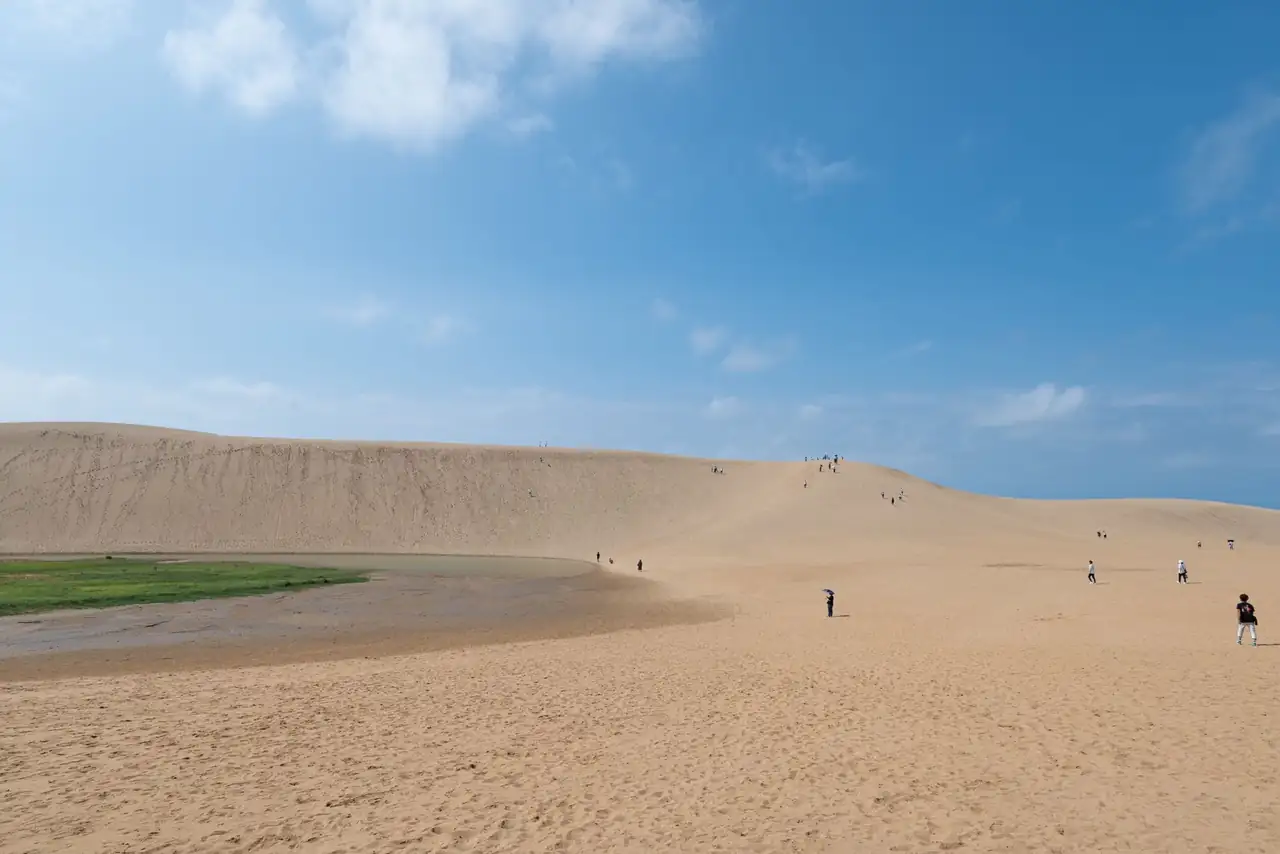
Tottori is globally renowned for its sweeping natural wonder: the Tottori Sand Dunes (Tottori Sakyū), where massive coastal dunes meet the breaking surf of the Sea of Japan. Yet beyond its sandy horizon, Tottori harbors profound spiritual and architectural marvels. Deep in the central mountains, the gravity-defying timber sanctuary of Mitokusan Sanbutsuji Nageiredo clings precariously inside a sheer mountain cliff cavern, recognized as one of Japan's most perilous ascetic pilgrimage climbs. To the west, the volcanic pinnacle of Mount Daisen—revered as the "Hōki Fuji"—anchors pristine alpine beech forests, ski slopes, and ancient Tendai Buddhist temples. Further celebrated as the birthplace of legendary manga pioneers Shigeru Mizuki (GeGeGe no Kitaro) and Gosho Aoyama (Detective Conan), Tottori combines untamed coastal geography with deep cultural preservation.
Navigating Tottori Prefecture: Core Geographic Sectors
Tottori stretches roughly 120 kilometers from east to west along the coast, dividing naturally into three distinct travel sectors:
| Sector | Primary Station Hubs | Landscape & Atmosphere | Key Highlights |
|---|---|---|---|
| Eastern Dunes & Inaba Core | JR Tottori Station / Iwami | Coastal sand dunes, camel rides, indoor sand sculpture museums, ria sea cave coasts, castle ruins. | Tottori Sand Dunes, The Sand Museum, Uradome Coast, Jinpūkan French villa, Tottori Castle ruins. |
| Central Onsen & Mitokusan | JR Kurayoshi / Misasa Onsen | Radium hot springs, white-wall storehouse waterways, sheer mountain cliffside hermitages. | Mitokusan Sanbutsuji (Nageiredo), Misasa Onsen, Kurayoshi White Wall Storehouses (Shirakabe Dozōgun). |
| Western Alps & Manga Harbors | JR Yonago / Sakaiminato | Towering alpine volcanic peaks, commercial crab fishing ports, yokai monster bronze streets. | Mount Daisen (Daisen-ji), Mizuki Shigeru Road (Sakaiminato), Kaike Onsen, Yumigahama Beach. |
Top Things to Do Across Tottori
1. Traverse the Vast Ridges of the Tottori Sand Dunes (Tottori Sakyū)
Stretching sixteen kilometers along the Sea of Japan coastline and reaching up to two kilometers inland, the Tottori Sand Dunes form the largest active dune system accessible to visitors in Japan. Created over more than 100,000 years, the dunes are formed from volcanic granitic sands carried down from the Chūgoku Mountains by the Sendai River, washed ashore by ocean currents, and sculpted continuously by prevailing sea gales.
Visitors can trek across the undulating sands to conquer the Umanose ("Horse's Back")—a monumental forty-meter-high coastal sand ridge. Reaching the crest rewards hikers with a sweeping panoramic view looking straight down sheer sand slopes into the crashing azure surf of the Sea of Japan. The wind constantly shifts the surface, creating delicate, rippling wave patterns known as Fūmon (Wind Ripples). Activities include paragliding, sandboarding, fat-tire cycling, and riding camels across the sandy hollows.
2. Marvel at Ephemeral Masterpieces at The Sand Museum
Located just a five-minute stroll from the dunes, The Sand Museum (Suna no Bijutsukan) is the world's first permanent indoor museum dedicated exclusively to sand sculptures. Under the creative direction of world champion sculptor Katsuhiko Chaen, the museum invites top master sculptors from across the globe each year to construct monumental, museum-grade exhibitions.
Operating under the guiding concept "Travel Around the World in Sand," the exhibits rotate annually to focus on different world regions (such as Egypt, South America, or Europe). What makes the exhibition astonishing is its purity: the colossal, multi-meter-tall statues, palaces, and mythological dioramas are constructed strictly from nothing but local sand and water, relying entirely on physical compression without chemical adhesives or artificial binders. Because each exhibition is systematically destroyed and returned to sand at the end of its run to create the next year's showcase, the artwork carries an ephemeral, fleeting beauty.
3. Climb to the Precipice Temple: Mitokusan Sanbutsuji (Nageiredo)
Perched 520 meters high inside a sheer vertical rock cavern on the sacred slopes of Mount Mitoku, Nageiredo is officially recognized as a National Treasure and celebrated as one of the most daring pieces of timber architecture in the world. According to Buddhist legend, the seventh-century ascetic monk En no Gyōja miraculously hurled the entire wooden temple into the cliff face using supernatural psychokinetic powers (Nageire means "thrown in").
The temple is approached via the hardest and most hazardous pilgrimage path in Japan. Pilgrims must climb over giant exposed tree roots (Kazurazaka), haul themselves up vertical rock bluffs using colossal iron chains (Kusarizaka), and traverse knife-edge rocky ridges. Ascent Safety Regulations: Visitors must register at the mountain base in pairs (solo climbing is strictly prohibited for safety). Temple priests inspect your footwear at the gate; smooth-soled street shoes are banned, requiring climbers to purchase traditional hand-woven straw sandals (Waraji) on site if their tread is insufficient. Reaching the base of Nageiredo reveals an eighth-century timber temple standing on wooden stilts wedged directly into the rock face.
---
4. Summit the Sacred Peaks of Mount Daisen (Hōki Fuji)
Rising 1,729 meters above the plains of western Tottori, Mount Daisen is the highest peak in the Chūgoku region and one of Japan's 100 Famous Mountains. When viewed from the west, its conical volcanic slopes closely mimic Mount Fuji, earning it the title Hōki Fuji; yet viewed from the north or south, the mountain reveals dramatic, crumbled volcanic walls, knife-edge ridges, and sheer rocky precipices.
Revered as a sacred mountain since the eighth century, the lower slopes house the ancient Tendai monastery of Daisen-ji and Ōgamiyama Shrine Okumiya, approached along a 700-meter natural stone-paved path through the largest virgin beech forest (Buna) in western Japan. Hikers can ascend the well-maintained Natsuyama Trail to the Misen peak (roughly 3 hours up), rewarded with panoramic views across the Sea of Japan and the Miho Peninsula. In winter, Daisen’s slopes transform into western Japan’s premier ski resort.
---
5. Cruise the Emerald Sea Grottoes of the Uradome Coast
Stretching fifteen kilometers eastward from the sand dunes to the Hyogo border, the Uradome Coast (Uradome Kaigan) is a designated UNESCO Global Geopark. Formed by tectonic shifts and millions of years of violent Sea of Japan winter waves eroding granite rock, the coast is a labyrinth of sea caves, natural stone arches, jagged reefs, and white sandy coves.
Board sightseeing catamarans or small fishing punts from San'in Kaigan Geopark pier to weave through narrow rock fissures and navigate past the sheer sea arches of Sengokujima. The coastal water is exceptionally clear, boasting underwater visibility exceeding twenty-five meters, making Uradome a prime destination for sea kayaking and snorkeling in summer.
---
6. Walk Among Yokai Monsters on Mizuki Shigeru Road (Sakaiminato)
Located on the coastal tip of the Yumigahama Peninsula, the port town of Sakaiminato is the hometown of legendary manga master Shigeru Mizuki, creator of the iconic series GeGeGe no Kitaro. The city transformed its central eight-hundred-meter shopping avenue into Mizuki Shigeru Road, creating an open-air museum dedicated to traditional Japanese spirits and supernatural creatures (Yokai).
The street is lined with 177 intricately cast bronze statues of famous yokai characters, including Kitaro, Medama-Oyaji (Daddy Eyeball), and Nezumi-Otoko (Rat Man). Visitors can visit the Mizuki Shigeru Museum, taste street snacks like eye-ball-shaped bean pastries and yokai lattes, and collect commemorative rubber stamps in a pocket "Yokai Guidebook" at shops along the avenue. At night, the sidewalks are illuminated by moving shadow projections of ghostly spirits cast onto the pavement.
7. Stroll the Red-Tiled Canals of Kurayoshi White Wall Storehouses
Nestled in the central river basin, Kurayoshi preserves a picturesque merchant quarter dating from the late Edo and early Meiji periods: the Shirakabe Dozōgun (White Wall Storehouse District). Wealthy merchants built these storehouses along the gentle Tamagawa River to store sake, soy sauce, and rice.
The buildings feature white fireproof plaster on their upper halves, dark cedar boards stained with charcoal along the base, and distinctive rust-red Sekishū-gawara ceramic roof tiles engineered to shed freezing winter snow. Stone bridges cross the canal to the storehouses, which have been converted into craft studios, sake tasting bars, and folk pottery shops. Visitors can stroll in rented kimonos, sample local soy sauce ice cream, and visit Utsubuki Park, famed for its spring cherry blossoms.
Tottori Food Culture: Matsuba Crab, 20th Century Pears & Beef Bone Ramen
Nourished by the deep cold trenches of the Sea of Japan, fertile volcanic slopes around Mount Daisen, and sunlit sand hills, Tottori boasts a culinary identity built on ocean catches and fruit orchards:
- Matsuba Gani (Winter Snow Crab): The undisputed king of winter gastronomy in Tottori. Adult male snow crabs landed at coastal ports like Sakaiminato and Karo between November and March are known as Matsuba Crab. Sakaiminato lands more crab by volume than almost anywhere else in Japan, leading the prefecture to playfully rebrand itself as Kani-ken ("The Crab Prefecture") in winter.
- Culinary Excellence: Cold, oxygen-rich currents give the crab dense, muscular meat with an intense natural sweetness, loaded with rich, savory liver paste (Kani-miso). Savor it boiled fresh in ocean salt water, split and grilled over binchōtan charcoal until the shell blisters, or served as translucent raw sashimi. The highest grade of certified male crab is branded as Itsukiboshi (Five Shining Stars), commanding luxury prices at seasonal auctions.
---
- Nijisseiki Pears (20th Century Asian Pears): Tottori produces roughly half of all the Nijisseiki Pears grown in Japan. Cultivated on the sunlit hillsides for over a century, local farmers wrap each individual pear in two separate paper bags while still on the tree branch to protect the thin yellow-green skin. The fruit is famous for its crisp, crunchy texture, dripping juiciness, and a balance of refreshing sweetness and subtle tart acidity. Visit the Tottori Nijisseiki Pear Museum (Nashikkokan) in Kurayoshi to sample three distinct pear varieties year-round.
- Gyūkotsu Ramen (Beef Bone Broth Ramen): A rare and distinctive regional ramen style native to central and western Tottori (around Kurayoshi and Yonago), dating back to the post-war 1940s. Unlike standard ramen broths brewed from pork bones (tonkotsu) or chicken, Gyūkotsu Ramen utilizes a broth simmered exclusively from beef marrow bones for up to twenty hours. The resulting soup is crystal-clear and golden, with sweet beef oils floating on the surface, delivering a savory, aromatic beef flavor paired with medium-curly noodles, scallions, and thin chashu pork.
- Tottori Wagyu (Daisen Beef): Tottori is the historic cradle of modern Japanese Black wagyu genetics; in 1966, a Tottori bull named Kedaka won top honors at the first National Wagyu Competition, siring lineages that form the foundation of wagyu cattle across Japan today. Raised on mineral spring water and alpine grains around Mount Daisen, Tottori Wagyu features high concentrations of oleic acid, giving the fat a low melting point that dissolves at body temperature without greasiness.
- Daisen Dairy & White Rose Milk (Shirobara): The highland pastures at the foot of Mount Daisen support historic dairy farming cooperatives. Tottori’s Shirobara (White Rose) Milk is a cultural icon across western Japan, renowned for its fresh, creamy richness. Savor it as full-fat soft-serve ice cream, bottled fruit milk, and cream puffs sold throughout the prefecture.
Transportation: Limited Express Lines & Comic Airport Gateways
Tottori is connected to Kansai and Okayama via scenic mountain-crossing rail corridors and regional airports playfully themed after beloved manga heroes:
- Reaching Tottori City from Osaka and Kyoto:
- The primary rail lifeline is the JR Limited Express Super Hakuto, which departs Kyoto and Osaka Station multiple times daily.
- The diesel train races along the private Chizu Express Line, cutting through the Chūgoku mountain passes to reach JR Tottori Station in roughly 2 hours and 30 minutes from Osaka (and 3 hours from Kyoto). (Partially covered by nationwide JR passes; fully covered by JR West Kansai WIDE Area Pass).
- Connecting to Western Tottori (Yonago) from Okayama:
- From JR Okayama Station (a major Sanyō Shinkansen stop), board the JR Limited Express Yakumo, which winds along the Hakubi Line through mountain ravines to reach JR Yonago Station in roughly 2 hours and 10 minutes.
- The Two Manga Airports:
- Tottori Sand Dunes Conan Airport (TTJ): Located in eastern Tottori, fully decorated with installations and statues dedicated to Detective Conan (whose creator, Gosho Aoyama, was born in nearby Hokuei). Connects to Tokyo (Haneda) in 75 minutes.
- Yonago Kitaro Airport (YGJ): Located in western Sakaiminato, featuring character displays honoring GeGeGe no Kitaro. Connects to Tokyo (Haneda) and international hubs.
- The Tottori ¥3,000 Tourist Taxi:
- For international travelers landing at JR Tottori Station, the local tourism board operates a promotional 3-Hour Tourist Taxi Service for just ¥3,000 per vehicle (accommodating up to four passengers). A licensed driver takes you directly to the Sand Dunes, Sand Museum, and Uradome Coast, eliminating bus transfers.
- Digital Transit Cards (IC Cards): Major stations along the JR San'in Main Line (Tottori, Kurayoshi, Yonago) accept digital Suica, Pasmo, and ICOCA cards. However, rural bus lines to Mount Daisen and Mitokusan Sanbutsuji require physical cash payments.
Where to Stay in Tottori: Strategic Base Camps
| Base Hub | Vibe & Atmosphere | Transit Connections | Accommodation Strategy |
|---|---|---|---|
| JR Tottori Station Core | Lively regional capital, multi-level retail shopping, rapid express trains to Kansai, easy dune bus links. | JR San'in Main Line; Inbi Line; Super Hakuto Express; central bus terminal for dunes. | High density of modern, efficient Japanese business hotels (multiple central APAs), railway towers, corporate lodgings. |
| Misasa Onsen (Central Valley) | Historic riverside thermal village, misty stone alleys, world-famous radium-rich mineral waters. | Buses from JR Kurayoshi Station (approx. 20 mins). | Traditional hot spring (onsen) ryokans featuring private open-air rock baths and multi-course Matsuba crab banquets. |
| Yonago & Kaike Onsen (West) | Commercial transport junction, white sand beaches, coastal hot springs overlooking the sea. | JR Yakumo Express stop; JR Sakai Line; airport shuttle buses. | Oceanfront hot spring resort hotels with open-air baths facing the Sea of Japan, clean station-front business hotels. |
| Daisen Highland Foothills | Peaceful alpine forest seclusion, cool mountain breezes, direct trailhead and ski slope access. | Daisen Loop Bus from Yonago Station. | Alpine resort lodges, family-run European pensions, traditional temple lodgings (Shukubō) at Daisen-ji. |
Regional Day Trips Across Tottori Prefecture
1. Misasa Onsen: The Healing Radium Waters
Tucked into a tranquil mountain valley along the Mitoku River near Kurayoshi, Misasa Onsen is a historic 850-year-old thermal hamlet celebrated as having some of the highest concentrations of radon (radium) in the world. In local lore, the hot spring was discovered in 1164 when a samurai spared the life of a white wolf, which rewarded him by revealing the mineral springhead.
Radon is a weak, natural radioactive gas that stimulates the body's immune system and cellular repair mechanisms (a therapeutic effect known as radiation hormesis). The village encourages a three-part wellness ritual: soaking in the mineral baths, breathing the misty radon-rich steam rising from the water, and drinking the warm mineral water from public fountains in town. In the center of the village sits Kawara-buro—a free, open-air public stone bath located right in the rocky bed of the river beneath the wooden Kajika Bridge.
2. The Gosho Aoyama Manga Factory (Hokuei)
Located in the coastal town of Hokuei in central Tottori, the Gosho Aoyama Manga Factory honors the creator of Case Closed (Detective Conan), one of the most successful manga franchises in history. The museum displays original hand-drawn manga manuscripts, recreations of Aoyama’s creative work studio, and interactive puzzle-solving games where visitors test forensic detective gadgets like Conan’s voice-changing bow tie and turbo engine skateboard.
The entire town of Hokuei celebrates the manga: walk down Conan Street from JR Yura Station (nicknamed "Conan Station") to encounter bronze statues of series characters, manhole covers stamped with Conan artwork, and souvenir bakeries selling mystery-themed snacks.
3. Jinpūkan French Renaissance Villa (Tottori City)
Standing at the foot of Mount Hisamatsu beneath the stone ramparts of Tottori Castle, Jinpūkan is a magnificent French Renaissance-style timber mansion constructed in 1907 by Marquis Nakahiro Ikeda, the 14th head of the local samurai clan. Designed by master architect Katayama Tōkuma (who also designed the Akasaka Palace in Tokyo), the mansion was built to host Crown Prince Yoshihito (later Emperor Taishō) during his tour of the San'in region.
The building features an elegant white wooden facade, soaring brick chimneys, expansive second-floor verandas, and a freestanding spiral wooden staircase constructed without central support pillars. The rear of the villa opens to Hōkōen, an Edo-period sunken pond stroll garden where stone lanterns reflect across carp ponds.
Best Seasons to Visit Tottori
- Autumn (October to Late November): The premier season for comfortable outdoor touring and visual spectacle. Crisp, sunny skies, low humidity, and pleasant daytime temperatures (15°C–20°C / 59°F–68°F). The ancient beech forests of Mount Daisen blaze in brilliant shades of yellow, gold, and scarlet, creating western Japan's most spectacular autumn foliage backdrop. In early November, the official Matsuba Crab season opens with festive harbor auctions.
- Winter (December to Early March): The ultimate culinary and winter sports season. Moisture sweeping from the Sea of Japan dumps heavy powder across Mount Daisen, transforming the mountain into an alpine ski haven. Down along the coast, freezing winter gales carve sharp Fūmon wave patterns into the Tottori Sand Dunes, occasionally dusting the sand in pure white snow. Winter is the definitive time to soak in the therapeutic radium waters of Misasa Onsen and feast on sweet, fresh Matsuba crab banquets.
- Spring (Late March to Mid-April): A splendid season of cherry blossoms. Somei-yoshino trees bloom across the stone moats of Tottori Castle ruins (Kyu-shō Park) and blanket Utsubuki Park in Kurayoshi. Mild, pleasant sightseeing weather makes hiking the coastal paths of the Uradome Coast and walking the dunes comfortable before summer heat arrives.
- Summer (July to August): Warm, sunny, and coastal, with temperatures reaching 31°C to 33°C (88°F–91°F). The clear waters of the Uradome Coast and Yumigahama Beach buzz with sea kayakers, snorkelers, and coastal swimmers. While the sand dunes become hot under midday sun, early morning and sunset walks offer cool breezes and dramatic lighting over the Sea of Japan.


 広島
広島 岡山
岡山 島根
島根 山口
山口