General Safety & Street Awareness
Japan is consistently ranked among the safest countries in the world, with low rates of violent crime. You will routinely see locals reserving cafe tables with their smartphones, walking alone late at night, and elementary school children commuting unaccompanied on public transit. However, standard travel vigilance is still required, particularly regarding personal belongings in dense train stations and tourist hubs.
Nightlife Districts & The Tout Warning
In vibrant entertainment and nightlife districts—notably Kabukicho (Shinjuku) and Roppongi in Tokyo, as well as parts of Minami (Osaka)—be wary of aggressive street promoters, host club promoters, and touts offering “cheap all-you-can-drink” specials. A well-documented nightlife scam involves foreign tourists being escorted into inconspicuous upstairs bars, served spiked drinks, and billed exorbitant fraudulent charges running into thousands of dollars on their credit cards. As a general rule: never follow street touts into any bar or lounge.
Lost & Found: Neighborhood Police Boxes (Koban)
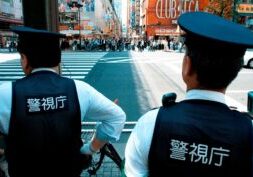
Japan boasts a world-renowned lost property recovery system. If you misplace your wallet, phone, bag, or passport, there is a very high likelihood it will be handed in intact. Inquire first with the nearest station customer service desk or visit the local Koban (small neighborhood police boxes marked with a red light, situated near station exits and shopping quarters). Officers can file a formal lost property report (ishitsubutsu todoke) linked to a centralized database across the city.
Earthquake Preparedness & The “Safety tips” App
Japan experiences frequent minor seismic activity. Modern buildings, hotels, and train networks are engineered with world-class earthquake-resistant damping systems designed to sway safely during tremors. If an earthquake occurs:
- Drop, Cover, and Hold On: Protect your head under a sturdy desk or table, and stay away from heavy glass windows.
- Follow Staff Guidance: In transit hubs, shopping malls, and department stores, follow the directions of security staff and train conductors rather than rushing toward exits.
- Download the “Safety tips” App: Developed under the supervision of the Japan Tourism Agency, this free app pushes real-time Earthquake Early Warnings (EEW), tsunami advisories, and volcanic alerts directly to your phone in English, alongside emergency evacuation flowcharts.
Medical Emergencies & Travel Insurance
Japanese healthcare standards are exceptional, but medical facilities generally require immediate upfront payment via credit card or cash before discharge, and overseas health plans rarely cover services directly. Always travel with comprehensive travel medical insurance. If you fall ill with a non-emergency condition, use the Japan National Tourism Organization (JNTO) website to locate nearby multilingual clinics that accept international visitors.
Emergency Dispatch Numbers & Helplines
Keep these critical telephone numbers saved in your phone or written down in your daypack:
- 110 — Police (to report theft, accidents, or urgent security issues)
- 119 — Fire & Ambulance (for medical dispatch and fire emergencies)
- #7119 — Emergency Medical Consultation (connects to triage professionals to evaluate whether symptoms require an immediate ambulance or a walk-in clinic)
- 050-3816-2720 — Japan Visitor Hotline (JNTO) (a 24/7 tourist helpline operated in English, Chinese, and Korean for disaster assistance, medical routing, and travel advice)